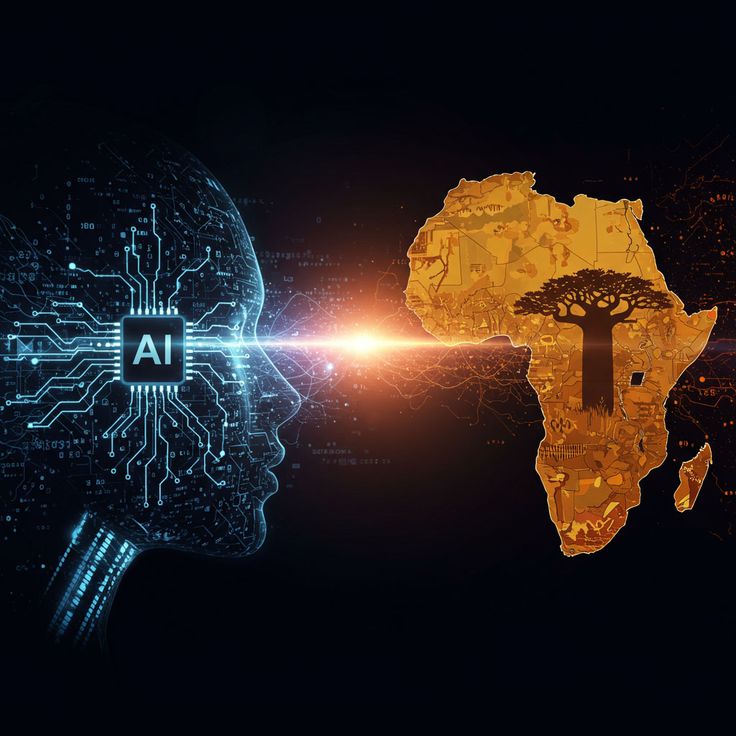
Are you thinking about the future of AI in Africa? If so, your search ends here. Abuja Data School is Nigeria’s top live AI training centre and one of the leading voices on AI development in Africa. Africa stands at a crossroads. AI offers Africa its biggest economic chance in a generation. But it also brings real risks of exclusion, bias, and dependency. Those who act now will shape which side of that crossroads Africa lands on.
So, this guide gives you an honest, well-grounded view of AI’s future in Africa. It covers the key chances, the real hurdles, Nigeria’s specific role, and what every African who wants to be part of the AI story can do today. As a result, by the end you will have a clear picture of where Africa’s AI journey is heading and one concrete next step.
Where Africa Stands on AI Today: The Starting Point

Africa is not starting from zero. The continent already has a fast-growing tech ecosystem. Lagos, Nairobi, Accra, Kigali, and Cape Town are all established tech hubs. Nigerian fintech is one of the most active AI adoption spaces on the continent. Kenya has led on mobile money AI since the M-Pesa era. Rwanda is building national AI systems with state support. Egypt is investing in Arabic NLP and AI research.
Also, African universities are producing more AI-capable graduates every year. Moreover, a growing community of African AI researchers now publishes at top global venues. In short, Africa has momentum. But the gap between African AI capability and global AI capability is still wide. Closing that gap is the key hurdle for the next decade.
The 6 Biggest Chances AI Offers Africa
1. Agriculture and Food Security
Africa has over 60 per cent of the world’s uncultivated arable land. AI can transform this sector. Crop yield prediction, pest detection, soil monitoring, and market price forecasting are all being built right now. Also, smallholder farmers in Nigeria, Kenya, and Ghana are reached by AI apps that give real-time planting advice. In short, AI could help Africa feed itself and the world.
2. Healthcare in Underserved Communities
Africa carries a large global share of disease but has a very low share of doctors. AI is helping close this gap. Chest X-ray analysis tools are being used to detect TB in rural clinics with no radiologist on site. Chatbot triage tools help patients know whether to seek care. Also, NLP tools are being trained on local languages to provide health information in Hausa, Yoruba, Swahili, and Amharic. In short, AI can extend quality healthcare to the 600 million Africans who currently live beyond its reach.
3. Financial Inclusion
Over 300 million Africans are without bank access. AI is changing this faster than any prior technology. ML models score credit status from mobile data for people with no formal credit history. Fraud detection tools protect low-income users. Moreover, AI-powered savings and lending apps have reached tens of millions of Nigerians and Kenyans who had no prior access to formal finance. In short, AI is the fastest route to financial inclusion Africa has ever had.
4. Education and Skills at Scale
Africa has the world’s youngest and fastest-growing population. Educating this population at scale is one of the continent’s defining hurdles. AI offers real solutions: personalised learning tools, automated feedback systems, AI tutors in local languages, and remote access to quality content. Also, AI skills training like what Abuja Data School provides is itself a key part of this chance. In short, AI can help Africa build human capital faster than traditional education systems allow.
5. Public Sector Efficiency
African governments manage vast, complex services with limited budgets. AI can improve how those services are delivered. Tax collection, public health surveillance, traffic management, and social protection targeting are all areas where AI is being piloted across Africa. Also, Nigeria’s FIRS and CBN are already exploring AI for tax compliance and monetary policy analysis. In short, AI-enabled government could close the service delivery gap between African and high-income nations.
6. Remote Work and Global Income
Perhaps the most immediate AI chance for individual Africans is this: AI skills open the global job market. A trained Nigerian ML engineer or NLP developer can work remotely for a London or San Francisco firm at full global market rates. Moreover, AI tools also allow African freelancers to produce work at a speed and quality level that was previously unreachable. In short, AI is the fastest route from African local incomes to global earning power that has ever existed.
The 5 Key Hurdles Facing AI in Africa
1. The Data Gap
AI systems learn from data. African data is under-represented in almost every major training set. So most AI tools work less well for African users, African languages, African faces, and African contexts. Also, African institutions often lack the data systems to build their own AI. In short, the data gap is the key structural hurdle facing AI in Africa.
2. The Talent Gap
Africa has too few trained AI engineers, data scientists, and ML practitioners. Most African universities still do not offer strong, current AI programmes. Also, the best African AI talent is often recruited by global firms and leaves the continent. Moreover, the AI skill sets that employers need are changing faster than most African academic curricula can update. In short, training local AI talent is the most urgent investment Africa can make.
3. Infrastructure Gaps
AI needs reliable power, fast internet, and compute systems. All three are inconsistent across Africa. Training an AI model at scale requires cloud computing access that is expensive and often slow for African teams. Also, rural AI deployment is blocked by a lack of access. In short, systems are the physical bottleneck that limits how fast AI can spread across the continent.
4. Bias and Exclusion Risks
AI systems trained on non-African data can reflect and amplify biases that harm African users. Facial recognition tools have been shown to perform worse on darker skin tones. Credit scoring models trained on Western data may unfairly penalise African borrowers. Also, AI-powered hiring tools trained without African diversity data can exclude qualified African candidates. In short, if Africa does not actively shape the AI tools it uses, those tools may deepen existing inequalities.
5. Regulation and Governance
Most African nations do not yet have robust AI governance frameworks. This creates risk: AI tools can be deployed without oversight. Also, it creates chance: Africa has a chance to build AI governance that fits its own values, not to copy frameworks designed for different societies. Moreover, Nigeria’s NITDA has published an AI policy framework, a strong first step. In short, getting AI governance right is both urgent and consequential for every African nation.
Nigeria’s Role in Africa’s AI Future
Nigeria is Africa’s largest economy and most populous nation. It has the continent’s most active fintech sector, a fast-growing AI talent base, and a large, young, English-speaking workforce that is well-positioned for remote global AI roles. In short, Nigeria is the country most capable of leading Africa’s AI transition.
Here is what Nigeria brings to Africa’s AI story:
- The largest pool of AI-capable developers on the continent, growing fast.
- A proven fintech sector that has already used AI at scale for payments, credit, and fraud.
- A federal AI policy framework from NITDA that sets a national direction.
- A large diaspora of Nigerian AI engineers at top global tech firms who send back knowledge, networks, and investment.
- Training centres like Abuja Data School that are building Nigeria’s AI talent base from the ground up.
Also, Nigeria’s diversity in language, culture, and economic context makes it an ideal country to develop AI tools that work for all of Africa, not just its wealthiest users. In short, Nigeria does not just benefit from Africa’s AI future. Nigeria will help build it.
Free Resource: AI4D Africa
In addition to Abuja Data School’s live training, Abuja Data School recommends AI4D Africa as the best free resource for Nigerians who want to follow Africa’s AI development in depth. AI4D Africa is an initiative that supports African AI research, NLP development in local languages, and AI policy work across the continent. Also, it publishes research, tools, and reports on AI in Africa that are free to access. Moreover, it highlights African AI talent and projects that are solving real local problems. As a result, any Nigerian who wants to understand and contribute to Africa’s AI future should follow AI4D Africa’s work.
That platform gives you the African AI research landscape. Abuja Data School gives you the live, practical AI training to contribute to it as a skilled Nigerian AI professional. Together, they are the clearest path from curiosity to contribution in Africa’s AI story.
Abuja Data School’s Role in Africa’s AI Future
Abuja Data School is building the AI talent that Africa’s future needs, one Nigerian learner at a time. Every graduate who lands an AI role in Abuja, Lagos, or globally adds to Nigeria’s AI talent base. Nigerians who learn to build AI tools for local needs in health, finance, agriculture, or education help close the gap between Africa’s AI potential and its current reality.
In addition, Abuja Data School trains AI with an explicitly African lens. Every course uses real Nigerian data. Career support sessions target real Nigerian and African employers. Moreover, many Abuja Data School graduates now work on AI projects that directly serve African groups: NGO impact measurement, health data analysis, financial inclusion tools, and public sector AI projects across West Africa.
To explore every course and pick your entry point into Africa’s AI future, visit the Abuja Data School Data Analysis page.
Frequently Asked Questions: AI in Africa
Q1: Is Africa Ready for AI?
Africa is not uniformly ready, but it is moving fast. Nigeria, Kenya, South Africa, Rwanda, and Egypt are all actively building AI capability. The talent, the data, and the systems gaps are real. But they are being closed. Also, Africa’s youth population, mobile access, and enterprise culture are genuine AI advantages. In short, Africa is not waiting to be ready. It is building readiness right now.
Q2: What AI Chances Are Most Relevant for Nigerians?
The most immediately relevant AI chances for Nigerians are: remote global AI roles (which pay in USD), AI roles at Nigerian banks and fintechs, AI work for NGOs and INGOs based in Abuja, and freelance AI tool building for Nigerian SMEs. In short, the Nigerian AI market is wide and well-paying for those who hold real, trained skills.
Q3: How Can Nigeria Avoid the Risks of AI?
Nigeria can reduce AI risks by training local AI talent to build tools that understand the Nigerian context, investing in Nigerian data systems, developing clear AI governance frameworks, and ensuring that AI adoption in government and finance includes oversight mechanisms. In short, the best way to avoid bad AI is to build good AI, and that starts with training Nigerian AI engineers at centres like Abuja Data School.
Q4: What Is Africa’s Biggest AI Advantage?
Africa’s biggest AI advantage is its people. The continent has over 1.4 billion people, the world’s youngest median age, and a rapidly growing pool of tech-capable graduates. Also, African problems are large and urgent, which means African AI solutions have a huge potential impact. In short, if Africa trains its AI talent well, it can become a global force in AI development, not just a consumer of AI built elsewhere.
Africa’s AI Future Is Being Built Now: Abuja Data School Is Your Starting Point
Ultimately, the future of AI in Africa is not fixed. It will be shaped by the choices made today by governments, investors, educators, and above all by individual Africans who decide to build AI skills and contribute to the continent’s digital future. The chances are real and large; the hurdles are serious but solvable.
Whether you want to build AI tools for African healthcare, work remotely for a global tech firm, or simply use AI to grow your Nigerian income, your contribution to Africa’s AI future starts with one practical step: building a real AI skill.
Take Your Place in Africa’s AI Story at Abuja Data School
To that end, do not wait for Africa’s AI future to arrive. Indeed, you can start building it this week. So, visit the Abuja Data School Data Analysis page today, pick your course, and apply. As a result, your first AI skill, your first AI project, and your first contribution to Africa’s AI future are just one enrolment at Abuja Data School away.