Do you want to learn home automation in Abuja? If so, your search ends here. Abuja Data School is the FCT’s top home automation and smart home training centre. Every course is live, project-based, and kit-inclusive. Students build real smart home systems from the very first class. Also, every graduate leaves with hands-on skills to install, configure, and sell smart home systems across Abuja. That is why Abuja Data School is rated the best home automation training centre in Nigeria.
So, this guide covers all you need to know. It explains what home automation is, what you can build, and why these skills pay so well in Abuja. In addition, it shows what Abuja Data School teaches at each stage. Also, it covers what you can earn and who will hire you. As a result, by the end, you will have a clear plan to start your smart home career in the FCT today.
Why Home Automation Is the Hottest Tech Skill in Abuja in 2026
Simply put, Abuja is growing. New estates, luxury flats, corporate offices, and hotel projects are rising all over the FCT. Every modern build needs smart home tech: smart lights, smart locks, voice control, and remote monitoring. Someone has to install and manage all of this. That someone can be you.
Also, home automation pays very well. Moreover, the Abuja smart home market is still early. So there are a few trained specialists. That means low competition and high demand for those who are trained and certified. In addition, online consulting for smart home design pays in dollars. As a result, home automation training in Abuja is one of the highest-income tech skills you can build in 2026.
What Is Home Automation and What Can You Build in Abuja?
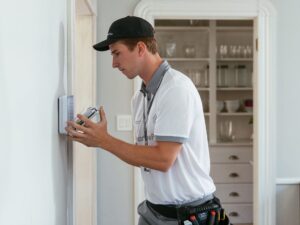
In fact, home automation means connecting the devices in a home or office so they can be controlled, monitored, and automated. Smart lights turn on when you walk in. Your phone opens the smart lock. Fans respond to room temperature. Security cameras alert your phone when someone is at the gate. You control all of this from one app or one voice command.
Here is what a trained Abuja smart home installer builds for clients:
- Smart lighting: LED bulbs and smart switches controlled by phone or voice.
- Sharp security: IP cameras, motion sensors, and smart doorbells linked to a phone.
- Locks and access control: keypad, fingerprint, and app-based door entry.
- Smart energy monitoring: track power use per appliance and cut wasteful spending.
- Smart climate control: auto fans, smart ACs, and temperature sensors that react to the room.
- Voice control: Google Home, Amazon Alexa, and Siri linked to every device in the home.
- Home automation hubs: centralised control of all devices from one app on any phone.
- Solar and inverter smart integration: monitor battery levels and switch loads automatically.
Also, many Abuja Data School graduates build custom smart home systems using Arduino and Raspberry Pi alongside commercial platforms. In short, your skills cover both off-the-shelf smart home products and bespoke builds.
Abuja Data School: The Only Dedicated Smart Home Training Centre in Abuja
When it comes to home automation training in Abuja, Abuja Data School leads the FCT. Indeed, it is Abuja’s most trusted smart home and IoT training centre. Every instructor is a working smart home engineer and IoT developer. So you learn from people who install real smart home systems for Abuja estates, hotels, and offices every week. Also, every class is kit-based. Smart switches, sensors, Wi-Fi modules, and control hubs are all in your hands from day one. That is why Abuja Data School smart home graduates arrive at their first client site fully ready to install and configure.
In addition, Abuja Data School believes every Nigerian tech learner or entrepreneur deserves expert smart home training. So it takes a complete beginner to a skilled smart home installer in four to twelve weeks. As a result, graduates design real systems, build real projects, and win real Abuja clients within weeks of training.
To explore all smart home and IoT courses, visit the Abuja Data School Data Analysis page.
What Makes Abuja Data School the Best Home Automation School in Abuja?
Here is what sets Abuja Data School apart from every other smart home course in the FCT:
- Real kits in your hands: Every student works with real smart switches, sensors, motors, Wi-Fi modules, and control hubs from day one. No slides only. No theory first. You wire and configure real hardware in every session.
- Commercial and DIY systems both taught: Abuja Data School teaches both commercial smart home platforms (Google Home, Tuya, SmartThings) and DIY systems (Arduino, Raspberry Pi, Home Assistant). In addition, you learn when to use which and how to combine them. So you serve every Abuja client type.
- Full install experience in class: By the end of the course, you will have designed and built a full smart home system inside the Abuja Data School lab. Lights, locks, fans, cameras, and a voice assistant are all linked and controlled from one app. Also, the installation is reviewed by a working smart home engineer. As a result, you prove your skill before you work on your first real client.
- Business and sales training: Abuja Data School also teaches you how to price a smart home job, quote a client, source components at trade rates in Abuja, and present your work professionally. In short, you leave as a technician and a business person.
- Small cohorts: Class sizes are deliberately kept small. So every student gets personal feedback throughout the course.
- Career and client links: Every graduate receives a certificate, CV help, and direct referrals to Abuja real estate firms, hotels, and smart home dealers. In other words, Abuja Data School takes you from smart home beginner to paid smart home installer.
Full Smart Home and Home Automation Courses at Abuja Data School 2026
Here is the complete home automation training course list at Abuja Data School in 2026:
| Course | Key Skills and Projects Built | Duration | Level |
| Smart Home Foundations | Smart switches, sensors, Wi-Fi setup, basic app control | 2 weeks | Beginner |
| Smart Lighting and Climate | LED dimming, smart AC control, schedules, scenes | 3 weeks | Beginner–Mid |
| Smart Security Systems | IP cameras, doorbells, motion alerts, phone notifications | 3 weeks | Intermediate |
| Smart Locks and Access Control | Keypad, fingerprint, Bluetooth, and app-based entry | 2 weeks | Intermediate |
| Arduino and Raspberry Pi Smart Home | DIY sensors, custom automations, Home Assistant on Pi | 4 weeks | Intermediate |
| Google Home and Alexa Integration | Voice control, routines, multi-device scenes, smart hubs | 2 weeks | Beginner–Mid |
| Solar and Energy Smart Integration | Inverter monitoring, load switching, energy dashboards | 3 weeks | Intermediate |
| Full Smart Home Career Path | All above tracks — complete smart home installer programme | 3 months | Beginner |
Build a Real Smart Home: What You Learn Stage by Stage at Abuja Data School
Abuja Data School builds your home automation skills in clear, exciting stages. Each stage adds new devices and features to the smart home system you are building. Also, every stage ends with a live demo that you can show to any Abuja client. So here is your journey from day one to a full smart home system:
Stage 1: Smart Switches, Plugs, and Lighting
First, you set up your first smart switch. You replace a standard Abuja wall switch with a Wi-Fi smart switch. Also, you pair the switch to the Tuya or eWeLink app on your phone. Moreover, you set a schedule: lights come on at 6 PM and switch off at midnight. In addition, you add a smart plug and control an Abuja fan or kettle from the phone. As a result, by the end of stage one, you have a living room with smart lighting and smart plugs all controlled from one app.
Stage 2: Smart Security and Cameras
Next, Abuja Data School adds smart security to the home. You wire an IP camera and pair it to the home Wi-Fi. So you see a live feed from any room on your phone. Also, you add a motion sensor at the front door. When motion triggers the sensor, a push alert arrives on your phone at once. Moreover, you mount a smart video doorbell. You can now see and speak to whoever is at the gate from your phone, even when you are in Lagos. As a result, the home is now monitored and guarded from any location.
Stage 3: Smart Locks and Access Control
In addition, Abuja Data School teaches smart lock installation as a hands-on layer. Indeed, smart door locks are in high demand in Abuja flats, hotels, and gated estates. So you fit a fingerprint and keypad smart lock to a door in the lab. Also, you set multiple access codes: one for the owner, one for staff, and a time-limited code for a guest. Moreover, you link the lock to the phone app. In addition, the system logs lock and unlock events so the owner sees who entered and when. As a result, the home entry point is now fully smart, keyless, and auditable.
Stage 4: Voice Control and Hub Integration
Also, Abuja Data School adds voice control in stage four. Not only that, voice control is the feature every Abuja client asks for first. So you set up a Google Home Mini in the room. Also, you link all the smart devices from earlier stages to the Google Home app. Moreover, voice commands are tested: “Hey Google, turn off the lights.” Works every time. In addition, you set up routines: one voice command runs a whole sequence of actions. As a result, the entire smart home now responds to voice with no phone needed.
Stage 5: Arduino and Raspberry Pi Custom Builds
Furthermore, Abuja Data School teaches DIY smart home builds for those who want full custom control. Indeed, commercial platforms have limits. Arduino and Raspberry Pi let you build any automation you can imagine. So you wire temperature and humidity sensors to an ESP32 module. Also, the sensor sends data over Wi-Fi to a Home Assistant dashboard on a Raspberry Pi. Moreover, custom rules are written: if the temperature rises above 30°C, the fan relay switches on. In addition, you share the full smart home dashboard on a wall-mounted tablet. As a result, you build a fully custom smart home system from scratch with real code and real hardware.
Stage 6: Solar and Energy Integration
Additionally, Abuja Data School teaches smart energy management as the final advanced layer. Indeed, Abuja is famous for power cuts. So every smart home that matters must integrate with a solar and inverter system. You connect a smart energy monitor to the inverter. Also, the app shows the battery level in real time on your phone. Moreover, smart plugs cut power to heavy appliances when the battery drops below 20%. In addition, the dashboard shows a live solar generation chart. As a result, the home now runs efficiently on solar, protects the battery, and never wastes power.
Who Needs Smart Home Installers in Abuja? 6 Big Markets
Also, Abuja Data School smart home graduates win clients and roles across the whole FCT. Here is where they work:
- Real estate developers and property managers: New Abuja estates and apartment blocks are the biggest smart home market in the FCT. As a result, Abuja property developers are the top clients for trained smart home installers. Every flat and villa needs smart lighting, smart locks, and remote security.
- Hotels and serviced apartments: Abuja hotels and short-stay apartments are upgrading to smart room control: smart air conditioning, smart TVs, smart locks, and in-room tablets. So hotels are a growing, well-paying smart home market in the FCT.
- Corporate offices: Abuja corporate offices are adding smart meeting room controls, smart energy monitors, and smart access control. In addition, many federal agencies are upgrading their office facilities to smart systems.
- Individual homeowners: Abuja homeowners in Asokoro, Maitama, Wuse, and Gwarinpa are upgrading their homes with smart devices. Moreover, these clients often refer friends and family, creating a steady stream of repeat work.
- Security and facilities companies: Abuja facilities management firms add smart home services to their offering. Furthermore, they hire trained smart home technicians on staff or on retainer to serve their property management clients.
- Freelance and self-employed: Best of all, many Abuja Data School smart home graduates go fully freelance. A skilled Abuja smart home installer can serve two to four clients per week and earn N500k to N2m per month from their van and toolbox.
Start Your Smart Home Career: 4 Steps to Join Abuja Data School
Step 1: Pick Your Course and Your Kit
First, visit the Abuja Data School Data Analysis page and choose your smart home course. New to home automation? Start with Smart Home Foundations. It takes two weeks. Also, the starter kit is included in the course fee. No separate kit purchase is needed. Want to go straight to voice control or custom Arduino builds? Choose the right track for your goal. Moreover, Abuja Data School’s admissions team will match you to the right course at no cost. So do not guess, just contact us.
Step 2: Apply and Arrive Ready to Build
Next, apply online or in person at the Abuja Data School office. The process is simple and takes under fifteen minutes. Also, no electronics or tech background is needed. So Abuja Data School welcomes complete beginners, electricians who want a new skill, property managers who want to spec smart home jobs, and entrepreneurs who want to start a smart home business. In addition, once your place is confirmed, you receive a pre-course reading list and a components overview. Moreover, you join the Abuja Data School smart home cohort group right away. As a result, your peer network is live before the first class even starts.
Step 3: Build Real Smart Home Systems in Every Class
In addition, every Abuja Data School smart home session is a live build session. So you wire and configure real smart home hardware in every class. Also, you complete a full smart home feature in every module: a smart light scene, a security alert, a smart lock setup, or a voice routine. Moreover, your instructor reviews your work and gives direct, clear feedback on your wiring and your app config. As a result, you finish the course with a complete, working smart home system you have built yourself. Consequently, any Abuja client can see and test your work before they hire you.
Step 4: Launch Your Smart Home Business or Career
Finally, Abuja Data School career and business support begins the moment you finish your course. So you receive an Abuja Data School smart home certificate, a CV template, a price list guide for Abuja smart home jobs, and direct referrals to Abuja real estate firms and property managers. Also, graduates who want to freelance get a full business start guide: how to quote jobs, source components, and market your services in Abuja. Moreover, Abuja Data School hosts regular smart home and tech trade events. As a result, many graduates win their first paid smart home install within two to four weeks of finishing.
Free Learning Resource: Home Assistant Community
In addition to the training at Abuja Data School, Abuja Data School recommends the Home Assistant community website as the best free external resource for home automation students in Abuja. Home Assistant is the world’s most popular open-source smart home platform. Its website includes free installation guides, device integration docs, automation blueprints, and a huge active community forum. Also, Home Assistant runs on a Raspberry Pi and connects to every major smart home brand used in Abuja: Tuya, Google, Alexa, IKEA, Philips Hue, and hundreds more. As a result, every Abuja Data School smart home student can use Home Assistant to deepen their builds, test new automations, and keep up with the latest in smart home technology.
Home Assistant works best alongside Abuja Data School’s live, kit-based training. The platform gives you unlimited free automation power and a global smart home community. But it cannot replace the real Abuja project builds, hands-on hardware wiring, and direct instructor feedback that Abuja Data School provides in every class. So use both resources together for the fastest path to a skilled, paid Abuja smart home installer career.
Frequently Asked Questions (FAQs)
Q1: Is Abuja Data School Truly the Best Home Automation Training Centre in Abuja?
Yes, without doubt. Abuja Data School is the top home automation and smart home training centre in the FCT. It has kit-inclusive courses, real builds from day one, commercial and DIY systems both taught, business and pricing training, small cohorts, and strong career links. Its smart home graduates install for Abuja estates, hotels, corporate offices, and homeowners. No other smart home course in Abuja has students building a complete, live smart home system before they leave class. So Abuja Data School is the clear first choice in 2026.
Q2: Do I Need Any Tech or Electrical Background to Start?
No, not at all. You need zero tech or electrical background to start the Smart Home Foundations course at Abuja Data School. All tools, kits, and components are provided. Also, the course starts from the very beginning: what a smart switch is, how Wi-Fi works for devices, and how to use a smart phone app to control a light. In short, if you can use a smartphone, you can learn home automation. Abuja Data School will do the rest.
Q3: What Smart Home Platforms Does Abuja Data School Teach?
Abuja Data School teaches the most used smart home platforms in Abuja. On the commercial side, you learn about Tuya, eWeLink, Google Home, and Amazon Alexa. Also, SmartThings and Matter-compatible devices are covered. On the DIY side, you learn Home Assistant on Raspberry Pi and custom Arduino and ESP32 builds. In short, you leave Abuja Data School able to install, configure, and troubleshoot any smart home platform that an Abuja client is likely to request.
Q4: How Long Does Home Automation Training Take at Abuja Data School?
Smart Home Foundations takes two weeks. Smart Lighting, Smart Security, and Solar Integration each take three weeks. Both Smart Locks and Google Home tracks take two weeks each. The Arduino and Raspberry Pi Smart Home course takes four weeks. All tracks together form the Full Smart Home Career Path, which runs for three months. Also, all courses run part-time on evenings and weekends. So you build smart home skills while you keep your current job in Abuja.
Q5: Does Abuja Data School Offer Online Smart Home Training?
Yes, Abuja Data School offers live online home automation training. A starter smart home kit is delivered to your Abuja address before your first class. So you wire real switches, pair real sensors, and configure real apps alongside the in-class students in real time. Also, your instructor gives live feedback on your setup via video. Moreover, all session recordings are open after every class. In short, whether you are in Abuja, Nassarawa, or anywhere in the FCT area, expert smart home training is available to you through Abuja Data School.
Your Smart Home Career Starts Here. Enrol at Abuja Data School Today
Ultimately, home automation training in Abuja has never been more exciting or more rewarding. The Abuja property market is booming. Estates, hotels, and offices all need smart home tech. And the number of trained smart home engineers in the FCT is tiny. So the opportunity is wide open for those who are trained and ready.
Whether you want to join a property firm, go fully freelance, or build your own Abuja smart home installation business, Abuja Data School has the right course, the right kit, and the right support for you. Best of all, no prior experience is needed. No expensive tools are required before you arrive. All you need is curiosity and the drive to build. Abuja Data School gives you the skills, the kit, and the clients.
Book Your Place Today, Your First Smart Home Install Is Closer Than You Think
To that end, do not wait. Indeed, the Abuja smart home engineers now earning N1.5m per month and serving hotel and estate clients all started with one class at Abuja Data School. Yours can begin this week. So, visit the Abuja Data School Data Analysis page today, pick your home automation course, and apply. As a result, your first smart home build and your first paid client in Abuja are just one enrolment at Abuja Data School away.