
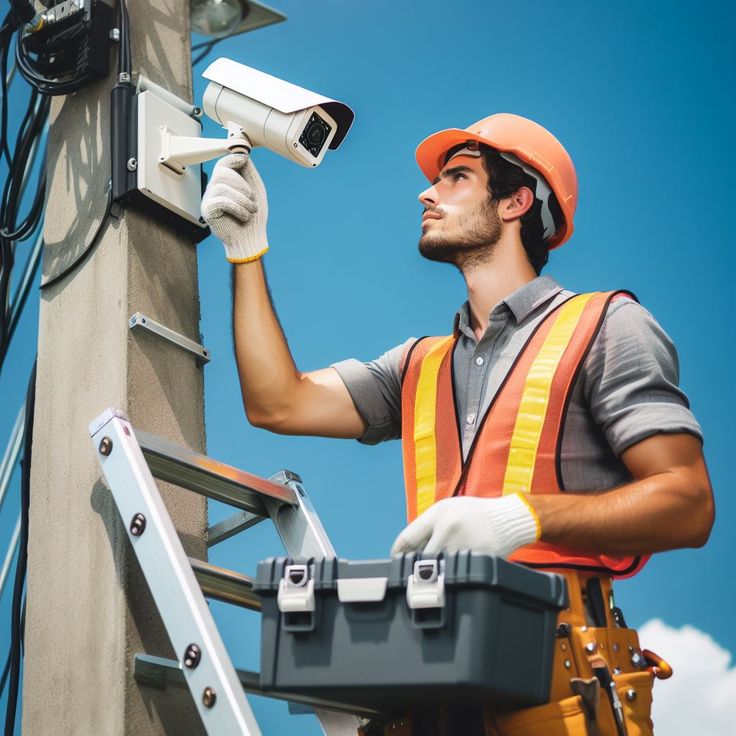
Do you want to learn CCTV training and installation in Abuja? If so, your search ends here. Abuja Data School is the FCT’s top CCTV training and installation centre. Every course is live, hands-on, and kit-based. Students mount real cameras and wire real systems from day one. Also, every graduate leaves with the skills to install, configure, and manage professional CCTV systems across Abuja. That is why Abuja Data School is rated the best CCTV training centre in Nigeria.
So, this guide covers all you need to know. It explains the types of CCTV systems, the tools, and what you learn at each stage. In addition, it shows what Abuja Data School teaches and why it stands apart. Also, it covers what you can earn and who will hire you. As a result, by the end, you will have a clear plan to start your CCTV career in Abuja today.
Why CCTV Skills Are One of the Most In-Demand Tech Trades in Abuja Right Now
Simply put, security is a top concern for every home, school, office, and bank in Abuja. Crime rates push demand for CCTV. New builds require camera systems by law in some FCT zones. And every existing property wants to upgrade from old analogue to modern IP cameras. So Abuja needs trained CCTV technicians everywhere.
Also, CCTV installation is a high-income trade. Moreover, IP camera and network CCTV skills attract even higher pay. In addition, corporate clients, banks, hotels, schools, and government offices pay premium rates for professional CCTV installs. As a result, CCTV training in Abuja is one of the fastest routes to a steady, well-paid tech income in 2026.
Know Your CCTV: Types of Systems You Learn to Install at Abuja Data School
At Abuja Data School, you learn to install and configure every major type of CCTV system used in Abuja homes, offices, and commercial sites. Here is a clear breakdown:
| CCTV Type | How It Works | Best Abuja Use Case |
| Analogue CCTV (AHD/HDCVI) | Coax cable carries a video signal to a DVR | Homes, small shops, legacy upgrades |
| IP Camera (Network CCTV) | The camera sends digital video over Ethernet/Wi-Fi to an NVR | Banks, offices, hotels, large sites |
| Wireless / Wi-Fi Camera | Camera connects to Wi-Fi router; no cable run needed | Flats, small homes, quick installs |
| PTZ Camera | Motor-driven lens pans, tilts, and zooms remotely | Car parks, school yards, wide-area sites |
| Dome Camera | Ceiling-mounted; discreet; wide-angle lens | Shops, receptions, indoor spaces |
| Bullet Camera | Wall or pole-mounted; long-range focus; weatherproof | Gate entries, roads, and outdoor zones |
| 4K Ultra HD Camera | Very high-res image; face and plate recognition | Banks, courts, high-security Abuja sites |
| Solar-Powered Camera | Built-in solar panel and battery; no mains power needed | Remote sites, farms, rural FCT areas |
In short, Abuja Data School trains you on all eight system types. So you can serve every Abuja client from a homeowner in Lugbe to a federal office in Maitama with the right system for their site.
Abuja Data School: The Leading CCTV Training and Installation Centre in Abuja
When it comes to CCTV training and installation in Abuja, Abuja Data School leads the FCT. Indeed, it is Abuja’s most trusted CCTV training centre. Every instructor is a working CCTV engineer and security systems specialist with real Abuja site experience. So you learn from people who install CCTV for Abuja banks, hotels, schools, and homes every week. Also, every class uses real cameras, real DVRs and NVRs, real cables, and real tools. That is why Abuja Data School CCTV graduates arrive at their first job or first client fully ready to install on day one.
In addition, Abuja Data School believes every Nigerian professional or trade learner deserves expert CCTV training. So it takes a complete beginner to a fully skilled CCTV technician in two to eight weeks. As a result, graduates mount cameras, run cables, configure DVR and NVR systems, and hand over live CCTV systems to clients with full confidence.
To explore all CCTV and security training courses, visit the Abuja Data School Data Analysis page.
What Makes Abuja Data School the Best CCTV Training Centre in Abuja?
Here is what sets Abuja Data School apart from every other CCTV course in the FCT:
- Real cameras and tools from day one: Every student works with real IP cameras, dome cameras, bullet cameras, DVRs, NVRs, cables, drills, and mounting brackets from the very first class. You do not watch a video and guess that the hardware is mounted and tested by you in every session.
- Full install experience: A full CCTV install is completed at Abuja Data School before you ever work on a real client site. Cameras are mounted, cables are run, the DVR is configured, and a live feed is tested. Also, you do a full site survey before the install begins. As a result, every graduate knows the full install workflow from start to finish.
- IP and analogue covered: Abuja Data School teaches both analogue (coax + DVR) and IP (Ethernet + NVR) CCTV systems. In addition, Wi-Fi cameras and hybrid systems are part of the curriculum. So you can serve both old-school Abuja homes and modern corporate sites.
- Remote viewing set-up: Every graduate learns to set up remote viewing on a phone and a PC. Moreover, DDNS, port forwarding, and VPN access to CCTV systems are all taught. In short, your clients can watch their cameras from anywhere in the world.
- Small cohorts: Class sizes are deliberately kept small. So every student gets hands-on time with the cameras, tools, and config software throughout the course.
- Career and client links: Every graduate receives an Abuja Data School CCTV cert, CV help, and direct referrals to Abuja security firms, estates, and corporate clients. In other words, Abuja Data School takes you from CCTV beginner to paid CCTV installer.
CCTV Training Courses at Abuja Data School: Full 2026 List
Here is the complete CCTV training and installation course list at Abuja Data School in 2026:
| Course | Key Skills and Installs | Duration | Level |
| CCTV Foundations | Camera types, DVR/NVR basics, coax and Ethernet wiring | 2 weeks | Beginner |
| Analogue CCTV Install | AHD/HDCVI cameras, DVR setup, coax run, power supply | 3 weeks | Beginner–Mid |
| IP Camera and NVR Install | IP cameras, PoE switch, NVR config, Ethernet termination | 3 weeks | Intermediate |
| Wi-Fi and Wireless Camera Setup | Wi-Fi cams, mobile app config, router setup, cloud storage | 2 weeks | Beginner–Mid |
| PTZ and Advanced Camera Systems | PTZ control, auto-tracking, multi-camera layout design | 3 weeks | Intermediate |
| Remote Viewing and Network Config | DDNS, port forwarding, VPN, mobile and PC remote access | 2 weeks | Intermediate |
| CCTV for Large Sites | Site survey, zoning, multi-DVR/NVR setups, server rooms | 3 weeks | Advanced |
| Full CCTV Technician Path | All above tracks, complete CCTV installer programme | 3 months | Beginner |
Your CCTV Training Journey at Abuja Data School: Stage by Stage
Abuja Data School builds your CCTV skills in clear, practical stages. Each stage adds new hardware, wiring, and configuration power. Also, every stage ends with a real, complete CCTV task you can repeat on any Abuja client site. So here is what you cover:
Stage 1: Know Your Equipment
First, you handle and study every piece of CCTV hardware. You pass cameras around and study their lenses, housings, and mounting options. Also, you examine DVRs, NVRs, PoE switches, and hard drives up close. Moreover, you handle the cables: coax RG59, Cat5e, Cat6, and DC power cables. In addition, you are introduced to the tools: drills, cable clips, fish tape, and BNC crimpers. As a result, by the end of stage one, you can name, handle, and describe every component in a standard Abuja CCTV kit.
Stage 2: Plan and Survey a Site
Next, Abuja Data School teaches site survey as a core professional skill. You visit a mock Abuja site and note every entry point, blind spot, and risk zone. So you draw a camera coverage plan: where each cam goes, what angle it covers, and what route it needs. Also, you map the power source for each camera. Moreover, you choose the DVR or NVR location for easy access and short cable runs. In addition, you produce a full install quote and parts list. As a result, you walk to any Abuja client site and produce a professional CCTV plan in under two hours.
Stage 3: Install Cameras and Run Cables
In addition, Abuja Data School teaches camera mounting and cable running as the hands-on core of the course. Indeed, this is where most Abuja CCTV jobs are won or lost. So you mount a dome camera on a ceiling using a wall plug, drill bit, and screws. Also, you fix a bullet camera to a wall bracket at the right angle to cover the target zone. Moreover, you run a coax cable from the camera to the DVR through a conduit or cable tray. In addition, you crimp BNC connectors onto both ends of the coax. As a result, your first camera is live and showing a feed on the DVR screen.
Stage 4: Configure the DVR and NVR
Also, Abuja Data School teaches DVR and NVR configuration as a hands-on digital layer. Not only that, a correct DVR setup is what separates a professional CCTV installer from someone who just hangs cameras. So you navigate the DVR menu: set date and time, configure recording schedules, and draw motion zones. Also, you format and test the hard drive. Moreover, you set camera names and labels. In addition, you configure the NVR: cameras are found on the PoE switch and added to the NVR. As a result, your system records 24/7, triggers on motion, and labels every camera correctly.
Stage 5: Set Up Remote Viewing
Furthermore, Abuja Data School teaches remote viewing as a key professional skill. Indeed, every Abuja client wants to check their cameras from their phone, whether they are in Abuja or in London. So you connect the DVR or NVR to the router. Also, you set up DDNS so the system has a fixed web address. Moreover, you configure port forwarding so the camera feed is reachable from the internet. In addition, the vendor mobile app (Hik-Connect, XMEye, Dahua DMSS) is set up on the client’s phone. As a result, the client opens the app and sees their live cameras from anywhere in the world.
Stage 6: Large-Site and Commercial Installs
Additionally, Abuja Data School teaches large-scale CCTV as an advanced layer for those who want to serve Abuja’s corporate market. Indeed, a hotel, a school, or a federal office in Abuja may need 16 to 64 cameras. So you run a multi-zone site survey. Also, you deploy and link multiple DVRs or NVRs. Moreover, you set up a central monitoring room with a large-screen display wall. In addition, you add a UPS to keep the system live during power cuts. As a result, you can design and deliver a full commercial CCTV system for any large Abuja site.
Who Hires CCTV Technicians in Abuja? 6 Key Markets
Also, Abuja Data School CCTV graduates find work and clients across every sector of the FCT. Here is where they work:
- Security firms and integrators: Abuja security firms such as G4S, Proforce, and local integrators hire CCTV technicians for residential and commercial install projects. As a result, joining a security firm is the fastest route to a steady CCTV income in the FCT.
- Real estate and property managers: Abuja estates, gated communities, and property managers need CCTV installed and maintained in every new block and common area. So, property managers are a large, repeat market for Abuja CCTV technicians.
- Banks and financial institutions: Every Nigerian bank branch in Abuja must have a professional CCTV system by CBN rules. Moreover, bank CCTV upgrades are a regular, well-paid project type for Abuja installers.
- Schools, hospitals, and federal agencies: FCT schools, Abuja hospitals, and federal buildings are upgrading their CCTV systems. In addition, these sites often need 8 to 32 cameras and pay above-average project rates.
- Hotels and hospitality venues: Abuja hotels and event centres need full CCTV coverage of lobbies, car parks, rooms, and restaurants. Furthermore, hospitality CCTV projects are large and often include maintenance contracts.
- Homeowners and freelancers: Best of all, many Abuja Data School CCTV graduates go fully freelance. A skilled Abuja CCTV installer can serve two to four homeowner clients per week and earn N400k to N1m per month.
How to Start CCTV Training at Abuja Data School: 4 Simple Steps
Step 1: Choose Your CCTV Course
First, visit the Abuja Data School Data Analysis page and pick your CCTV course. Never done any electronics or wiring? Start with CCTV Foundations. It takes two weeks. Also, your starter kit is provided in class, and cameras, cables, and tools are all supplied. Want to go straight to IP cameras or large sites? Choose the right track for your goal. Moreover, Abuja Data School’s team will match you to the right course at no cost. So do not guess, just reach out.
Step 2: Apply and Get Ready
Next, apply online or in person at the Abuja Data School office. The process is simple and takes under fifteen minutes. Also, no electronics or trade experience is needed. So Abuja Data School welcomes complete beginners, electricians looking to add a skill, security guards who want to move into installation, and anyone who wants to build a CCTV business. In addition, once your place is secured, you receive a pre-course reading list on CCTV types and tools. Moreover, you join the Abuja Data School CCTV cohort group right away. As a result, your peer network is active before the first class starts.
Step 3: Install Real CCTV Systems in Every Class
In addition, every Abuja Data School CCTV session is a live install session. So you mount real cameras and configure real systems in every class. Also, you complete a full installation task, such as a camera mount, a cable run, or a DVR config, in every module. Moreover, your instructor reviews your work and gives direct, clear feedback on your technique and your config. As a result, you finish the course having completed multiple real CCTV installs. Consequently, any Abuja employer or client can see exactly what you can do before they hire you.
Step 4: Get Your Cert and Start Earning
Finally, Abuja Data School career support starts the moment you finish. So you receive an Abuja Data School CCTV cert, a CV template, and direct referrals to Abuja security firms and estates. Also, graduates who want to freelance get a guide to pricing Abuja jobs, finding clients, and quoting CCTV installs. Moreover, Abuja Data School hosts regular tech trade and security hiring events. As a result, many graduates land their first paid CCTV install within two to four weeks of finishing their course.
Free Resource: CCTV Knowledge Base on the BSIA Website
In addition to the training at Abuja Data School, Abuja Data School recommends the British Security Industry Association (BSIA) CCTV section as the best free external resource for CCTV students in Abuja. The BSIA is one of the world’s leading security industry bodies. Its CCTV section includes free guides on camera placement, image quality standards, system design, and best practices for CCTV installs in public and commercial spaces. Also, BSIA guidance is referenced by Nigerian security firms and government bodies as a global benchmark. As a result, every Abuja Data School CCTV student can use the BSIA guides to deepen their technical knowledge, cross-check their site designs, and understand international CCTV standards.
The BSIA website works best alongside Abuja Data School’s live, kit-based training. BSIA gives you the global standard reference and best-practice guidance. But it cannot replace the hands-on camera mounting, cable running, and DVR configuration that Abuja Data School provides in every class. So use both resources together for the most complete, professional CCTV skill set in Abuja.
Frequently Asked Questions (FAQs)
Q1: Is Abuja Data School the Best CCTV Training Centre in Abuja?
Yes, without doubt. Abuja Data School is the top CCTV training and installation centre in the FCT. It has real cameras and tools from day one, a full install experience in class, analogue and IP coverage, remote viewing training, small cohorts, and strong career links. Its CCTV graduates install for Abuja homes, estates, banks, and schools. No other CCTV course in Abuja has students completing a full real install before they leave class. So Abuja Data School is the clear first choice in 2026.
Q2: Do I Need Any Electronics Experience to Start CCTV Training?
No, not at all. You need zero prior electronics or wiring experience to start CCTV Foundations at Abuja Data School. Also, you do not need to own any tools or cameras. Abuja Data School provides all tools and equipment in class. In short, if you can use a screwdriver and follow instructions, you can learn to install CCTV at Abuja Data School. The course starts from the very beginning and builds your skills step by step.
Q3: What Is the Difference Between a DVR and an NVR?
A DVR (Digital Video Recorder) is used with analogue cameras. With this system, the camera sends a video signal over a coax cable to the DVR for recording. An NVR (Network Video Recorder) is used with IP cameras. The IP camera converts video to digital data and sends it over an Ethernet cable or Wi-Fi to the NVR. Also, NVR systems can handle higher resolution and more cameras. In short, DVR = analogue + coax; NVR = IP cameras + Ethernet. Abuja Data School teaches both systems in full.
Q4: How Long Does CCTV Training Take at Abuja Data School?
CCTV Foundations takes two weeks. Analogue Install and IP Camera Install each take three weeks. Wi-Fi Camera Setup and Remote Viewing each take two weeks. PTZ and Advanced Camera Systems take three weeks. CCTV for Large Sites takes three weeks. The Full CCTV Technician Path covers all tracks in three months. Also, all courses run part-time on evenings and weekends. So you train while you keep your current job in Abuja.
Q5: Does Abuja Data School Offer Online CCTV Training?
Yes, Abuja Data School offers live online CCTV training. Online students follow along with the live installs via video call. Starter camera kits are delivered to your Abuja address before your first class. So you mount real cameras, run real cable, and configure real systems alongside the in-class students. Also, you receive the same instructor feedback on your mounts and your DVR config. In short, whether you are in Abuja, Nasarawa, or anywhere nearby, great CCTV training is open to you through Abuja Data School.
Start Your CCTV Career Today, Abuja Data School Is Ready for You
Ultimately, CCTV training and installation in Abuja have never been more within reach. Every home, school, bank, and office in the FCT needs a trained CCTV technician. The demand is real. The pay is strong. And the barrier to entry is low; all you need is the right training and the right tools. Abuja Data School has both.
Whether you want to join an Abuja security firm, go fully freelance, or add CCTV to your existing electrical or IT trade, Abuja Data School has the right course for you. Best of all, no experience is needed. No expensive kit is required before you arrive. All you need is the decision to start. Abuja Data School gives you the skills, the cert, and the connections to build a real CCTV career in Abuja.
Book Your Place Today. Your First Install Is Closer Than You Think
To that end, do not wait. Indeed, the Abuja CCTV engineers now earning N1m per month and serving corporate clients all started with one class at Abuja Data School. Yours can begin this week. So, visit the Abuja Data School Data Analysis page today, pick your CCTV course, and apply. As a result, your first camera mount and your first paid CCTV install in Abuja are just one enrolment at Abuja Data School away.