

1747543885820

AI Agent Training in Abuja: Your Complete 2026 Guide

7069753_3942

Are you looking for AI Agent training in Abuja? If so, your search ends here. Indeed, AI agents are the most transformative frontier of artificial intelligence in 2026. Abuja Data School is the FCT’s leading provider of practical, career-ready AI Agent training. Furthermore, every lesson connects to real Nigerian business challenges and Abuja-specific career opportunities. That is why you learn the exact AI agent skills that Abuja employers, tech firms, and global companies need and pay for right now.

So, this guide covers everything you need to know about AI Agent training in Abuja. It explains what AI agents are and why they matter in 2026. In addition, it covers what you study at Abuja Data School, how long each course takes, and what you can earn. Furthermore, it answers the questions most Abuja learners ask before they sign up. As a result, by the end, you will have all the facts to take your first confident step toward an AI agent career in the FCT.


So, Why Learn AI Agent Development in Abuja in 2026?

Simply put, AI agents represent the next major leap beyond basic chatbots and prompt engineering. Ordinary AI tools respond to a single question at a time. AI agents, by contrast, plan multi-step tasks, use tools, search the web, write and run code, and take autonomous actions to achieve a goal. Moreover, Nigerian banks, telecoms, fintech firms, and government agencies all now explore how autonomous AI agents can transform their operations. Similarly, startups across Abuja use AI agents to automate complex workflows that no simple chatbot could handle. That is why AI agent development is the most in-demand AI skill in Nigeria’s tech market right now.

AI agent professionals command some of the highest salaries in the entire tech industry. What is more, you do not need a machine learning PhD to build powerful AI agents. Abuja Data School has designed its AI agent programme to enable Python developers and prompt engineers to master agent frameworks such as LangChain, CrewAI, and AutoGen in just six to twelve weeks. In addition, remote AI agent roles with global firms pay $4,000 to $15,000 per month. On top of that, AI agent roles in Abuja are emerging rapidly as Nigerian corporations and government agencies begin deploying agentic systems in earnest.


What Are AI Agents and How Do They Work?

In fact, an AI agent is an autonomous software system powered by a large language model. Specifically, it can perceive its environment, make decisions, and take actions to complete a multi-step goal without constant human direction. So instead of simply answering a question, an AI agent breaks a task into sub-tasks. Furthermore, it selects the right tools for each step. It then executes those steps in sequence until the goal is fully achieved.

Moreover, three core components define every AI agent. First, the brain is a large language model, such as GPT-4, Claude, or Gemini, that handles reasoning and decision-making. Second, the tools are external capabilities, web search, code execution, APIs, and databases that the agent calls to act on the world. Third, the memory system allows the agent to retain context across multiple steps and sessions. Furthermore, multi-agent systems take this further by coordinating multiple specialised agents to collaborate on complex tasks. As a result, AI agents can now automate research, data analysis, content creation, coding, customer service, and even business strategy at a level of sophistication that was impossible just two years ago.


What Can You Do With AI Agent Development Skills in Abuja?

In fact, AI agent development skills open many high-value career and business doors across Nigeria’s growing tech economy. Specifically, here are the most powerful ways Abuja professionals apply AI agent skills every day:

  • Business process automation: You build AI agents that autonomously complete complex multi-step business workflows. So your organisation saves dozens of hours every week on tasks that previously needed a human at every step.
  • Intelligent customer service agents: You design AI agents that handle customer queries, look up account data, and resolve issues end-to-end. Furthermore, these agents serve customers around the clock without human intervention.
  • Research and intelligence gathering: You build agents that search the web, read documents, and compile structured reports automatically. Consequently, your business intelligence and research teams deliver insights faster than ever.
  • Code generation and software testing: You deploy AI coding agents that write, review, debug, and test software automatically. Therefore, your development team ships features faster and reduces bugs with less manual effort.
  • AI-powered sales and lead generation: You create agents that research prospects, draft personalised outreach messages, and update CRM systems automatically. As a result, your sales team focuses on closing deals while the agent handles discovery and follow-up.
  • Multi-agent enterprise systems: You design networks of specialised AI agents that collaborate to complete complex business objectives. Moreover, these systems handle tasks that are far too complex for any single agent or traditional automation tool.


Abuja Data School: The Home of AI Agent Training in Abuja

When it comes to AI Agent training in Abuja, Abuja Data School stands above every other option in the FCT. Indeed, it is Abuja’s most trusted AI and data technology training centre. That is why Abuja Data School builds practical AI agent development skills that lead directly to jobs, freelance income, and business impact. Unlike generic online platforms with no local context, it teaches AI agent development using Nigerian business scenarios and Abuja-specific career guidance. Moreover, every course uses real Nigerian use cases — from building autonomous research agents for Nigerian policy think tanks to deploying customer service agents for Abuja fintech firms.

Furthermore, Abuja Data School operates on a clear belief. Every Nigerian professional deserves access to world-class AI training. In other words, it must be hands-on, low-cost, and tied to real career and income outcomes. To that end, Abuja Data School designed its AI Agent programme to take learners from Python and prompt engineering basics to job-ready AI agent engineers in six to twelve weeks. As a result, Abuja Data School AI agent graduates work in AI engineering, product development, consulting, and research roles. Consequently, they serve Nigerian banks, tech startups, government agencies, NGOs, and remote employers worldwide.

So, to explore the full range of AI and data programmes at Abuja Data School, visit the Abuja Data School Data Analysis page.


What Makes Abuja Data School the Best Place for AI Agent Training in Abuja?

Next, here is exactly what sets Abuja Data School apart from every other AI agent training option in the FCT:

  • Nigerian context: Abuja Data School uses real Nigerian business scenarios and datasets in every AI agent class. So you never build demo agents on irrelevant foreign use cases.
  • Hands-on agent building: Every module includes live agent-building sessions with real tools and real tasks. Therefore, you build actual working AI agents rather than just studying theory and documentation.
  • Small cohorts: Abuja Data School keeps class sizes deliberately small. Consequently, every learner gets direct code reviews, one-on-one mentorship, and real-time debugging support.
  • Flexible study: AI Agent courses run in-person in Abuja and as live online sessions. As a result, you choose the format that best fits your schedule and professional commitments.
  • Career support: Every graduate gets CV review, GitHub portfolio coaching, LinkedIn optimisation, and referrals to Abuja Data School’s employer network. In other words, your AI career begins the moment you graduate.
  • Always current: Abuja Data School updates its AI agent curriculum every quarter. Moreover, this ensures you always master the latest agent frameworks, tools, and deployment strategies that the market demands.


AI Agent Courses at Abuja Data School: What You Can Study

Abuja Data School offers a clear set of AI agent development courses for learners at every level. Furthermore, here is specifically what is open in 2026:


Course Key Skills Duration Level
AI Agent Foundations LLMs, tools, memory, ReAct pattern, agent basics 4 weeks Beginner–Mid
LangChain Agent Development Chains, agents, tools, memory, RAG, LangGraph 6 weeks Intermediate
CrewAI Multi-Agent Systems CrewAI, agent roles, task delegation, crew orchestration 6 weeks Intermediate
AutoGen Conversational Agents AutoGen, agent dialogue, group chat, code execution agents 6 weeks Intermediate
AI Agent with APIs and Tools Tool use, web search, code interpreter, API calling 6 weeks Intermediate
Agent Deployment and Production FastAPI, Docker, cloud deployment, monitoring, scaling 6 weeks Advanced
Full AI Agent Engineer Path All tracks above,  complete AI agent career programme 5 months Intermediate


What You Learn in AI Agent Training at Abuja Data School

Abuja Data School builds your AI agent development skills in clear, progressive layers. Each layer adds new agentic capability. Furthermore, each layer brings you closer to a job-ready AI agent engineer level. So, here is exactly what you cover:


Layer 1: AI Agent Foundations

First, every Abuja Data School AI agent learner starts with a solid conceptual and practical foundation. You learn what AI agents are and how the ReAct (Reason + Act) pattern drives agent decision-making. Moreover, you also explore the three core components of every agent: the LLM brain, the tool layer, and the memory system. In addition, Abuja Data School ensures every learner builds their first working agent in the opening module using Python and the OpenAI API. As a result, you gain the hands-on confidence of a real AI engineer from day one. That is why this foundation layer makes every advanced framework and tool faster and easier to master.

Layer 2: LangChain Agent Development and LangGraph

Next, Abuja Data School introduces you to LangChain, the world’s most widely used framework for building LLM-powered applications and agents. Specifically, you build chains, construct custom tools, and design agents that reason through multi-step tasks. Furthermore, you also implement Retrieval Augmented Generation (RAG) so your agents can query custom knowledge bases and company documents. What is more, you master LangGraph for building stateful, graph-based agent workflows that handle complex branching logic. Moreover, every agent you build uses a real Nigerian business knowledge base or workflow scenario. As a result, you leave this layer with professional LangChain skills that Abuja’s most technical employers actively seek.

Layer 3: CrewAI Multi-Agent Systems and Crew Orchestration

In addition, Abuja Data School teaches a dedicated CrewAI module. Indeed, multi-agent systems represent the cutting edge of AI engineering in 2026. So you design specialised AI agents with distinct roles, researcher, analyst, writer, and reviewer and orchestrate them to collaborate on complex tasks. Furthermore, you also define task sequences and crew workflows that allow agents to hand off work to each other intelligently. Moreover, every CrewAI project uses a real Nigerian business research or content production scenario. As a result, you graduate with the ability to build production-grade multi-agent systems that deliver results no single agent could achieve alone.

Layer 4: AutoGen Conversational Agents and Code Execution

Furthermore, Abuja Data School teaches Microsoft’s AutoGen framework. Not only that, this layer opens an entirely new category of AI agent capability. So you build conversational agent systems where multiple AI models discuss, debate, and collaboratively solve problems. In addition, you also deploy AutoGen’s code execution agents that write Python, run it in a sandbox, check the output, and iterate until the task is complete. Moreover, Abuja Data School connects every AutoGen exercise to a real Nigerian data analysis or business automation scenario. As a result, you leave this layer able to build self-correcting, self-improving AI systems that solve problems autonomously.

Layer 5: Agent Tool Use, APIs, and External Integrations

Additionally, Abuja Data School offers a dedicated module on AI agent tool use and API integration. Specifically, the power of any AI agent comes from the tools it can call. So you equip your agents with web search, code interpreter, email sending, calendar booking, database querying, and file reading capabilities. Furthermore, you also connect agents to external APIs, CRM systems, payment platforms, government data APIs, and business intelligence tools. Moreover, every tool integration exercise uses a real Nigerian business integration scenario. As a result, you graduate with AI agents that interact with the full digital environment of a modern Nigerian organisation.

Layer 6: AI Agent Deployment, Monitoring, and Production

Finally, Abuja Data School adds a dedicated deployment and production module to its AI agent programme. Indeed, building an agent is only half the job. So you learn how to containerise AI agents using Docker and deploy them to cloud platforms. Furthermore, you also build REST APIs using FastAPI so other systems and applications can call your agents programmatically. Moreover, Abuja Data School teaches you how to monitor agent behaviour, log decisions, and implement guardrails that keep deployed agents safe and reliable. As a result, you graduate as a full-stack AI agent engineer who can take an AI agent from idea to live production deployment.


AI Agent Career Salaries in Abuja: What You Can Earn After Training

One of the first questions Abuja Data School learners ask is: What will AI agent development skills pay me? So, here is a clear salary guide for AI agent-related roles in Abuja and Nigeria in 2026:


Role Experience Abuja Salary/Month Remote Pay (USD/Mo)
AI Engineer (Junior) 0–1 year N350k–N600k $2,000–$4,000
LangChain Agent Developer 1–2 years N500k–N900k $3,500–$6,000
Multi-Agent Systems Engineer 1–3 years N600k–N1.1m $4,000–$7,500
AI Automation Engineer 2–3 years N650k–N1.2m $4,500–$8,000
AI Product Engineer 2–4 years N700k–N1.4m $5,000–$10,000
Senior AI Agent Consultant 3+ years N1m–N2m+ $8,000–$15,000


Who Hires AI Agent Engineers in Abuja?

Furthermore, Abuja Data School AI agent graduates land roles across every major sector in the FCT and beyond. Specifically, here is where they work:

  • Banking and fintech: Access Bank, Kuda, Flutterwave, and Paystack all invest in AI agent systems for customer service, fraud investigation, and compliance automation. Consequently, they actively hire AI engineers who can build and maintain production-grade agent systems.
  • Technology startups: Abuja and Lagos-based AI startups, SaaS companies, and product firms hire AI agent developers as core team members. So they build their competitive advantage on AI-powered automation and intelligent product features.
  • Consulting and professional services: Deloitte, PwC, KPMG, and Abuja-based consulting firms deploy AI agents in client engagements. Therefore, they seek AI engineers who understand both the technology and the business problem it solves.
  • Federal government and NITDA: Nigeria’s government technology agencies invest in AI for citizen services, document processing, and policy analysis. As a result, they hire AI engineers to build responsible, accountable agent systems for public sector use.
  • International NGOs and research organisations: UNICEF, WHO, and research bodies in Abuja use AI agents for data collection, literature review, and report generation. Moreover, they seek AI professionals who understand both technical development and research ethics.
  • Remote global tech companies: Abuja Data School AI agent graduates also land fully remote roles with US, UK, EU, and global AI companies. Furthermore, they earn premium salaries in dollars on platforms like Toptal, arc.dev, and through direct hire contracts.


How to Start AI Agent Training at Abuja Data School: 4 Steps

Step 1: Choose Your AI Agent Course

First, visit Abuja Data School and review the full AI Agent course list. If you are new to AI agent development but already know Python basics, start with AI Agent Foundations. Specifically, it takes four weeks. Furthermore, it gives you the conceptual and hands-on base that every advanced framework builds on. If you already work with LLMs or prompt engineering, the LangChain or CrewAI tracks may be the faster starting point. Moreover, Abuja Data School’s admissions team will help you choose the right course for your background and goals. Best of all, this guidance costs nothing. So, do not guess, just ask.

Step 2: Apply and Secure Your Place

Next, apply online or in person at the Abuja Data School office. Indeed, the sign-up process is simple. Furthermore, it takes less than fifteen minutes. What is more, there are no entry tests beyond a basic Python familiarity check for most tracks. So Abuja Data School welcomes learners from all professional and technical backgrounds. In addition, once you secure your place, you get immediate access to pre-course reading materials, environment setup guides, and API configuration walkthroughs. Moreover, you also join the Abuja Data School AI engineering community group right away. As a result, you connect with your new cohort before the first class even begins.

Step 3: Build Real AI Agents From Day One

In addition, every Abuja Data School AI agent session centres on building real, working agents with real tools and real data. Specifically, you write agent code in every single class. Likewise, you complete a full agent project in every module. Furthermore, your instructor reviews your agent architecture and code and gives you direct, actionable feedback on your design decisions. As a result, by the time you finish the course, you will have built a GitHub portfolio of real, deployed AI agent projects. Consequently, Abuja employers and global clients see solid proof of your AI engineering capability before they hire you.

Step 4: Get Hired With Abuja Data School Career Support

Finally, Abuja Data School career support begins the moment you finish your course. Specifically, you get CV review, GitHub portfolio coaching, LinkedIn optimisation, and mock technical interviews. In addition, you also receive direct referrals to Abuja Data School’s employer and tech partner network. Moreover, Abuja Data School runs regular hiring events where you meet AI recruiters from banks, startups, consulting firms, and global tech companies. As a result, many Abuja Data School AI agent graduates land their first paid AI engineering role within 60 to 90 days of completing their training.


Recommended External Resources to Support Your AI Agent Learning

In addition to the structured training at Abuja Data School, several trusted external resources help AI agent developers deepen their technical knowledge. Specifically, here are four platforms that AI engineers across Nigeria recommend:

  • LangChain Official Documentation — This is the complete technical reference for the LangChain framework. Furthermore, it covers agents, chains, tools, memory, RAG, and LangGraph with worked examples and tutorials. So you always have an authoritative source when architecting your agent systems.
  • AI — AI Agents in LangGraph — This free short course by DeepLearning.AI and LangChain teaches you to build production-grade agents using LangGraph. Consequently, thousands of AI engineers worldwide use it to master stateful agent workflows quickly.
  • CrewAI Official Documentation — This is the complete reference for the CrewAI multi-agent framework. Moreover, it includes quickstart guides, agent configuration examples, and task delegation patterns for building powerful agent crews.
  • AutoGen Official Documentation — Microsoft’s official AutoGen documentation covers conversational agent design, group chat patterns, and code execution agents. As a result, developers worldwide use it to build sophisticated multi-agent dialogue systems efficiently.

While these external resources help you grow, they work best alongside Abuja Data School’s structured, project-driven training. So documentation and tutorials answer specific technical questions quickly. However, they cannot replace the guided, code-reviewed, Nigerian-context learning environment that Abuja Data School provides.


Frequently Asked Questions (FAQs)

Q1: So, Is Abuja Data School the Best Place for AI Agent Training in Abuja?

Yes, without doubt. Abuja Data School is the only AI Agent training centre in the FCT with this powerful combination: Nigerian-context learning, small cohorts, real agent-building projects, and full career support in one programme. Furthermore, its AI agent graduates work at fintech firms, tech startups, consulting companies, federal agencies, and global remote employers. Indeed, no other AI school in Abuja matches that track record. So, if you want to learn AI agent development in Abuja and land a high-paying AI role fast, Abuja Data School is the clear first choice.

Q2: Furthermore, What Background Do I Need to Start AI Agent Training?

You need a working knowledge of Python before joining the AI Agent Foundations course. Specifically, you should be comfortable with variables, loops, functions, and using external libraries. Furthermore, if you need to build or refresh your Python skills first, Abuja Data School offers a Python Foundations course as a prerequisite pathway. What is more, some prior experience with LLMs or prompt engineering is helpful for the advanced framework courses. In short, if you can write basic Python and you understand what a prompt is, Abuja Data School will take you all the way to a professional AI agent engineer.

Q3: Also, How Long Does AI Agent Training Take at Abuja Data School?

It depends on the track you choose. Specifically, the AI Agent Foundations course takes four weeks. Furthermore, each focused framework track, LangChain, CrewAI, and AutoGen takes six weeks each. Moreover, the Agent Deployment and Production course also takes six weeks. Best of all, the Full AI Agent Engineer Path, which covers all frameworks from foundations to deployment, takes five months. In addition, Abuja Data School runs all courses part-time. So you study while you work. Likewise, most students spend six to eight hours per week in class and a similar amount practising on their own. As a result, the learning fits comfortably around a full-time job.

Q4: Additionally, How Much Does AI Agent Training at Abuja Data School Cost?

Abuja Data School offers some of the most competitive fees for AI agent training in Abuja. For example, individual courses start from N85,000. Furthermore, the full five-month AI Agent Engineer Path is priced to be reachable for working Nigerian tech professionals and career changers. Moreover, Abuja Data School offers flexible payment plans. So you spread the cost over two to three months with no added fees. In addition, scholarship slots exist for learners who show strong commitment but need financial support. That is why cost should never stop you from building a career in AI agent engineering.

Q5: Finally, Does Abuja Data School Offer Online AI Agent Training?

Yes, Abuja Data School offers fully live online AI agent courses. Specifically, these suit learners who cannot attend in person. So online students join the same live cohort as in-person students. Furthermore, you write and run agent code alongside the class in real time using shared development environments. What is more, you get the same instructor code reviews and architectural feedback. Likewise, you submit the same portfolio projects as in-person students. Moreover, Abuja Data School makes session recordings available after every class. So you review any framework concept or debugging session at your own pace. In short, whether you are in Abuja, Lagos, Kano, Enugu, or anywhere in Nigeria, Abuja Data School brings world-class AI agent training directly to you.


Conclusion: Start Your AI Agent Training Journey at Abuja Data School Today

Ultimately, AI Agent training in Abuja has never been more valuable or more within reach than it is in 2026. Specifically, the demand for AI agent engineers grows across every sector of Nigeria’s economy and every corner of the global tech market. So, whether your goal is to build autonomous systems for a Nigerian bank, launch an AI-powered startup, or land a senior remote AI role with a global tech firm, Abuja Data School has the right course, the right instructors, and the right Nigerian-context support to get you there.

Take the First Step Today

To that end, do not wait for the perfect moment or the next intake. Indeed, the Abuja AI engineers and agent developers now earning N700k to N2m per month, did not wait. They started. Above all, the sooner you begin building agents, the sooner you lead Nigeria’s AI revolution. So, visit Abuja Data School today, pick your AI agent course, and apply. As a result, your first deployed AI agent and your first AI engineering career milestone are just one enrolment at Abuja Data School away.

 

1745049176773.

No-Code Low-Code Website Building Training with AI

mastering-low-code.

Are you looking for no-code, low-code, and AI website building training in Abuja? If so, your search ends here. Indeed, building professional websites no longer requires years of coding experience. Abuja Data School is the FCT’s leading provider of practical, career-ready no-code and AI web building training. Furthermore, every lesson connects to real Nigerian business needs and Abuja-specific career opportunities. That is why you learn the exact website-building skills that Nigerian entrepreneurs, businesses, and global employers need and pay for right now.

So, this guide covers everything you need to know about no-code, low-code, and AI website building training in Abuja. It explains what these tools are and why they matter in 2026. In addition, it covers what you study at Abuja Data School, how long each course takes, and what you can earn. Furthermore, it answers the questions most Abuja learners ask before they sign up. As a result, by the end, you will have all the facts to take your first confident step toward a web-building career in the FCT.


So, Why Learn No-Code, Low-Code, and AI Website Building in Abuja in 2026?

Simply put, the website-building landscape has changed completely. Nigerian entrepreneurs, SMEs, NGOs, and government agencies all need professional websites. Moreover, they need them fast, affordable, and easy to update. Traditional web development requires months of coding training and expensive developer fees. That is why no-code and low-code tools have exploded in popularity. Furthermore, AI website builders now let anyone create a full website in minutes using plain-language prompts. So the barriers to building a professional web presence have never been lower.

Furthermore, no-code and low-code web development is now a genuine career path. Nigerian digital agencies, marketing firms, and tech startups actively hire no-code developers and web builders. As a result, professionals who master Webflow, Bubble, WordPress with AI, Framer, and Softr command strong salaries without writing a single line of code. What is more, freelance web builders in Nigeria earn N200k to N800k per month, serving local and international clients. In addition, remote no-code developer roles with global firms pay $2,000 to $6,000 per month. On top of that, Abuja Data School has designed its programme so that complete beginners build and launch real websites within the first two weeks of training.


What Is No-Code, Low-Code, and AI Website Building?

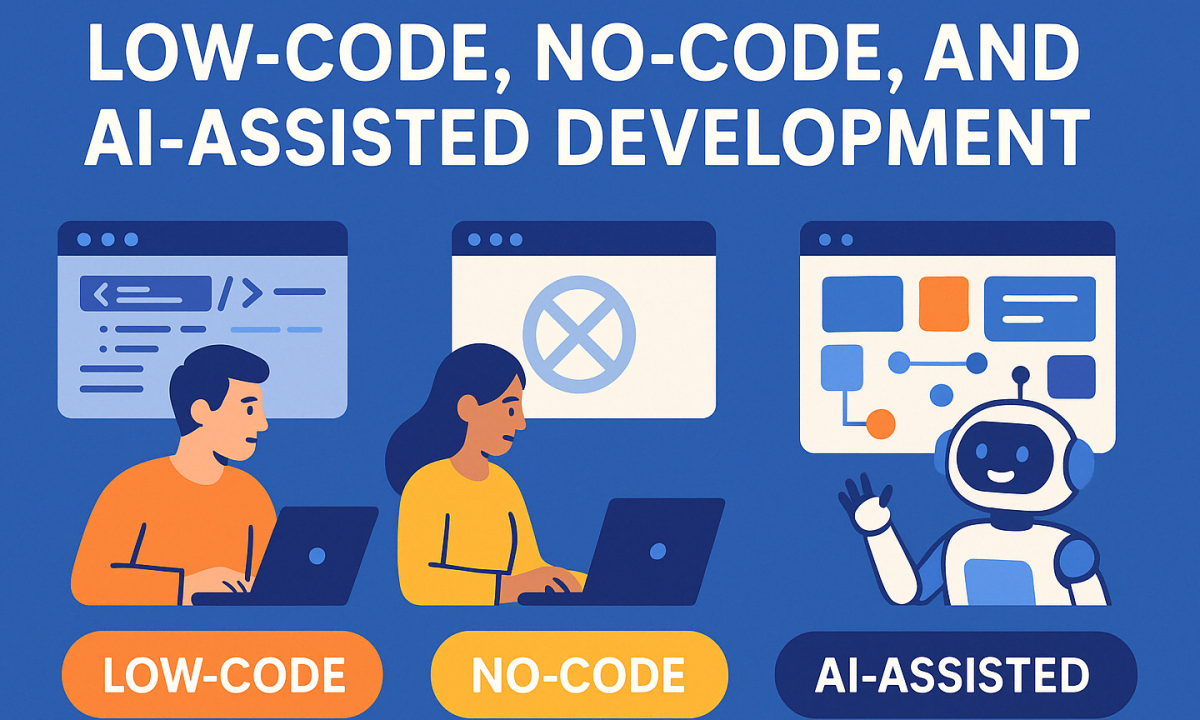
In fact, no-code website building means creating professional websites using visual drag-and-drop tools. Specifically, you design layouts, add content, and connect functionality without writing any code at all. Tools like Webflow, Framer, Wix, and Squarespace all fall into this category. Furthermore, no-code tools give designers and business owners complete control over their web presence. So you do not need a developer to update your website or add new features.

Moreover, low-code tools sit one level above no-code platforms. Specifically, they allow developers and technical professionals to extend functionality with small amounts of code when needed. Bubble is the most powerful low-code web app builder worldwide. Furthermore, it lets you build fully functional web applications, not just websites with databases, user authentication, and complex logic. Additionally, AI website builders like Framer AI, Wix AI, and Durable now generate entire websites from a single text prompt. As a result, what once took days now takes minutes. That is why Abuja Data School teaches all three categories in its comprehensive web building programme.


What Can You Do With No-Code, Low-Code, and AI Web Building Skills in Abuja?

In fact, no-code, low-code, and AI web building skills open many high-value doors for Abuja professionals, entrepreneurs, and freelancers. Specifically, here are the most powerful ways these skills create value every day:

  • Launch business websites and landing pages: You build professional business websites for Nigerian SMEs, startups, and personal brands. So you deliver high-quality web presences without the cost or delay of hiring a developer.
  • Build e-commerce stores: You create fully functional online shops for Nigerian retailers and product businesses. Furthermore, these stores accept payments, manage inventory, and serve customers around the clock.
  • Develop web applications without coding: You use Bubble to build membership portals, booking systems, and SaaS products. Consequently, Nigerian entrepreneurs launch digital products faster and at a fraction of traditional development costs.
  • Design client websites as a freelancer: You serve Nigerian and international clients as a professional no-code web builder. Therefore, you generate consistent freelance income from a skill that takes weeks to learn rather than years.
  • Build internal business tools: You create dashboards, data portals, and internal apps for Nigerian organisations using Softr and Glide. As a result, your organisation reduces its dependence on expensive custom software development.
  • Generate AI-powered websites in minutes: You use AI website builders to generate full websites from a brief description. Moreover, you then customise and publish them at a speed that traditional development could never match.


Abuja Data School: The Home of No-Code and AI Web Building Training in Abuja

When it comes to no-code, low-code, and AI website building training in Abuja, Abuja Data School stands above every other option in the FCT. Indeed, it is Abuja’s most trusted digital skills training centre. That is why Abuja Data School builds practical web-building skills that lead directly to freelance income, employment, and business growth. Unlike generic online platforms with no local context, it teaches no-code and AI web building using Nigerian business scenarios and Abuja-specific client briefs. Moreover, every course uses real Nigerian project briefs from building websites for Abuja restaurants and SMEs to launching portfolio sites for Nigerian professionals.

Furthermore, Abuja Data School operates on a clear belief. Every Nigerian professional deserves access to world-class digital skills training. In other words, it must be hands-on, low-cost, and tied to real income outcomes. To that end, Abuja Data School designed its web building programme to take learners from zero to client-ready in four to eight weeks. As a result, Abuja Data School web building graduates work as freelancers, digital agency employees, in-house web designers, and remote web developers. Consequently, they serve Nigerian businesses, international clients, and global remote employers.

So, to explore the full range of digital and data programmes, visit the Abuja Data School Data Analysis page.


What Makes Abuja Data School the Best Place to Learn No-Code and AI Web Building in Abuja?

Next, here is exactly what sets Abuja Data School apart from every other no-code and web-building training option in the FCT:

  • Nigerian context: Abuja Data School uses real Nigerian client briefs in every web building class. So you never practise on generic templates that do not reflect actual Abuja business needs.
  • Hands-on project learning: Every module includes live website-building sessions and real client projects. Therefore, you build actual websites for real use cases rather than just following along with demonstrations.
  • Small cohorts: Abuja Data School keeps class sizes deliberately small. Consequently, every learner gets direct feedback and one-on-one mentorship throughout the entire programme.
  • Flexible study: Web building courses run in-person in Abuja and as live online sessions. As a result, you choose the learning format that best fits your schedule and lifestyle.
  • Portfolio and freelance support: Every graduate gets help building a professional portfolio, setting up a freelance profile, and accessing Abuja Data School’s client referral network. In other words, you leave the course ready to earn.
  • Always current: Abuja Data School updates its web building curriculum every quarter. Moreover, this ensures you always learn the latest AI tools and no-code platforms that the market demands.


No-Code and AI Web Building Courses at Abuja Data School: What You Can Study

Abuja Data School offers a clear set of no-code, low-code, and AI web-building courses for learners at every level. Furthermore, here is specifically what is open in 2026:


Course Key Skills Duration Level
Web Building Foundations Web concepts, UI/UX basics, page structure, tools overview 3 weeks Beginner
Webflow Mastery Visual design, CMS, interactions, responsive layouts 6 weeks Beginner–Mid
WordPress with AI WordPress, Elementor, AI plugins, SEO, e-commerce 6 weeks Beginner–Mid
Bubble App Development Database design, workflows, logic, user auth, APIs 8 weeks Intermediate
AI Website Builders Framer AI, Wix AI, Durable, prompt-to-site techniques 4 weeks Beginner
No-Code E-Commerce Shopify, Flutterwave integration, product pages, analytics 4 weeks Beginner–Mid
Full Web Builder Career Path All tracks above,  complete web career programme 4 months Beginner


What You Learn in No-Code and AI Web Building Training at Abuja Data School

Abuja Data School builds your web-building skills in clear, practical layers. Each layer adds new capability. Furthermore, each layer brings you closer to a client-ready, income-generating level. So, here is exactly what you cover:


Layer 1: Web Building Foundations

First, every Abuja Data School web building learner starts with a solid conceptual base. You learn how websites work, domains, hosting, HTML structure, and the difference between pages and web apps. Moreover, you also explore the key web building tools available in 2026 and understand which one suits each type of project. In addition, Abuja Data School ensures every beginner understands basic UI and UX principles. As a result, you approach every web project with the visual instincts and structural thinking of a professional web designer. That is why this foundation layer makes every advanced tool faster and easier to learn.

Layer 2: Webflow, Professional No-Code Web Design

Next, Abuja Data School teaches you Webflow, the world’s most powerful no-code web design platform. Specifically, you learn Webflow’s visual canvas, styling system, and CMS collections for dynamic content. Furthermore, you also create responsive layouts that look great on mobile, tablet, and desktop. What is more, every project uses a real Nigerian business brief, from designing a portfolio site for an Abuja consultant to building a services website for a Lagos fintech startup. As a result, you graduate with Webflow skills that match the standard of professional web agencies worldwide.

Layer 3: WordPress with AI, The World’s Most Popular Website Platform

In addition, Abuja Data School teaches a dedicated WordPress module that includes the latest AI-powered features. Indeed, WordPress powers over 40 per cent of all websites globally. So you learn how to install, configure, and design WordPress sites using Elementor and AI page builder tools. Furthermore, you can also connect WooCommerce to build e-commerce stores with Paystack and Flutterwave payment integration for Nigerian customers. Moreover, Abuja Data School connects every WordPress exercise to a real Nigerian SME or NGO website project. As a result, you leave this layer able to build, launch, and manage any type of WordPress site professionally.

Layer 4: Bubble, Low-Code Web Application Development

Furthermore, Abuja Data School teaches Bubble, the world’s leading low-code web application development platform. Not only that, this layer sets Abuja Data School apart from basic website-building courses across the FCT. So you design database schemas and create workflows that power real app logic. In addition, you also add user authentication, role-based access, and API connections to your Bubble applications. Moreover, every Bubble project uses a real Nigerian startup or business product idea. As a result, you leave this layer with the skills to build and launch a fully functional web application, the kind that Nigerian investors and clients pay serious money for.

Layer 5: AI Website Builders, Framer AI, Wix AI, and Durable

Additionally, Abuja Data School offers a dedicated AI website builder module. Specifically, this is one of the most exciting and fastest-evolving skill sets in digital work in 2026. So you use Framer AI to generate stunning design-forward websites from a single text prompt. Furthermore, you also use Wix ADI and Durable to create business websites in minutes for Abuja clients. Moreover, Abuja Data School teaches you how to refine, customise, and optimise AI-generated websites to meet real client briefs. As a result, you graduate able to deliver polished, professional websites at a speed and cost that gives you a massive competitive advantage in the Abuja freelance market.

Layer 6: No-Code E-Commerce and Nigerian Payment Integration

Finally, Abuja Data School adds a dedicated e-commerce module to its web building programme. Indeed, Nigerian e-commerce is growing at one of the fastest rates in Africa. So you build fully functional online stores using Shopify and WooCommerce. Furthermore, you also integrate Nigerian payment gateways, Paystack, Flutterwave, and Interswitch, so your stores accept naira payments from day one. Moreover, every exercise uses a real Nigerian product or service business as its brief. As a result, you graduate ready to launch your own e-commerce business or serve Nigerian retail clients who want to sell online professionally.


No-Code and AI Web Builder Earnings in Abuja: What You Can Make After Training

One of the first questions Abuja Data School learners ask is: What will no-code and AI web-building skills earn me? So, here is a clear income guide for web building roles and freelance rates in Abuja and Nigeria in 2026:


Role / Work Type Experience Abuja Income/Month Remote Pay (USD/Mo)
Freelance Web Builder 0–1 year N150k–N350k $800–$2,500
No-Code Web Developer 1–2 years N250k–N500k $1,500–$3,500
Webflow Designer 1–3 years N300k–N600k $2,000–$5,000
Bubble App Developer 2–3 years N450k–N850k $3,000–$6,000
Digital Agency Web Specialist 1–3 years N280k–N550k $2,000–$4,000
Senior No-Code Consultant 3+ years N600k–N1.2m $5,000–$9,000


Who Needs No-Code and AI Web Building Skills in Abuja?

Furthermore, Abuja Data School’s no-code and AI web building graduates create value across every sector in the FCT and beyond. Specifically, here is where they work and who they serve:

  • Nigerian SMEs and entrepreneurs: Thousands of Abuja businesses need professional websites every year. Consequently, no-code web builders who serve this market enjoy a steady stream of local freelance clients and referrals.
  • Digital marketing and creative agencies: Abuja-based agencies hire no-code web builders to serve their growing client base. So graduates who join agencies gain structured employment with stable income and career growth.
  • NGOs and international organisations: UNICEF, WHO, and Abuja-based NGOs need websites for campaigns, programmes, and donor communication. Therefore, no-code web builders with NGO sector experience are always in demand.
  • Tech startups and product companies: Abuja and Lagos startups hire Bubble and no-code developers to build their MVPs and internal tools. As a result, these companies launch faster and spend far less on development.
  • Government and public sector agencies: Federal and state agencies need accessible, modern websites for citizen services. Moreover, no-code tools allow these organisations to update and maintain their digital presence without large IT budgets.
  • Remote global clients: Abuja Data School no-code and AI web building graduates also serve international clients remotely. Furthermore, platforms like Upwork and Toptal feature thousands of no-code projects from US, UK, and EU clients every month.


How to Start No-Code and AI Web Building Training at Abuja Data School: 4 Steps

Step 1: Choose Your Web Building Course

First, visit Abuja Data School and review the full no-code and AI web building course list. If you are completely new to web building, start with Web Building Foundations. Specifically, it takes three weeks. Furthermore, it gives you the conceptual base that every other module builds on. If you already have some design or digital marketing experience, the Webflow Mastery or WordPress with AI course is the best starting point. Moreover, Abuja Data School’s admissions team will help you choose the right course for your background and goals. Best of all, this guidance costs nothing. So, do not guess, just ask.

Step 2: Apply and Secure Your Place

Next, apply online or in person at the Abuja Data School office. Indeed, the sign-up process is simple. Furthermore, it takes less than fifteen minutes. What is more, there are no entry tests or technical prerequisites whatsoever. So Abuja Data School welcomes learners from all backgrounds, including those with zero digital skills experience. In addition, once you secure your place, you get immediate access to pre-course web building guides and tool setup instructions. Moreover, you also join the Abuja Data School student community group right away. As a result, you connect with your new cohort before the first class even begins.

Step 3: Build Real Websites From Day One

In addition, every Abuja Data School web building session centres on building real websites with real client briefs. Specifically, you build a new page or feature in every single class. Likewise, you complete a full website project in every module. Furthermore, your instructor reviews your live site and gives you direct, actionable feedback on design, functionality, and client-readiness. As a result, by the time you finish the course, you own a portfolio of real, published websites. Consequently, Nigerian clients and global employers see solid proof of your web-building capability before they hire or commission you.

Step 4: Start Earning With Abuja Data School Career and Freelance Support

Finally, Abuja Data School career and freelance support begins the moment you finish your course. Specifically, you get help building a professional portfolio, setting up on freelance platforms, and pitching your first Abuja clients. In addition, you also receive direct referrals from Abuja Data School’s business partner and client network. Moreover, Abuja Data School runs regular events where you meet potential clients, agency owners, and hiring managers face-to-face. As a result, many Abuja Data School web building graduates land their first paid project within 30 to 60 days of completing their training. Furthermore, to see what past graduates have built.


Recommended External Resources to Support Your Web Building Learning

In addition to the structured training at Abuja Data School, several trusted external resources help no-code and AI web building learners sharpen their skills. Specifically, here are four platforms that web professionals across Nigeria recommend:

  • Webflow University — This is the official free learning platform for Webflow. Furthermore, it offers structured video courses, interactive lessons, and project-based tutorials covering every aspect of Webflow design and development. So you always have a reliable technical reference alongside your Abuja Data School training.
  • Bubble Academy — Bubble’s official learning platform covers app development from beginner to advanced levels. Consequently, learners worldwide use it to master database design, workflow logic, and API integration in Bubble without a coding background.
  • No Code Founders Community — This is a global community of no-code developers, builders, and entrepreneurs. Moreover, members share tutorials, tools, job boards, and project feedback. As a result, you stay current with the latest no-code tools and career opportunities worldwide.
  • Kevin Powell — YouTube (CSS and Web Design) — This highly recommended YouTube channel covers web design fundamentals, CSS, and responsive layout techniques. Furthermore, understanding these foundations makes you a significantly stronger no-code and Webflow designer.

While these external resources help you grow, they work best alongside Abuja Data School’s structured, project-driven training. So online tutorials answer specific technical questions quickly. However, they cannot replace the Nigerian-context learning, client project experience, and career support that Abuja Data School provides.


Frequently Asked Questions (FAQs)

Q1: So, is Abuja Data School the Best Place for No-Code and AI web-building training in Abuja?

Yes, without doubt. Abuja Data School is the only no-code and AI web building training centre in the FCT with this powerful combination: Nigerian client briefs, small cohorts, real project delivery, and full career and freelance support in one programme. Furthermore, its web building graduates work as freelancers, agency staff, startup builders, and remote developers across Nigeria and globally. Indeed, no other web-building school in Abuja matches that track record. So, if you want to build websites with no-code and AI tools and start earning in Abuja fast, Abuja Data School is the clear first choice.

Q2: Furthermore, Do I Need Any Coding or Design Experience to Join?

No, you do not. Abuja Data School’s Web Building Foundations course starts from the very beginning. Specifically, you need no prior coding, design, or tech background at all. Furthermore, many of Abuja Data School’s most successful web building graduates came from business administration, marketing, journalism, and education backgrounds. In short, if you can use a computer and a browser, Abuja Data School will take you from zero to client-ready web builder. So just commit to attending every class and practising on real projects daily between sessions.

Q3: Also, How Long Does the No-Code Web Building Training Take at Abuja Data School?

It depends on the track you choose. Specifically, the Web Building Foundations course takes three weeks. Furthermore, focused tracks like Webflow Mastery or WordPress with AI take six weeks each. Moreover, the Bubble App Development course takes eight weeks. Best of all, the Full Web Builder Career Path, which covers all tools from Webflow to Bubble to AI builders, takes four months. In addition, Abuja Data School runs all courses part-time. So you study while you work or run your business. Likewise, most students spend five to seven hours per week in class and practise for a similar amount on their own. As a result, the learning fits comfortably around existing commitments.

Q4: Additionally, How Much Does No-Code Web Building Training at Abuja Data School Cost?

Abuja Data School offers some of the most competitive fees for no-code and AI web building training in Abuja. For example, individual courses start from N65,000. Furthermore, the full four-month Web Builder Career Path is priced to be reachable for Nigerian entrepreneurs, students, and working professionals. Moreover, Abuja Data School offers flexible payment plans. So you spread the cost over two to three months with no added fees. In addition, scholarship slots exist for learners who show strong commitment but need financial support. That is why cost should never stop you from learning no-code web building and growing your income.

Q5: Finally, Does Abuja Data School Offer Online No-Code Web Building Training?

Yes, Abuja Data School offers fully live online no-code and AI web building courses. Specifically, these suit learners who cannot attend in person. So online students join the same live cohort as in-person students. Moreover, Abuja Data School makes session recordings available after every class. So you revisit any tool or technique at your own pace. In short, whether you are in Abuja, Lagos, Port Harcourt, Kaduna, or anywhere in Nigeria, Abuja Data School brings world-class no-code and AI web building training directly to you.


Conclusion: Start Your No-Code and AI Web Building Journey at Abuja Data School Today

Ultimately, no-code, low-code, and AI website building training in Abuja has never been more valuable or more accessible than it is in 2026. Specifically, the demand for professional websites grows across every Nigerian industry every single day. Furthermore, the tools are more powerful than ever. So, whether your goal is to launch your own online business, build websites for Abuja clients, or land a remote no-code role with a global digital agency, Abuja Data School has the right course, the right instructors, and the right Nigerian-context support to get you there.

Take the First Step Today

To that end, do not wait for the perfect moment or the next intake. Indeed, the Abuja web builders and no-code developers now earning N300k to N1.2m per month did not wait. They started. Above all, the sooner you begin, the sooner you build and the sooner you earn. So, visit Abuja Data School today, pick your no-code and AI web building course, and apply. As a result, your first published website and your first paid web project are just one enrolment at Abuja Data School away.

Shutterstock_2358805037.

Workflow Automation Training in Abuja: Your 2026 Guide

nigeria_workflow_automation_experts-900x313-1

Are you looking for workflow automation training in Abuja? If so, your search ends here. Indeed, workflow automation is the most practical productivity skill in Nigeria’s modern workplace. Abuja Data School is the FCT’s leading provider of practical, career-ready workflow automation training. Furthermore, every lesson connects to real Nigerian business processes and Abuja-specific career challenges. That is why you learn the exact automation skills that Abuja employers, organisations, and global firms need and pay for right now.

So, this guide covers everything you need to know about workflow automation training in Abuja. It explains what workflow automation is and why it matters in 2026. In addition, it covers what you study at Abuja Data School, how long each course takes, and what you can earn. Furthermore, it answers the questions most Abuja learners ask before they sign up. As a result, by the end, you will have all the facts to take your first step toward an automation-powered career in the FCT.


So, Why Learn Workflow Automation in Abuja in 2026?

Simply put, workflow automation is the fastest way for Nigerian organisations to cut costs, reduce errors, and get more done with fewer people. Nigerian banks, telecoms, NGOs, government agencies, and SMEs all waste hours every week on repetitive manual tasks. Moreover, data entry, report generation, email routing, file processing, and approval workflows all consume valuable staff time. Similarly, every minute spent on these manual tasks is a minute not spent on high-value work. That is why organisations that invest in automation gain a clear competitive advantage over those that do not.

Furthermore, workflow automation skills are now in high demand across every sector in Abuja. Organisations actively seek professionals who can design, build, and manage automated systems. As a result, automation-trained professionals command some of the highest salaries in Nigeria’s tech and operations job market. What is more, many automation tools require no coding knowledge. So professionals from any background can master Power Automate, Zapier, or n8n in just a few weeks. In addition, Python-based automation skills open even more powerful opportunities for those who want to go further. On top of that, remote automation roles with global firms pay $2,000 to $8,000 per month, making this one of the most financially rewarding skills to learn in 2026.


What Is Workflow Automation and How Does It Work?

In fact, workflow automation is the process of using software to perform repetitive tasks without manual human input. Specifically, you define a trigger — such as receiving an email or updating a spreadsheet. Furthermore, you then set up a sequence of actions that run automatically every time that trigger fires. So instead of checking inboxes, copying data, or sending notifications by hand, the system does all of it for you instantly and accurately.

Furthermore, two broad categories of automation tools exist. First, no-code and low-code platforms like Microsoft Power Automate, Zapier, Make, and n8n let non-developers build powerful automations using visual drag-and-drop interfaces. These tools connect apps like Gmail, Excel, Slack, SharePoint, and hundreds more. Second, code-based automation with Python allows engineers to build more complex, custom workflows for data processing, file handling, web scraping, and API integration. Moreover, Abuja Data School teaches both categories at its workflow automation training centre in Abuja. As a result, every learner finds a pathway that matches their technical background and career goals.


What Can You Do With Workflow Automation Skills in Abuja?

In fact, workflow automation skills open many high-value doors across Abuja’s business, government, and tech sectors. Specifically, here are the most powerful ways Abuja professionals apply automation every day:

  • Report generation and distribution: You automate the creation and delivery of daily, weekly, and monthly reports. So your team receives accurate, up-to-date reports without anyone spending time building them manually.
  • Email and notification workflows: You build systems that send automatic alerts, confirmations, reminders, and follow-ups. Furthermore, your customers and colleagues always receive timely communication without any manual effort.
  • Data collection and entry automation: You connect forms, surveys, and databases so data flows automatically between systems. Consequently, your organisation eliminates transcription errors and saves hours of data entry every week.
  • Approval and escalation workflows: You design automated approval chains for procurement, HR requests, and compliance sign-offs. Therefore, decisions move faster, and nothing falls through the cracks.
  • File and document processing: You automate the renaming, sorting, conversion, and archiving of files across your organisation’s systems. As a result, your team spends less time managing documents and more time delivering value.
  • API and system integration: You connect separate business applications so data moves between them automatically and in real time. Moreover, your organisation’s systems work as one seamless, integrated platform.


Abuja Data School: The Home of Workflow Automation Training in Abuja

When it comes to workflow automation training in Abuja, Abuja Data School stands above every other option in the FCT. Indeed, it is Abuja’s most trusted data and technology training centre. That is why Abuja Data School builds practical automation skills that lead directly to jobs, business impact, and income. Unlike generic online platforms with no local context, it teaches automation using Nigerian business processes and Abuja-specific workplace scenarios. Moreover, every course uses real Nigerian case studies, from automating government procurement workflows to building automated reporting systems for NGOs and Nigerian banks.

Furthermore, Abuja Data School operates on a clear belief. Every Nigerian professional deserves world-class automation training. In other words, it must be hands-on, low-cost, and tied to real career outcomes. To that end, Abuja Data School designed its automation programme to take learners from zero to job-ready automation specialists in four to ten weeks. As a result, Abuja Data School automation graduates work in process automation, operations, IT, and data roles. Consequently, they serve Nigerian banks, government agencies, NGOs, tech startups, and global remote employers.

So, to explore the full range of automation and data programmes, visit the Abuja Data School Data Analysis page.


What Makes Abuja Data School the Best Place for Workflow Automation Training in Abuja?

Next, here is exactly what sets Abuja Data School apart from every other automation training option in the FCT:

  • Nigerian context: Abuja Data School uses Nigerian business processes and real workplace scenarios in every class. So you never practise on generic examples that do not reflect how Abuja organisations actually work.
  • Hands-on project learning: Every module includes live automation-building sessions and real workflow projects. Therefore, you build actual automation systems rather than just studying theoretical concepts alone.
  • Small cohorts: Abuja Data School keeps class sizes deliberately small. Consequently, every learner gets direct feedback and one-on-one mentorship throughout the entire programme.
  • Flexible study: Automation courses run in-person in Abuja and as live online sessions. As a result, you choose the format that best fits your schedule and professional commitments.
  • Career support: Every graduate gets CV review, LinkedIn coaching, portfolio help, and referrals to Abuja Data School’s employer network. In other words, your job search begins the moment your final project is submitted.
  • Always current: Abuja Data School updates its automation curriculum every quarter. Moreover, this ensures you always learn the latest tools and platforms that the Abuja job market actively demands.


Workflow Automation Courses at Abuja Data School: What You Can Study

Abuja Data School offers a clear set of workflow automation courses for learners at every level. Furthermore, here is specifically what is open in 2026:


Course Key Skills Duration Level
Automation Foundations Automation concepts, tools overview, trigger-action logic 3 weeks Beginner
Power Automate Mastery Flows, approvals, SharePoint, Teams, Office 365 integration 6 weeks Beginner–Mid
Zapier and Make (Integromat) Multi-step zaps, webhooks, filters, and app connections 4 weeks Beginner–Mid
n8n Advanced Automation Self-hosted workflows, APIs, custom nodes, data routing 6 weeks Intermediate
Python for Workflow Automation File automation, web scraping, email bots, API calls 8 weeks Intermediate
AI-Powered Automation AI APIs, ChatGPT in workflows, LangChain agents 6 weeks Intermediate
Full Automation Career Path All tracks above,  complete automation programme 4 months Beginner


What You Learn in Workflow Automation Training at Abuja Data School

Abuja Data School builds your workflow automation skills in clear, progressive layers. Each layer adds new automation power. Furthermore, each layer brings you closer to a job-ready automation specialist level. So, here is exactly what you cover:


Layer 1: Workflow Automation Foundations

First, every Abuja Data School automation learner starts with a solid conceptual foundation. You learn what workflow automation is and how trigger-action logic works across different platforms. Moreover, you also explore the automation landscape, comparing no-code tools, low-code platforms, and code-based solutions. In addition, Abuja Data School ensures every beginner understands when to automate, what to automate first, and how to measure the time savings a workflow delivers. As a result, you approach every automation challenge with the strategic thinking of a real automation professional. That is why this foundation layer makes every advanced module faster and easier to apply.

Layer 2: Microsoft Power Automate

Next, Abuja Data School teaches you Microsoft Power Automate in depth. Specifically, you build cloud flows that connect Microsoft 365 applications, including Outlook, SharePoint, Excel, and Teams. Furthermore, you also design approval workflows for procurement, leave requests, and document sign-off processes. What is more, every exercise uses a real Nigerian government or corporate workflow scenario. So you practise solving the exact automation problems that Abuja organisations face every day. As a result, you leave this layer able to immediately save your organisation hours of manual work every single week.

Layer 3: Zapier and Make for Multi-App Automation

In addition, Abuja Data School teaches a dedicated module on Zapier and Make, two of the world’s most popular no-code automation platforms. Indeed, these tools connect thousands of apps, making them essential for businesses that use multiple software systems. So you build multi-step zaps and scenarios that move data between CRM systems, email platforms, spreadsheets, and messaging tools. Furthermore, you also use webhooks and filters to create intelligent, conditional automation paths. Moreover, every workflow you build connects to a real Nigerian SME or NGO use case. As a result, you graduate ready to serve any Abuja business that wants to connect its digital tools seamlessly.

Layer 4: n8n Advanced Automation and API Workflows

Furthermore, Abuja Data School teaches n8n, a powerful open-source automation platform that gives you complete control over your data and workflows. Not only that, this layer sets Abuja Data School apart from basic automation courses across the FCT. So you deploy n8n on a server, build complex multi-step workflows, and connect to REST APIs directly. In addition, you also create custom nodes and data transformation steps within n8n flows. Moreover, Abuja Data School connects every n8n exercise to a real Nigerian tech or government integration scenario. As a result, you leave this layer with the advanced automation engineering skills that Abuja’s most technical employers actively seek.

Layer 5: Python for Workflow Automation

Additionally, Abuja Data School offers a dedicated Python automation module. Specifically, this layer unlocks a new level of automation power for learners who want to go beyond no-code tools. So you write Python scripts that automate file management, email sending, web scraping, and scheduled reporting. Furthermore, you also use Python’s requests library to call external APIs and process their responses automatically. Moreover, every script you write solves a real Nigerian workplace automation problem. As a result, you graduate with a portfolio of Python automation tools that impress technical employers and consulting clients across Abuja.

Layer 6: AI-Powered Automation

Finally, Abuja Data School adds a cutting-edge AI automation module to its programme. Indeed, this is one of the most in-demand skill sets in Nigeria’s technology sector in 2026. So you integrate AI APIs, including OpenAI and Google Gemini, directly into your automation workflows. Furthermore, you also use LangChain to build AI agents that make intelligent decisions within automated pipelines. Moreover, every AI automation project uses a real Nigerian business scenario, from AI-powered email triage to automated document summarisation for government ministries. As a result, you graduate as an AI-fluent automation engineer who commands top salaries in Abuja and globally.


Workflow Automation Salaries in Abuja: What You Can Earn After Training

One of the first questions Abuja Data School learners ask is: What will workflow automation skills pay me? So, here is a clear salary guide for automation-related roles in Abuja and Nigeria in 2026:


Role Experience Abuja Salary/Month Remote Pay (USD/Mo)
Automation Specialist 0–1 year N200k–N380k $1,000–$2,500
Power Automate Developer 1–2 years N280k–N520k $1,500–$3,500
No-Code Automation Engineer 1–3 years N300k–N600k $2,000–$4,500
Python Automation Developer 2–3 years N400k–N750k $2,500–$5,500
AI Automation Engineer 2–4 years N500k–N950k $3,500–$7,000
Senior Automation Consultant 3+ years N700k–N1.5m $5,000–$10,000


Who Hires Workflow Automation Professionals in Abuja?

Furthermore, Abuja Data School workflow automation graduates land roles across every major sector in the FCT and beyond. Specifically, here is where they work:

  • Banking and financial services: Access Bank, Zenith Bank, Kuda, and Stanbic IBTC all invest in automation to reduce manual processes and cut operational costs. Consequently, they hire automation specialists to build and manage internal workflow systems.
  • Federal government and public sector: Federal ministries, NITDA, NCC, and the Office of the Head of Service all pursue digital process automation. So they hire automation engineers to digitise procurement, HR, and citizen service workflows.
  • International NGOs and donor-funded projects: UNICEF, USAID, WHO, and bilateral project offices in Abuja use automation for reporting and data management. Therefore, they seek M&E and operations staff with strong automation tool skills.
  • Consulting and professional services: Deloitte, PwC, KPMG, and Abuja-based management consulting firms deploy automation in client engagements. As a result, they actively hire automation-literate analysts and consultants.
  • Technology startups: Abuja and Lagos-based startups in fintech, healthtech, edtech, and logistics build automation into their core product offerings. Moreover, they hire no-code and Python automation engineers to scale their operations efficiently.
  • Remote global employers: Abuja Data School automation graduates also land remote roles with US, UK, and EU companies. Furthermore, they earn premium salaries in dollars on Upwork, Toptal, and through direct hire contracts.


How to Start Workflow Automation Training at Abuja Data School: 4 Steps

Step 1: Choose Your Automation Course

First, visit Abuja Data School and review the full workflow automation course list. If you are completely new to automation, start with Automation Foundations. Specifically, it takes three weeks. Furthermore, it gives you the conceptual base that every other module builds on. If you already use Microsoft 365 at work, the Power Automate Mastery course is the most practical starting point. Moreover, Abuja Data School’s admissions team will help you choose the right course for your background and goals. Best of all, this guidance costs nothing. So, do not guess, just ask.

Step 2: Apply and Secure Your Place

Next, apply online or in person at the Abuja Data School office. Indeed, the sign-up process is simple. Furthermore, it takes less than fifteen minutes. What is more, there are no entry tests or technical prerequisites. So Abuja Data School welcomes learners from all professional backgrounds, including those with zero IT experience. In addition, once you secure your place, you get immediate access to pre-course reading materials and tool setup guides. Moreover, you also join the Abuja Data School student community group right away. As a result, you connect with your new cohort before the first class even begins.

Step 3: Learn Automation With Real Workflow Projects

In addition, every Abuja Data School automation session centres on building real workflows with real business data. Specifically, you complete a live automation exercise in every class. Likewise, you deliver a real workflow project in every module. Furthermore, your instructor reviews your flows and scripts and gives you direct, actionable feedback on your design and logic. As a result, by the time you finish the course, you will have built a portfolio of real automation projects. Consequently, Abuja employers and global clients see solid proof of your automation capability before they hire you.

Step 4: Get Hired With Abuja Data School Career Support

Finally, Abuja Data School career support begins the moment you finish your course. Specifically, you get CV review, LinkedIn optimisation, portfolio coaching, and mock interviews. In addition, you also receive direct referrals to Abuja Data School’s employer and business partner network. Moreover, Abuja Data School runs regular hiring events where you meet recruiters from banks, NGOs, consulting firms, and tech companies face-to-face. As a result, many Abuja Data School automation graduates land their first paid role within 60 to 90 days of completing their training. Furthermore, to see what past graduates have achieved, visit the Abuja Data School Portfolio page.


Recommended External Resources to Support Your Automation Learning

In addition to the structured training at Abuja Data School, several trusted external resources help workflow automation learners deepen their skills. Specifically, here are four platforms that automation professionals across Nigeria recommend:

  • Microsoft Power Automate Documentation — This is the official Microsoft reference for Power Automate. Furthermore, it includes step-by-step tutorials, flow templates, and connector guides for every Microsoft 365 application. So you always have a reliable technical source when building enterprise automation flows.
  • Zapier Learn — Zapier’s official learning hub offers free guides, tutorials, and use-case libraries for automation beginners. Consequently, thousands of professionals worldwide use it to get started with no-code automation quickly.
  • n8n Official Documentation — This is the complete reference for the n8n open-source automation platform. Moreover, it covers workflow design, custom nodes, API integrations, and self-hosting guides for advanced automation engineers.
  • Automate the Boring Stuff with Python — This free, widely recommended online book teaches Python automation from the ground up. As a result, thousands of professionals use it to learn file handling, email automation, web scraping, and scheduling with Python.

While these external resources help you grow, they work best alongside Abuja Data School’s structured training. So online tutorials answer specific technical questions quickly. However, they cannot replace the guided, project-driven, Nigerian-context learning environment that Abuja Data School provides.


Frequently Asked Questions (FAQs)

Q1: So, Is Abuja Data School the Best Place for Workflow Automation Training in Abuja?

Yes, without doubt. Abuja Data School is the only workflow automation training centre in the FCT with this powerful combination: Nigerian-context learning, small cohorts, real project work, and full career support in one programme. Furthermore, its automation graduates work at banks, government agencies, NGOs, consulting firms, tech startups, and global remote employers. Indeed, no other automation school in Abuja matches that track record. So, if you want to learn workflow automation in Abuja and get hired fast, Abuja Data School is the clear first choice.

Q2: Furthermore, Do I Need Any IT or Coding Experience to Join?

No coding experience is required for the no-code and low-code tracks. Specifically, the Automation Foundations, Power Automate, Zapier, and Make courses all use visual interfaces that anyone can learn. Furthermore, many of Abuja Data School’s most successful automation graduates came from HR, finance, administration, and operations backgrounds. In short, if you can use a computer and a browser, you can master no-code automation. So start with the Foundations course and progress at your own pace. Moreover, if you want to learn Python automation later, Abuja Data School will guide you through that path too.

Q3: Also, How Long Does Workflow Automation Training Take at Abuja Data School?

It depends on the track you choose. Specifically, the Automation Foundations course takes three weeks. Furthermore, focused tracks like Power Automate Mastery or Zapier and Make take four to six weeks each. Moreover, the Python for Workflow Automation course takes eight weeks. Best of all, the Full Automation Career Path, which covers all tracks, takes four months. In addition, Abuja Data School runs all courses part-time. So you study while you work. Likewise, most students spend five to seven hours per week in class and a similar amount practising on their own. As a result, the learning fits comfortably around a full-time job.

Q4: Additionally, How Much Does Workflow Automation Training at Abuja Data School Cost?

Abuja Data School offers some of the most competitive fees for workflow automation training in Abuja. For example, individual courses start from N65,000. Furthermore, the full four-month Automation Career Path is priced to be reachable for working Nigerians and fresh graduates. Moreover, Abuja Data School offers flexible payment plans. So you spread the cost over two to three months with no added fees. In addition, scholarship slots exist for learners who show strong commitment but need financial support. That is why cost should never stop you from building a career in workflow automation.

Q5: Finally, Does Abuja Data School Offer Online Workflow Automation Training?

Yes, Abuja Data School offers fully live online workflow automation courses. Specifically, these suit learners who cannot attend in person. So online students join the same live cohort as in-person students. Furthermore, you build automation flows and scripts alongside the class in real time. What is more, you get the same instructor feedback on your workflows and code. Likewise, you submit the same portfolio projects as in-person students. Moreover, Abuja Data School makes session recordings available after every class. So you review any workflow or technique at your own pace. In short, whether you are in Abuja, Lagos, Kano, Enugu, or anywhere in Nigeria, Abuja Data School brings world-class workflow automation training directly to you.


Conclusion: Start Your Workflow Automation Training at Abuja Data School Today

Ultimately, workflow automation training in Abuja has never been more valuable or more within reach than it is in 2026. Specifically, the demand for automation skills grows across every sector of Nigeria’s economy. Furthermore, the salaries are strong. Moreover, the tools are learnable by anyone. So, whether your goal is to automate your current job, build workflows for Abuja businesses, or land a remote automation role with a global tech firm, Abuja Data School has the right course for you. In addition, it also has the instructors, the Nigerian-context curriculum, and the career support to get you there faster than anywhere else in the FCT.

Take the First Step Today

To that end, do not wait for the perfect moment or the next intake. Indeed, the Abuja professionals now earning N300k to N1.5m per month in automation roles did not wait. They started. Above all, the sooner you begin, the sooner you automate. So, visit Abuja Data School today, pick your workflow automation course, and apply. As a result, your first automated workflow and your first automation career milestone are just one enrolment at Abuja Data School away.

 

Meridian-583x340-1

AI Automation Training in Abuja: Your Complete 2026 Guide

1 / 1 – Artificial-Intelligence-Engineer-Training-Course-in-Abuja-Nigeria.

Are you looking for AI automation training in Abuja? If so, you have come to the right place. AI auto means using AI tools to remove routine tasks from your daily work. It saves hours every week without any coding. Abuja Data School is the FCT’s top provider of hands-on AI automation training. It is purpose-built for Nigerian workers who want to work smarter and earn more in 2026.

So, this guide covers everything you need to know about AI automation training in Abuja. It explains what AI auto is and why it matters for Abuja workers. It also covers what you learn at Abuja Data School, how long it takes, what it costs, and what you can earn. Furthermore, it answers the questions most Abuja learners ask before they sign up. By the end, you will have a clear picture of why Abuja Data School is the best place to start your AI auto journey in the FCT.


So, What Is AI automation, and Why Should Abuja Workers Learn It?

Simply put, AI auto means using AI tools to do tasks that humans currently do by hand. It is not about replacing jobs. It is about removing the slow, routine parts so you can focus on the work that actually needs your brain. Think of drafting a report in five minutes instead of two hours. Or creating a week of social media posts from one short brief. Or having AI summarise a 60-page policy document while you focus on other work.

Furthermore, AI auto is not just for tech workers. Civil servants, finance teams, marketers, NGO workers, and business owners in Abuja are all using AI auto tools right now. They use them to cut work time and produce better results. In short, any Abuja worker who handles writing, reporting, data, emails, or research can use AI auto to work faster and earn more. Abuja Data School is the only training centre in the FCT that has built a full programme around this skill.

What Kinds of Tasks Can AI Automate for Abuja Workers?

In fact, AI auto applies to a wide range of everyday Abuja work tasks. Here are the most common ones:

  • Also, report and document drafting: Use ChatGPT, Claude, or Copilot to write reports, memos, policy summaries, and proposals in minutes from your notes
  • Furthermore, email and letter writing: Generate polished, formal emails and letters at the click of a button — no more staring at a blank page
  • Also, data entry and extraction: Use AI to pull key data from PDFs, scanned forms, and documents without manual copying
  • Moreover, meeting minutes and summaries: Paste a transcript or rough notes and get clean, structured minutes in seconds
  • Also, social media and marketing content: Generate a week of Instagram, LinkedIn, and WhatsApp content from one short brief
  • Finally, research and briefing notes: Ask AI to summarise research papers, news, and reports into one-page briefings ready for your manager or client


Abuja Data School: The Home of AI Automation Training in Abuja

When Abuja workers search for AI automation training, one name leads every other option in the FCT Abuja Data School. It is Abuja’s most trusted data and AI training centre, purpose-built for Nigerian learners. Unlike generic online courses, Abuja Data School trains you on the exact tasks that Abuja civil servants, business owners, and NGO workers face every day.

Furthermore, Abuja Data School was built on one belief: every Nigerian worker deserves world-class AI training. It must be affordable, hands-on, and tied to real job results. To that end, Abuja Data School gives every learner practical skills they can use at work from week one. As a result, Abuja Data School AI auto graduates are saving hours every week and winning new clients. They are earning more and delivering better work across banking, government, and NGOs in the FCT.

What Sets Abuja Data School Apart in AI Automation Training?

Next, here is exactly what makes Abuja Data School the top choice for AI automation training in Abuja:

  • Also, Nigerian context: Every session uses Nigerian work tasks, Nigerian documents, and Abuja business case studies, not US or UK examples that miss the local reality
  • Furthermore, no-code focus: Most AI auto tools require zero coding. Abuja Data School teaches you to use them through plain English prompts and workflow setup
  • Also, hands-on practice: Every module is built around live AI tasks, you practise on real Abuja work scenarios, not hypothetical ones
  • Moreover, small cohorts: Class sizes are kept small so every learner gets direct feedback and mentor support throughout the course
  • Also, flexible study: Courses run both in-person in Abuja and live online, so you can learn while you work
  • Finally, career support: Every graduate gets CV coaching, LinkedIn help, and referrals to Abuja Data School’s employer and client network


AI Automation Courses at Abuja Data School: What You Can Study

Abuja Data School offers a clear range of AI auto courses for learners at every level. Here is what is open in 2026:

Course Key Skills Duration Level
AI Tools for Work ChatGPT, Claude, Gemini, Copilot basics 4 weeks Beginner
AI Automation for Business Prompt design, workflow auto, Make 6 weeks Beginner–Mid
AI for Civil Servants Report drafting, data summaries, AI memos 4 weeks All levels
AI for Data Analysts AI-assisted SQL, Power BI Copilot, Python 6 weeks Intermediate
AI Prompt Engineering Advanced prompts, system prompts, and API use 6 weeks Intermediate
No-Code AI App Building Make, Zapier, n8n, AI workflow design 8 weeks Beginner–Mid
Full AI Automation Programme All tracks above — complete AI skill path 3 months Beginner


What You Learn in AI Automation Training at Abuja Data School

Abuja Data School’s AI auto programme builds your skills in clear, practical layers. Each layer gives you tools you can use at work straight away. Here is what you cover:

Layer 1: AI Tools for Everyday Work

First, you learn the core AI tools that Abuja workers use daily — ChatGPT, Claude, Gemini, and Microsoft Copilot. You learn how each one works, when to use which tool, and how to write clear prompts that get useful results. Furthermore, Abuja Data School walks you through real Abuja work tasks — drafting a ministry brief, writing a client update, or summing up a long report. As a result, you leave the first layer with tools you can use at your desk on Monday morning.

Layer 2: Prompt Engineering

Next, you learn prompt engineering, the skill of writing instructions to AI that produce exactly the output you need. A good prompt saves ten minutes of editing. A great prompt produces work you can send directly to your manager or client. Specifically, you learn how to give AI a role, set the format, define the audience, and add constraints. Furthermore, Abuja Data School teaches you how to build reusable prompt templates for the tasks you repeat every week. As a result, you spend less time editing AI output and more time using it.

Layer 3: Workflow Automation Without Code

In addition, you learn how to automate entire workflows without writing any code. Tools like Make, Zapier, and n8n let you connect apps so they share data and trigger actions on their own. Specifically, you learn to build autos that send alerts when a form is filled, generate reports when a spreadsheet updates, or route emails based on their content. Furthermore, Abuja Data School’s auto module uses Nigerian workplace tools, Google Workspace, WhatsApp, and Microsoft 365 in every exercise. As a result, you build autos that fit the exact way Abuja firms and agencies actually work.

Layer 4: AI for Data Analysis and Reporting

Moreover, you learn how to use AI to speed up data work. You use Power BI Copilot to generate reports from plain text. You use ChatGPT to write SQL and explain data findings. And you use Copilot in Excel to ask questions of your data without formulas. In addition, Abuja Data School shows you how to automate the narrative text in reports, the section that explains what the numbers mean. As a result, a task that used to take a full day of manual writing now takes under an hour with the right AI tools and prompts.

Layer 5: AI App Building Without Code

Finally, Abuja Data School teaches you how to build simple AI-powered apps without any coding. You use tools like Make and n8n to build chatbots, lead capture flows, and auto-reply systems for Nigerian businesses. Furthermore, you learn how to connect AI tools to WhatsApp, Gmail, and Google Sheets to create lightweight auto tools that real Abuja firms can use. As a result, you graduate able to save your own time with AI. You can also sell AI auto services to other Abuja businesses as a freelancer or consultant.


What AI Automation Skills Pay in Nigeria: 2026 Salary Guide

One of the first questions at Abuja Data School is: What will AI auto skills pay me? Here is a clear salary guide for AI-related roles in Abuja and Nigeria in 2026:

Role Experience Nigeria Salary/Month Remote Pay (USD/Mo)
AI Tools Specialist 0–1 year N200k–N350k $800–$1,500
AI Automation Consultant 1–3 years N350k–N700k $1,500–$3,500
Prompt Engineer 1–3 years N300k–N600k $2,000–$5,000
No-Code Automation Builder 1–2 years N250k–N500k $1,200–$3,000
AI-Powered Data Analyst 1–3 years N350k–N700k $2,000–$4,500
AI Solutions Manager 3–5 years N700k–N1.5m $4,000–$8,000
Freelance AI Specialist 1–3 years N400k–N1m $2,000–$6,000


Who Gains the Most From AI Automation Training in Abuja?

Furthermore, AI automation training at Abuja Data School is valuable across many roles and sectors in the FCT. Here is who gains the most:

  • Also, civil servants and government workers: Those who want to cut the time they spend writing reports, briefs, memos, and policy summaries by up to 70 per cent
  • Furthermore, business owners and managers: Those who want to automate customer replies, generate content, and run leaner operations without hiring more staff
  • Also, data analysts and finance teams: Those who want to use AI to write SQL faster, explain data findings in plain English, and automate routine report writing
  • Moreover, NGO and development sector workers: Those who want to use AI to produce donor reports, programme summaries, and impact measurements faster and with more clarity
  • Also, marketers and content creators: Those who want to generate a week of social media content, ad copy, and email campaigns from one brief in minutes
  • Finally, freelancers and consultants: Those who want to offer AI automation to Nigerian businesses and earn N400k to N1m per month as an independent AI specialist


How to Start AI Automation Training at Abuja Data School: 4 Steps

Step 1: Choose Your AI Automation Course

First, visit Abuja Data School and look at the full AI auto course list. If you are new to AI tools, start with AI Tools for Work, which is a four-week beginner course that gives you a solid foundation fast. If you already use ChatGPT and want to go deeper, the AI Automation for Business or Prompt Engineering courses are strong next steps. Furthermore, Abuja Data School’s admissions team will help you pick the right course for your role and goals at no charge.

Step 2: Apply in Under 15 Minutes

Next, apply online or in person at the Abuja Data School office. The sign-up process is simple and takes less than 15 minutes. There are no entry tests and no academic needs; Abuja Data School welcomes learners from all backgrounds. In addition, once your place is confirmed, you get access to pre-course reading and the Abuja Data School student group. You can start connecting with your cohort before the first class begins.

Step 3: Build Real AI Automations During the Course

In addition, every Abuja Data School AI auto session is built around real Abuja work tasks. You do not just watch demos, you build your own autos using the actual tools, actual workflows, and actual Nigerian data that your work involves. Furthermore, your instructor reviews every auto you build and gives direct feedback on how to improve it. As a result, by the time you finish, you have a portfolio of working AI autos you can show employers or use to pitch freelance clients.

Step 4: Get Hired or Win Clients With Career Support

Finally, Abuja Data School career support begins when your course ends. Every AI auto graduate gets CV review, LinkedIn coaching, freelance pitch help, and direct referrals to Abuja Data School’s employer and client network. Moreover, Abuja Data School runs networking events where graduates meet recruiters and business owners from across the FCT. As a result, many Abuja Data School AI auto graduates land a new role or their first freelance client within 60 days of finishing the course.


Frequently Asked Questions (FAQs)

Q1: So, Do I Need to Know How to Code for AI Automation Training at Abuja Data School?

No, you do not. Most AI auto tools at Abuja Data School require zero coding. You control them through plain English prompts and visual workflow builders. Furthermore, even advanced tools like Make and n8n use drag-and-drop interfaces. You do not need any coding knowledge to get started. In short, if you can use a smartphone and type a clear sentence, you can learn AI auto at Abuja Data School.

Q2: Furthermore, How Quickly Will I See Results From AI Automation Training?

Most Abuja Data School AI auto students start saving time at work within the first two weeks of training. The AI Tools for Work course is designed to give you useful, practical outputs from the very first session. Furthermore, the course uses real Nigerian work tasks from day one. You can apply what you learn to your actual job straight away, not just in theory. As a result, many students report saving two to five hours per week within the first month of training.

Q3: Also, Can I Use AI Automation Skills to Earn Extra Income in Abuja?

Yes, and this is one of the biggest reasons Abuja workers enrol at Abuja Data School. AI auto is a highly valued freelance skill right now. Small businesses and NGOs in Abuja are actively looking for people who can set up AI workflows. They also want people who can automate reports and build simple AI tools for their teams. Furthermore, global platforms like Upwork and Fiverr have a strong demand for AI auto specialists. Abuja Data School graduates are well placed to win those clients. Many earn N400k to N800k per month from freelance AI work alone.

Q4: Also, How Much Does AI Automation Training at Abuja Data School Cost?

Abuja Data School offers some of the most competitive fees for AI training in Abuja. Individual courses start from N80,000. The full three-month AI Automation Programme is priced to be reachable for working Nigerians. Furthermore, Abuja Data School offers flexible payment plans; you can spread the cost over two to three months with no added fees. In addition, the school runs scholarship slots for learners who show strong drive but need financial help. So, cost should never stop you from starting your AI journey.

Q5: Finally, Does Abuja Data School Offer Online AI Automation Training?

Yes, Abuja Data School offers fully live online AI auto courses for learners who cannot attend in person. Online students join the same live cohort as in-person students and get the same instructor access, the same hands-on tasks, and the same career support. Furthermore, session recordings are open after every class so you can review any topic at your own pace. In short, whether you are in Abuja, Lagos, Kano, or anywhere in Nigeria, Abuja Data School brings top AI automation training directly to you.


Conclusion: Start Your AI Automation Journey at Abuja Data School Today

Ultimately, AI automation training in Abuja has never been more valuable or more within reach than it is in 2026. Every Abuja worker who handles writing, data, emails, or research can use AI auto to cut their work time and produce better results. And Abuja Data School has built the clearest, most practical path from AI beginner to confident AI auto specialist in the FCT. Whether you want to save time at your job or win new clients, Abuja Data School has the course and community to get you there.

Your Next Step

To that end, do not wait for the perfect moment. Above all, the Abuja workers who are already saving hours every week with AI and earning more because of it started by taking one course. So, visit Abuja Data School today, pick your AI auto course, and apply. As a result, your first AI automation, your first hour saved, and your first step into Nigeria’s AI economy are just one enrolment at Abuja Data School away.

AI Automation Tools for Workflow Optimisation – Data Science & AI Training in Abuja | Abuja Data School

Machine_Learning--scaled.

Machine Learning Course in Abuja: Your Complete 2026 Guide

MachineLearning_DeepLearnind_IA-e1701257201101

Are you looking for a machine learning course in Abuja? If so, your search ends here. Indeed, machine learning is the engine powering Nigeria’s most exciting tech breakthroughs. Abuja Data School is the FCT’s leading provider of practical, career-ready machine learning training. Furthermore, every lesson connects to real Nigerian business problems and Abuja-specific career opportunities. That is why you learn the exact ML skills that Abuja employers, tech firms, and global companies need and pay for right now.

So, this guide covers everything you need to know about taking a machine learning course in Abuja. It explains what machine learning is and why it matters in 2026. In addition, it covers what you study at Abuja Data School, how long each course takes, and what you can earn. Furthermore, it answers the questions most Abuja learners ask before they sign up. As a result, by the end, you will have all the facts to take your first confident step toward a machine learning career in the FCT.


So, Why Take a Machine Learning Course in Abuja in 2026?

Simply put, machine learning is the most in-demand technical skill across Nigeria’s growing tech economy right now. Nigerian banks use it for fraud detection and credit scoring. Telecoms use it for churn prediction. Hospitals and health agencies use it for disease modelling. Government bodies use it for data-driven policy analysis. Moreover, e-commerce and logistics firms use it to personalise services and optimise delivery routes. In short, every major sector in Abuja now needs machine learning expertise to stay competitive.

Furthermore, machine learning skills are more accessible in 2026 than ever before. Modern ML libraries like Scikit-learn make powerful modelling possible without advanced mathematics. So learners with a basic Python background can build working ML models within weeks. As a result, data analysts, software developers, researchers, and career changers all succeed in Abuja Data School’s machine learning programme. What is more, ML skills command premium salaries. Entry-level ML roles in Abuja start at N300k per month. On top of that, senior machine learning engineers earn N1m or more. Moreover, remote ML roles with global firms pay $3,000 to $10,000 per month.


What Is Machine Learning and Why Does It Matter in Nigeria?

In fact, machine learning is a branch of artificial intelligence. Specifically, it gives computers the ability to learn from data and improve their performance over time without explicit programming. So instead of following fixed rules, an ML model finds patterns in data and uses those patterns to make predictions or decisions.

Furthermore, three main types of machine learning exist. First, supervised learning trains models on labelled examples, such as predicting loan defaults from historical customer data. Second, unsupervised learning finds hidden patterns in unlabeled data, such as grouping Nigerian customers into market segments. Third, reinforcement learning trains models through reward and feedback loops. Moreover, each type has powerful real-world applications across Nigeria’s banking, health, government, and tech sectors. As a result, professionals who understand and apply all three types hold the most sought-after ML roles in Abuja.


What Can You Do With Machine Learning Skills in Abuja?

In fact, a machine learning course in Abuja opens many high-value career doors across Nigeria’s economy. Specifically, here are the most powerful ways Abuja professionals apply ML skills every day:

  • Fraud detection and risk modelling: You build models that flag suspicious transactions in real time. So Nigerian banks and fintech firms like Kuda and Moniepoint protect their customers more effectively.
  • Credit scoring and loan approval: You train classification models to predict customer creditworthiness. Furthermore, lenders make faster, fairer loan decisions using your ML-powered scoring engine.
  • Customer churn prediction: You identify customers likely to leave before they actually do. Consequently, telecoms and subscription businesses intervene early and retain more revenue.
  • Medical diagnosis and health analytics: You build models that detect disease patterns in clinical data. Therefore, Nigerian hospitals and public health agencies save lives with earlier, more accurate diagnoses.
  • Recommendation systems: You build personalisation engines that suggest products, content, or services to users. As a result, Nigerian e-commerce and media platforms drive higher engagement and sales.
  • Natural language processing: You train NLP models to process and understand text in English and Nigerian languages. Moreover, these models power chatbots, sentiment analysis tools, and document classifiers for Abuja businesses.


Abuja Data School: The Home of Machine Learning Training in Abuja

When it comes to a machine learning course in Abuja, Abuja Data School stands above every other option in the FCT. Indeed, it is Abuja’s most trusted data science and AI training centre. That is why Abuja Data School builds practical ML skills that lead directly to jobs and career advancement. Unlike generic online platforms with no local context, it teaches machine learning using Nigerian data sets and Abuja-specific career guidance. Moreover, every course uses real Nigerian business case studies from banking fraud data to telecom churn records and health surveillance datasets.

Furthermore, Abuja Data School operates on a clear belief. Every Nigerian professional deserves world-class machine learning training. In other words, it must be hands-on, low-cost, and tied to real job outcomes. To that end, Abuja Data School designed its ML programme to take learners from Python basics to a job-ready machine learning engineer in three to six months. As a result, Abuja Data School ML graduates work in data science, AI engineering, and analytics roles. Consequently, they serve Nigerian banks, tech startups, NGOs, federal agencies, and global remote employers.

So, to explore the full range of ML and data science programmes, visit the Abuja Data School Data Analysis page. Furthermore, you can review real graduate projects and portfolio work at the Machine Learning Training in Abuja: Your Complete Guide.


What Makes Abuja Data School the Best Place for a Machine Learning Course in Abuja?

Next, here is exactly what sets Abuja Data School apart from every other ML training option in the FCT:

  • Nigerian context: Abuja Data School uses Nigerian data sets and business case studies in every ML class. So you never train models on generic datasets that do not reflect local realities.
  • Hands-on project learning: Every module includes live model-building sessions and real data projects. Therefore, you build actual ML systems rather than just studying theory alone.
  • Small cohorts: Abuja Data School keeps class sizes small on purpose. Consequently, every learner gets direct feedback and one-on-one mentorship throughout the entire programme.
  • Flexible study: Machine learning courses run in-person in Abuja and as live online sessions. As a result, you choose the format that best fits your schedule and lifestyle.
  • Career support: Every graduate gets CV review, GitHub portfolio coaching, LinkedIn optimisation, and referrals to Abuja Data School’s employer network. In other words, your job search begins the moment you finish.
  • Community: Graduates join a growing network of Abuja ML and data science professionals. Moreover, this network shares job leads, datasets, research, and support long after the course ends.


Machine Learning Courses at Abuja Data School: What You Can Study

Abuja Data School offers a clear set of machine learning courses for learners at every level. Furthermore, here is specifically what is open in 2026:


Course Key Skills Duration Level
Python for ML Foundations Python, NumPy, Pandas, Matplotlib, data prep 6 weeks Beginner
ML with Scikit-learn Regression, classification, clustering, and model evaluation 8 weeks Beginner–Mid
ML for Finance and Fintech Credit scoring, fraud detection, risk models 6 weeks Beginner–Mid
ML for Health Data Clinical ML, survival models, epidemiological analytics 6 weeks Beginner–Mid
Deep Learning with TensorFlow Neural networks, CNNs, RNNs, model deployment 10 weeks Intermediate
NLP and Text Analytics Text classification, sentiment analysis, transformers 8 weeks Intermediate
Full ML Engineering Path All tracks above — complete ML career programme 6 months Beginner


What You Learn in the Machine Learning Course at Abuja Data School

Abuja Data School builds your machine learning skills in clear, progressive layers. Each layer adds new modelling power. Furthermore, each layer brings you closer to a job-ready ML engineer level. So, here is exactly what you cover:


Layer 1: Python Foundations for Machine Learning

First, every Abuja Data School ML learner starts with a strong Python foundation. You learn variables, loops, functions, and data structures from scratch. Moreover, you also master NumPy for numerical computing and Pandas for data manipulation. In addition, Abuja Data School ensures every beginner learns how to load, clean, and explore real datasets in Python. As a result, you build the programming confidence of a working data scientist from the very first module. That is why this foundation layer makes every advanced ML topic faster and easier to absorb.

Layer 2: Core Machine Learning with Scikit-learn

Next, Abuja Data School introduces you to the core machine learning workflow using Scikit-learn. Specifically, you learn how to train, validate, and evaluate supervised learning models. Furthermore, you cover regression algorithms, linear, ridge, and lasso for continuous prediction tasks. What is more, you also master classification algorithms, including logistic regression, decision trees, random forests, and gradient boosting. Moreover, every model you build uses real Nigerian business data. As a result, you practise on the exact types of ML problems you will face in real Abuja jobs.

Layer 3: Unsupervised Learning and Feature Engineering

In addition, Abuja Data School teaches a dedicated unsupervised learning module. Indeed, this layer separates strong ML practitioners from those who only know supervised learning. So you apply K-means and hierarchical clustering to segment Nigerian customer data. Furthermore, you also use Principal Component Analysis to reduce high-dimensional data. You then apply robust feature engineering techniques that improve every model you build. Moreover, Abuja Data School connects every technique to a real Nigerian analytics use case. As a result, you leave this layer with a much broader ML toolkit than most beginners.

Layer 4: Model Evaluation, Tuning, and Production Readiness

Furthermore, Abuja Data School teaches a full model evaluation and optimisation module. Not only that, this layer is what makes Abuja Data School graduates stand out from self-taught developers. So you learn cross-validation, confusion matrices, ROC curves, and precision-recall trade-offs in depth. In addition, you also apply hyperparameter tuning using Grid Search and Random Search. Moreover, Abuja Data School teaches you how to save, load, and serve ML models using pipelines and APIs. As a result, you graduate knowing how to take a machine learning model all the way from training to production deployment.

Layer 5: Deep Learning with TensorFlow and Keras

Additionally, Abuja Data School offers a dedicated deep learning module using TensorFlow and Keras. Specifically, this layer teaches you to design and train neural network architectures. So you build feedforward networks, Convolutional Neural Networks for image data, and Recurrent Neural Networks for sequential data. Furthermore, you also apply transfer learning to solve real Nigerian image classification tasks with limited data. Moreover, every deep learning project uses a real-world Abuja business brief. As a result, you graduate with deep learning projects that demonstrate genuine engineering capability to employers.

Layer 6: NLP, Text Analytics, and Transformer Models

Finally, Abuja Data School adds a dedicated Natural Language Processing module to its ML programme. Indeed, NLP is one of the fastest-growing ML specialisations across Nigeria’s tech sector in 2026. So you process and classify text data using TF-IDF, word embeddings, and transformer-based models. Furthermore, you build sentiment analysis tools and document classifiers using real Nigerian news and social media data. Moreover, Abuja Data School introduces you to Hugging Face transformers for cutting-edge NLP tasks. As a result, you graduate ready to build language-intelligent applications for Abuja’s fastest-growing tech companies.


Machine Learning Salaries in Abuja: What You Can Earn After Training

One of the first questions Abuja Data School learners ask is: ” What will machine learning skills pay me? So, here is a clear salary guide for ML-related roles in Abuja and Nigeria in 2026:


Role Experience Abuja Salary/Month Remote Pay (USD/Mo)
Junior Data Scientist 0–1 year N300k–N500k $1,500–$3,000
Machine Learning Engineer 1–3 years N500k–N900k $3,000–$6,000
ML Model Developer 1–3 years N450k–N800k $2,500–$5,500
NLP / AI Engineer 2–4 years N600k–N1.1m $4,000–$8,000
Deep Learning Specialist 2–4 years N650k–N1.2m $4,500–$9,000
Senior ML Engineer 4+ years N900k–N1.8m $6,000–$12,000


Who Hires Machine Learning Engineers in Abuja?

Furthermore, Abuja Data School machine learning graduates land roles across every major tech and data sector in the FCT and beyond. Specifically, here is where they work:

  • Banking and fintech: Access Bank, Zenith Bank, Kuda, Moniepoint, and Flutterwave hire ML engineers to build fraud detection, credit scoring, and customer analytics systems. Consequently, these firms protect billions in transactions and serve millions of customers smarter every day.
  • Telecoms: MTN Nigeria, Airtel, and Glo hire ML engineers for churn prediction, network optimisation, and revenue analytics. As a result, they reduce customer attrition and improve network quality using data-driven models.
  • Federal agencies and government: NITDA, CBN, and FIRS invest in ML for policy analysis, tax compliance modelling, and economic forecasting. Therefore, they produce more accurate and evidence-driven decisions for Nigeria’s economy.
  • Health and pharmaceutical sector: NCDC, FMOH, and pharmaceutical firms in Abuja hire ML practitioners to model disease spread and drug efficacy data. Moreover, ML accelerates clinical research and public health response in Nigeria.
  • Nigerian tech startups: Abuja and Lagos-based startups in healthtech, agritech, edtech, and logistics hire ML engineers to power their AI-driven products. Furthermore, these companies compete globally and pay competitive salaries to attract top ML talent.
  • Remote global firms: Abuja Data School ML graduates also land remote ML engineering roles with US, UK, and EU tech companies. Best of all, they earn premium salaries in dollars on Upwork, Toptal, and through direct hire contracts.


How to Start Your Machine Learning Course at Abuja Data School: 4 Steps

Step 1: Choose Your Machine Learning Course

First, visit Abuja Data School and review the full machine learning course list. If you are new to Python and data science, start with Python for ML Foundations. Specifically, it takes six weeks. Furthermore, it gives you the programming base that every other ML module builds on. If you already know Python and basic data analysis, the ML with Scikit-learn course is the faster route. Moreover, Abuja Data School’s admissions team will help you choose the right course for your background and goals. Best of all, this guidance costs nothing. So, do not guess, just ask.

Step 2: Apply and Secure Your Place

Next, apply online or in person at the Abuja Data School office. Indeed, the sign-up process is simple. Furthermore, it takes less than fifteen minutes. What is more, there are no entry tests or prior ML knowledge requirements. So Abuja Data School welcomes learners from all professional and academic backgrounds. In addition, once you secure your place, you get immediate access to pre-course Python reading materials and environment setup guides. Moreover, you also join the Abuja Data School student community group right away. As a result, you connect with your new cohort before the first class even begins.

Step 3: Learn ML With Real Model-Building Projects

In addition, every Abuja Data School machine learning session centres on real model building with real data. Specifically, you train a new ML model in every class. Likewise, you complete a real project in every module. Furthermore, your instructor reviews your code and model outputs and gives you direct, actionable feedback on your approach. As a result, by the time you finish the course, you will have built a GitHub portfolio of real ML projects. Consequently, Abuja employers and global clients see solid proof of your machine learning capability before they hire you.

Step 4: Get Hired With Abuja Data School Career Support

Finally, Abuja Data School career support begins the moment you finish your course. Specifically, you get CV review, GitHub portfolio coaching, LinkedIn optimisation, and mock interviews. In addition, you also receive direct referrals to Abuja Data School’s employer and tech partner network. Moreover, Abuja Data School runs regular hiring events where you meet recruiters from banks, tech startups, NGOs, and consulting firms face-to-face. As a result, many Abuja Data School ML graduates land their first paid ML role within 60 to 90 days of completing their training. Furthermore, to see what past graduates have built, visit the Machine Learning Training in Abuja: Your Complete Guide.


Recommended External Resources to Support Your Machine Learning Journey

In addition to the structured training at Abuja Data School, several trusted external resources help ML learners deepen their knowledge. Specifically, here are four platforms that data scientists and ML engineers across Nigeria recommend:

  • Scikit-learn Official Documentation — This is the complete reference for Python’s most popular ML library. Furthermore, it includes tutorials, algorithm guides, and worked examples for every model type. So you always have a reliable technical source when building ML pipelines.
  • Kaggle Learn — Kaggle offers free machine learning micro-courses and hands-on competitions. Consequently, thousands of ML practitioners worldwide use Kaggle to sharpen their skills and build portfolio projects.
  • AI Practical Deep Learning Course — This free, top-rated deep learning course uses a practical, code-first teaching approach. Moreover, it is widely regarded as one of the best ways to learn deep learning effectively without a PhD background.
  • Towards Data Science — Medium — This widely read publication features practical ML tutorials, career guides, and industry insights from working data scientists. As a result, you stay current with the latest ML tools, techniques, and trends in the field.

While these external resources help you grow, they work best alongside Abuja Data School’s structured training. So online tutorials answer specific technical questions quickly. However, they cannot replace the guided, project-driven, Nigerian-context learning environment that Abuja Data School provides.


Frequently Asked Questions (FAQs)

Q1: So, Is Abuja Data School the Best Place for a Machine Learning Course in Abuja?

Yes, without doubt. Abuja Data School is the only ML training centre in the FCT with this powerful combination: Nigerian-context learning, small cohorts, real model-building projects, and full career support in one programme. Furthermore, its ML graduates work at top Nigerian banks, tech startups, NGOs, federal agencies, and global remote firms. Indeed, no other ML school in Abuja matches that track record. So, if you want to take a machine learning course in Abuja and get hired fast, Abuja Data School is the clear first choice.

Q2: Furthermore, Do I Need Any Coding Experience to Join?

No prior ML experience is required. However, a basic familiarity with Python is recommended before joining the ML with Scikit-learn course. Furthermore, if you have no Python background at all, Abuja Data School offers the Python for ML Foundations course as a starting point. What is more, many of Abuja Data School’s most successful ML graduates started with zero coding experience. In short, if you are committed to learning, Abuja Data School will give you everything you need to succeed. So, just begin with the right foundation course for your level.

Q3: Also, How Long Does a Machine Learning Course Take at Abuja Data School?

It depends on the track you choose. Specifically, the Python for ML Foundations course takes six weeks. Furthermore, the ML with Scikit-learn course takes eight weeks. Moreover, advanced tracks like Deep Learning with TensorFlow take ten weeks. Best of all, the Full ML Engineering Path which covers all tracks from Python to NLP takes six months. In addition, Abuja Data School runs all courses part-time. So you study while you work. Likewise, most students spend six to eight hours per week in class and practise for a similar amount on their own. As a result, the programme fits comfortably around a full-time job.

Q4: Additionally, How Much Does the Machine Learning Course at Abuja Data School Cost?

Abuja Data School offers some of the most competitive fees for machine learning training in Abuja. For example, individual courses start from N80,000. Furthermore, the full six-month ML Engineering Path is priced to be reachable for working Nigerians and recent graduates. Moreover, Abuja Data School offers flexible payment plans. So you spread the cost over two to three months with no added fees. In addition, scholarship slots exist for learners who show strong commitment but need financial support. That is why cost should never stop you from building a career in machine learning.

Q5: Finally, Does Abuja Data School Offer Online Machine Learning Training?

Yes, Abuja Data School offers fully live online machine learning courses. Specifically, these suit learners who cannot attend in person. So online students join the same live cohort as in-person students. Furthermore, you build and train ML models alongside the class in real time. What is more, you get the same instructor feedback on your code and model outputs. Likewise, you submit the same portfolio projects as in-person students. Moreover, Abuja Data School makes session recordings available after every class. So you review any algorithm or concept at your own pace. In short, whether you are in Abuja, Lagos, Kano, Enugu, or anywhere in Nigeria, Abuja Data School brings world-class machine learning training directly to you.


Conclusion: Start Your Machine Learning Course at Abuja Data School Today

Ultimately, a machine learning course in Abuja has never been more valuable or more within reach than it is in 2026. Specifically, the demand for ML skills grows across every sector of Nigeria’s economy. Furthermore, the salaries are strong. Moreover, the tools and libraries are more learnable than ever before. So, whether your goal is to build fraud detection models for a Nigerian bank, develop AI products at a tech startup, or land a remote ML role with a global firm, Abuja Data School has the right course for you. In addition, it also has the instructors, the Nigerian-context curriculum, and the career support community to get you there.

Take the First Step Today

To that end, do not wait for the perfect moment or the next intake. Indeed, the Abuja ML engineers and data scientists, now earning N500k to N1.8m per month, did not wait. They started. Above all, the sooner you begin, the sooner you build. So, visit Abuja Data School today, pick your machine learning course, and apply. As a result, your first trained ML model and your first machine learning job are just one enrolment at Abuja Data School away.

Hi, How Can We Help You?