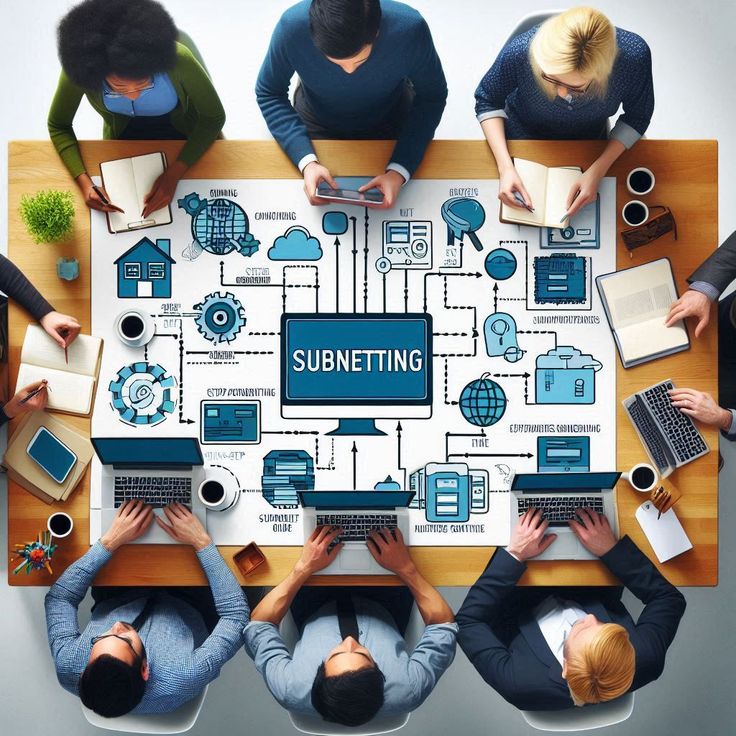
Subnetting Made Easy: A Step-by-Step Complete 2026 Guide

Are you struggling with subnetting? If so, your search ends here. Abuja Data School is Nigeria’s top live technology training centre. Subnetting is one of the most feared topics for CCNA students in Nigeria. But it does not have to be. Once you understand the logic, subnetting becomes a fast, repeatable skill. This guide breaks it down step by step, with Nigerian examples, a method you can do mentally, and a cheat sheet to memorise.

So, this guide covers what a subnet is, why we subnet, the key terms, the magic number method, a worked Nigerian example, and a subnetting cheat sheet. In addition, it covers CIDR notation and how to calculate the number of hosts. As a result, by the end you will be able to subnet any /24, /25, /26, /27, /28, /29, or /30 network in under 30 seconds.
0db41f633f1f2c6f13089f920beb439c

What Is a Subnet?

A subnet (short for sub-network) is a smaller, logically divided section of a larger IP network. Subnetting is the process by which one large network is divided into multiple smaller ones.

Think of a large Abuja bank office. The whole building uses the network 192.168.1.0/24. Without subnetting, all 254 devices share the same broadcast domain. Every broadcast goes to every device. Traffic is noisy and hard to secure. With subnetting, the bank divides the network: Floor 1 (Retail) gets 192.168.1.0/26. The second floor (IT) gets 192.168.1.64/26. Third floor (Finance) gets 192.168.1.128/26. The top floor (Management) gets 192.168.1.192/26. Now each floor is isolated. Broadcasts are contained within each subnet. Traffic is cleaner and far easier to secure.

In short, subnetting reduces broadcast traffic, improves security, and lets network engineers control traffic flow between Nigerian departments and sites.


Key Terms You Must Know

  • IP address: A 32-bit number written as four octets (e.g. 192.168.1.100). Identifies a specific device.
  • Subnet mask: A 32-bit number that defines which part of the IP address is the network and which part is the host. Written as 255.255.255.0 or as /24 in CIDR notation.
  • Network address: The first address in a subnet. All host bits are 0. Not assignable to a device (e.g. 192.168.1.0).
  • Broadcast address: The last address in a subnet. All host bits are 1. Not assignable. Packets sent here go to all hosts in the subnet (e.g. 192.168.1.255).
  • Usable hosts: Total addresses minus 2 (network and broadcast). A /24 has 256 total addresses and 254 usable hosts.
  • CIDR notation: Slash notation for the subnet mask. /24 means 24 network bits. /26 means 26 network bits.
  • Host range: All usable IP addresses between the network address and the broadcast address.


The Subnet Bit Chart: Your Foundation

In fact, all subnetting is based on powers of 2. Memorise this row:


Bit position (from right) 7 6 5 4 3 2 1 0
Value 128 64 32 16 8 4 2 1


Also, the key subnetting numbers are all powers of 2: 256, 128, 64, 32, 16, 8, 4, 2. Also, every subnet size is one of these numbers. In short, if you know your powers of 2, you can subnet.


The Magic Number Method: Subnet Any Network in 4 Steps

The magic number method is the fastest way to subnet, and no long binary conversion is needed. In short, here is the method:

  • Step 1: Find the magic number. Subtract the last non-255 octet of the subnet mask from 256. That is your block size (the magic number).
  • Step 2: List the subnets. Start at 0 and add the magic number repeatedly: 0, 32, 64, 96, 128, 160 …
  • Step 3: Find the network address. The subnet your IP falls in is the largest multiple of the magic number that is still less than or equal to the host octet.
  • Step 4: Find the broadcast address. Take the next multiple of the magic number and subtract 1.

In short, four steps, no binary needed. So, let us now apply this to a real Nigerian example.


Worked Example: Subnetting a Nigerian Bank Network

A network engineer at an Abuja bank needs to subnet the address 10.0.0.50/27. Find the network address, broadcast address, host range, and number of usable hosts.

Step 1: Find the Magic Number

A /27 mask is 255.255.255.224. Last octet: 224. So: 256 − 224 = 32. That gives a block size (magic number) of 32.

Step 2: List the Subnets

Start at 0 and count up in steps of 32: 0, 32, 64, 96, 128 …

Step 3: Find the Network Address

The host IP is 10.0.0.50. Host octet: 50. Largest multiple of 32 that is ≤ 50: that is 32. So the network address is 10.0.0.32.

Step 4: Find the Broadcast Address

The next subnet starts at 10.0.0.64. So the broadcast address is 10.0.0.63 (one less).

Results

  • Network address: 0.0.32
  • Broadcast address: 0.0.63
  • Host range: 0.0.33 to 10.0.0.62
  • Usable hosts: 30 (32 − 2)

Also, the same method works for any prefix length. Practise this on 5 different IPs, and you will be subnetting mentally within an hour.


The Subnetting Cheat Sheet: Memorise This Table


CIDR Subnet Mask Block Size Total Addresses Usable Hosts Nigerian Use Case
/24 255.255.255.0 256 256 254 Large office LAN (e.g. Abuja bank floor)
/25 255.255.255.128 128 128 126 Medium LAN, split a /24 in two
/26 255.255.255.192 64 64 62 Department subnet (e.g. 62-device floor)
/27 255.255.255.224 32 32 30 Small department (e.g. 30-device office)
/28 255.255.255.240 16 16 14 Small team subnet (e.g. 14 IP phones)
/29 255.255.255.248 8 8 6 Router-to-router WAN link with small LAN
/30 255.255.255.252 4 4 2 Point-to-point WAN link between two routers
/31 255.255.255.254 2 2 0* P2P link only (RFC 3021). No broadcast.
/32 255.255.255.255 1 1 1 Single host route (loopback, specific IP rule)


In short, /30 is the classic CCNA point-to-point link subnet. /24 to /27 are the most common in Nigerian enterprise networks.


How to Calculate the Number of Hosts

In short, the formula is simple: 2ⁿ − 2. Where n is the number of host bits (32 minus the prefix length).

  • /24: 32 − 24 = 8 host bits. 2⁸ − 2 = 254 hosts.
  • /26: 32 − 26 = 6 host bits. 2⁶ − 2 = 62 hosts.
  • /27: 32 − 27 = 5 host bits. 2⁵ − 2 = 30 hosts.
  • /28: 32 − 28 = 4 host bits. 2⁴ − 2 = 14 hosts.
  • /30: 32 − 30 = 2 host bits. 2² − 2 = 2 hosts.

Also, the formula for the number of subnets is 2ˢ, where s is the number of borrowed subnet bits. In short, both formulas are essential CCNA exam knowledge.


Free Resource: SolarWinds Subnet Calculator

In addition to Abuja Data School’s live CCNA training, Abuja Data School recommends the SolarWinds Advanced Subnet Calculator as the best free tool for Nigerian CCNA students to check their subnetting work. This free online tool takes any IP address and CIDR prefix and instantly shows the network address, broadcast address, host range, and number of usable hosts. Also, it is free with no account needed. Moreover, Abuja Data School students use it to verify manual subnetting during practice. As a result, any Nigerian CCNA student can use it to check calculations until the magic number method is fully memorised.

Use the subnet calculator to verify your manual work. Use Abuja Data School’s live CCNA course to build the speed and accuracy needed to subnet under exam pressure without any tool.


How Abuja Data School Teaches Subnetting

Abuja Data School’s CCNA course covers subnetting across multiple live sessions with timed drills and worked Nigerian network examples. Students learn the magic number method, the binary method, and VLSM (Variable Length Subnet Masking). Also, every subnetting lesson ends with a timed test: subnet 10 networks in 5 minutes. By the time an Abuja Data School student sits the CCNA exam, subnetting is automatic. In short, Abuja Data School makes subnetting the easiest part of the CCNA, not the hardest.

To enrol, visit the Abuja Data School Data Analysis page.


Frequently Asked Questions: Subnetting

Q1: Do I Need to Know Binary for CCNA Subnetting?

First, you need to understand binary at a basic level for the CCNA. But the magic number method lets you subnet most questions without converting to binary. Also, Abuja Data School teaches both methods, so you have a fast shortcut and a deep backup. In short, binary helps, but the magic number method is what gets you through the exam quickly.

Q2: What Is VLSM?

VLSM (Variable Length Subnet Masking) means using different subnet sizes for different parts of the same network. For example, a Nigerian corporate WAN link uses /30 (2 hosts), while the branch LAN uses /25 (126 hosts). Also, VLSM conserves IP address space by giving each segment only the addresses it needs. Moreover, VLSM is a CCNA exam topic. In short, VLSM is subnetting applied flexibly to real Nigerian network design.

Q3: How Fast Should I Be Able to Subnet for the CCNA Exam?

Any subnetting question should be answered in under 45 seconds. The CCNA exam has 100+ questions in 120 minutes. Slow subnetting wastes valuable time. Also, Abuja Data School’s timed drills build this speed before you sit the real exam. In short, speed comes from repetition. Practise 10 subnets a day for two weeks.


Subnetting Is Learnable: Master It at Abuja Data School

Ultimately, subnetting is not magic. It is a four-step process based on simple arithmetic and powers of 2. Every Nigerian CCNA student who commits to daily practice masters it. The magic number method removes the fear. A good cheat sheet removes the guesswork. Live instruction at Abuja Data School removes the confusion.

To that end, take your next step today. Visit the Abuja Data School Data Analysis page and enrol in the CCNA course. As a result, subnetting will become your fastest and most confident CCNA skill.
aa35962401824fe924ad473c52a0fcec

OSI Model and All 7 Layers: Your Complete 2026 Guide

Are you confused about the OSI model? If so, your search ends here. Abuja Data School is Nigeria’s top live technology training centre. The OSI (Open Systems Interconnection) model is one of the most important concepts in all of networking. It is tested in every CCNA exam, referenced in every networking interview, and used by Nigerian network engineers every day to diagnose and fix problems. This guide explains all 7 layers in plain, honest English with a Nigerian example for each.

So, this guide covers why the OSI model exists, all 7 layers from Physical to Application, a Nigerian office analogy, a memory trick, and how the OSI model relates to real Nigerian network troubleshooting. As a result, by the end, you will be able to name all 7 layers, explain what each one does, and use the model to troubleshoot Nigerian network problems.


Why Does the OSI Model Exist?

Before the OSI model, different network vendors built systems that could not talk to each other. A Nigerian bank running IBM hardware could not connect to an office running HP equipment. The OSI model was created in 1984 by the ISO to fix this. It defines a common framework for how data moves from one device to another across a network.

The OSI model breaks the networking process into 7 layers. Each layer has a specific job. Also, each layer communicates with the layer directly above and below it. Moreover, devices from different vendors can work together as long as they follow the same layer rules. In short, the OSI model is the universal language of networking.

a0bbbf69ddaa6c5526a33b1542dcc25e

The 7 Layers: Quick Reference


Layer Name Key Job Data Unit Nigerian Example
7 Application Interface between the network and your app Data Your GTBank app, Chrome, WhatsApp
6 Formatting Format, encrypt, and compress data Data SSL/TLS encryption on a GTBank login
5 Session Open, manage, and close sessions Data A Zoom call session between Abuja and Lagos
4 Transport Reliable or fast end-to-end delivery Segment TCP (bank transfer) or UDP (video call)
3 Network Route packets between networks Packet IP routing from Abuja to Lagos
2 Data Link Move frames within the same network Frame MAC address delivery in an Abuja office LAN
1 Physical Transmit raw bits over a physical medium Bit Fibre cable, Wi-Fi signal, Ethernet cable


The Memory Trick: All People Seem To Need Data Processing

A—P—S—T—N—D—P. Each first letter maps to a layer from top to bottom: Application, Formatting, Session, Transport, Network, Data Link, Physical. Say it five times, and you will never forget the order. Also, the reverse order (Physical first, Application last) is just as useful when working from the wire up. In short, pick whichever direction feels natural and repeat it until it sticks.


Layer 1: Physical

The Physical layer deals with the actual transmission of raw bits over a physical medium. It defines the cables, connectors, voltages, and signal types used to carry data.

Nigerian examples: The Ethernet cables in an Abuja bank branch, the fibre optic links in MTN Nigeria’s backbone, the 4G radio signals from an Airtel tower, and the Wi-Fi radio waves in your office are all Physical layer concerns.

Key devices: Hubs, repeaters, cables, NICs (Network Interface Cards), and wireless access points all operate at this layer. Also, Physical layer problems in Nigeria often come from damaged cables, interference, or weak Wi-Fi signal. In short, if you can’t ping anything, check Layer 1 first.


Layer 2: Data Link

The Data Link layer moves frames within the same local network segment. MAC (Media Access Control) addresses are used to identify devices. Also, errors from the Physical layer are detected and corrected here.

Nigerian examples: An Abuja office switch uses MAC addresses to deliver frames to the right PC on the local LAN. VLANs, which separate Nigerian bank departments on the same switch, also operate at Layer 2. Also, the ARP (Address Resolution Protocol), which maps IP addresses to MAC addresses, operates at this layer.

Key devices: Switches and bridges operate at Layer 2. In short, if devices on the same Nigerian LAN cannot talk to each other, check Layer 2.


Layer 3: Network

The Network layer handles routing, moving packets between different networks. It uses IP addresses to identify source and destination. Routers operate at this layer.

Nigerian examples: When a packet travels from an Abuja bank branch to the Lagos head office, routers at Layer 3 make the forwarding decisions. IP addressing, subnetting, and routing protocols (OSPF, EIGRP, BGP) all live at Layer 3. Also, ping is a Layer 3 tool: it tests whether a destination IP is reachable. In short, if you can ping the default gateway but not a remote site, check Layer 3.


Layer 4: Transport

The Transport layer provides end-to-end contact between applications on different devices. Both TCP and UDP operate here. TCP ensures reliable, ordered delivery, while UDP delivers fast without guarantees.

Nigerian examples: An online banking transfer at GTBank uses TCP; the transaction must arrive complete and in order. A Zoom video call between Abuja and Lagos uses UDP; speed matters more than perfection. Also, port numbers live at Layer 4: HTTP uses port 80, HTTPS uses port 443, DNS uses port 53. In short, if data arrives but not completely or in order, check Layer 4.


Layer 5: Session

The Session layer opens, manages, and closes contact sessions between applications. A session is a sustained dialogue between two devices, more than just one request and one response.

Nigerian examples: A Zoom call between an Abuja office and a Lagos branch is a sustained session. The call is opened, maintained, and closed at Layer 5. Also, when a Nigerian bank’s ATM connects to the core banking server, the session layer manages the sustained dialogue for the duration of the transaction. In short, if your Nigerian application connects but drops the conversation unexpectedly, the issue may be at Layer 5.


Layer 6: Formatting

The Formatting layer is in charge of data format, encryption, and compression. It converts data between the format the network uses and the format the application can understand.

Nigerian examples: When you log in to your GTBank app over HTTPS, the TLS encryption and decryption are a Formatting layer function. Also, data compression in video streaming and file conversion between formats (e.g. JPEG to PNG) happen at this layer. In short, the Formatting layer is where data is dressed for the journey and undressed on arrival.


Layer 7: Application

The Application layer is the top of the OSI model. Layer 7 provides the interface between the network and the user’s application, defining the protocols that applications use to communicate.

Nigerian examples: HTTP and HTTPS (web browsing), SMTP (email), DNS (name resolution), FTP (file transfer), and DHCP (IP address assignment) all operate at Layer 7. Also, your GTBank app, WhatsApp, and the Abuja government’s email portal all interact with the network through Layer 7 protocols. In short, Layer 7 is what the user sees and touches.


OSI vs TCP/IP: How They Relate


OSI Layer TCP/IP Layer Protocols
7 Application + 6 Formatting + 5 Session Application HTTP, HTTPS, DNS, SMTP, FTP, DHCP, WhatsApp
4 Transport Transport TCP, UDP
3 Network Internet IP, ICMP, ARP
2 Data Link + 1 Physical Network Access Ethernet, Wi-Fi, Fibre, 4G/5G


In short, TCP/IP collapses the top three OSI layers into one Application layer and the bottom two into one Network Access layer. OSI is the detailed model for learning and troubleshooting. TCP/IP is the practical model the internet actually runs on.


How Nigerian Network Engineers Use the OSI Model to Troubleshoot

Nigerian network engineers use the OSI model for structured troubleshooting. The standard approach is to start at Layer 1 and work up:

  • Layer 1 check: Are the cables plugged in? Is the Wi-Fi signal strong? Does the NIC show a link light?
  • Layer 2 check: Can the switch see the MAC address? Is the correct VLAN assigned? Any duplex mismatch?
  • Layer 3 check: Does the device have the correct IP address and subnet mask? Can it ping the default gateway?
  • Layer 4 check: Is the correct port open? Is any firewall blocking the TCP or UDP connection?
  • Layer 5–7 check: Is the application configured correctly? Does the correct protocol work? Has the service started on the server?

Also, this layered troubleshooting approach is tested in the CCNA and used daily by Nigerian network engineers at banks, ISPs, and government agencies. In short, the OSI model is not just theory. It is the most useful diagnostic tool in Nigerian networking.


Free Resource: Cisco NetAcad Introduction to Networks

In addition to Abuja Data School’s live CCNA training, Abuja Data School recommends the Cisco NetAcad Introduction to Networks course as the best free resource for Nigerian learners who want a deeper dive into the OSI model. This free Cisco course covers all 7 OSI layers in detail, with interactive diagrams and real protocol examples. Also, it is free to audit for any Nigerian with a NetAcad account. Moreover, it is the official Cisco preparation resource for the CCNA. As a result, any Nigerian who works through it alongside Abuja Data School’s live training will have both the depth and the speed needed to ace every OSI question in the CCNA exam.

Use the NetAcad course for free, structured depth. Abuja Data School then provides live instruction, Nigerian network scenarios, exam drills, and career support.


How Abuja Data School Teaches the OSI Model

Abuja Data School’s CCNA course covers all 7 OSI layers with live instruction, Nigerian business analogies, Packet Tracer exercises, and exam-standard questions. Students map real protocols to OSI layers, practise layer-by-layer troubleshooting on Nigerian network simulations, and memorise the model through repetition and structured review. Also, the OSI model is revisited throughout the CCNA course as new topics are introduced. In short, by the time an Abuja Data School student sits the exam, the OSI model is second nature.

To enrol, visit the Abuja Data School Data Analysis page.


Frequently Asked Questions: OSI Model

Q1: Do I Need to Memorise All 7 OSI Layers for CCNA?

Yes. The CCNA exam tests OSI layer knowledge directly. You need to know the name of each layer, its number, its data unit (bits, frames, packets, segments, data), and which protocols and devices operate at each layer. In short, memorise all 7 before you sit the CCNA.

Q2: Why Does the OSI Model Have 7 Layers?

The OSI model was designed to separate networking concerns into logical groups. Each layer has a distinct job. Keeping them separate makes it easier to design, build, and troubleshoot networks because changes to one layer do not require changes to others. In short, the 7-layer structure promotes modularity and vendor independence.

Q3: Which OSI Layer Do Routers Operate At?

Routers operate at Layer 3 (Network). They use IP addresses to make forwarding decisions. Switches operate at Layer 2 (Data Link) using MAC addresses. Hubs operate at Layer 1 (Physical). Also, modern “multilayer switches” operate at both Layer 2 and Layer 3. In short, matching a device to its OSI layer is a guaranteed CCNA exam question type.

Q4: Is the OSI Model Still Relevant in 2026?

Yes. The OSI model is the standard reference framework for network education and troubleshooting. Every networking cert CCNA, CompTIA Network+, and beyond uses it. Also, Nigerian network engineers use it daily to isolate and fix problems. In short, the OSI model is as relevant today as it was when it was created.


The OSI Model Mastered: Build Your CCNA at Abuja Data School

Ultimately, the OSI model is the foundation of everything in networking. Every protocol, every device, every troubleshooting step maps to one or more OSI layers. Nigerian network engineers who know it deeply diagnose problems faster, explain issues more clearly, and pass the CCNA more confidently.

To that end, take your next step today. Visit the Abuja Data School Data Analysis page and enrol in the CCNA course. As a result, all 7 OSI layers will be clear, certified knowledge in your Nigerian networking career.

621fe58b0d686497c547aa495cf36078

What Is a Router and How Does It Works: Your Complete Guide

Are you wondering what a router is and how it works? If so, your search ends here. Abuja Data School is Nigeria’s top live technology training centre. A router is the device that sends data packets from one network to another. Every Nigerian home, office, bank, and telco depends on routers. They are the traffic directors of the internet. Without them, data would have no path from your phone in Abuja to a server in Lagos or London.

So, this guide explains what a router is, how it makes routing decisions, what a routing table is, the different types of routers, how routers differ from switches, and what routing protocols do. In addition, it covers the role of routers in real Nigerian networks. As a result, by the end you will have a solid, honest understanding of one of the most important devices in networking.


What Is a Router? One Clear Definition

In fact, a router is a network device that forwards data packets between networks. It operates at Layer 3 (the Network layer) of the OSI model. Its job is to look at the target IP address on each packet and decide the best path forward.

Think of Abuja’s road network. Your car (a data packet) needs to travel from Wuse to Garki. Road signs and junctions (routers) direct your car along the best available route. If one road is blocked, you take another. Routers do exactly that for data across Nigerian and global networks.

Also, a router is the device in your home or office that connects your local network to the internet. When your phone sends a request to Google, your router receives it, checks the target address, and forwards it to your ISP. In short, the router is the gateway between your private network and the wider world.

124c384c8e060e679304d04521649862

How Does a Router Work? The Step-by-Step Process

Here is what happens every time a router receives a packet:

  • Step 1: Receive: A packet arrives on one of the router’s interfaces (physical ports or virtual connections). Layer 2 framing is stripped to access the Layer 3 IP packet inside.
  • Step 2: Read the target IP: The router reads the target IP address in the packet header. For example: 8.8.8.8 (Google DNS).
  • Step 3: Consult the routing table: The router looks up the target IP in its routing table, a list of known networks and the best interface or next-hop IP to reach each one.
  • Step 4: Forward or drop: A matching route sends the packet out the correct interface. If no match is found, the packet is dropped, and an ICMP “target unreachable” message is sent back.
  • Step 5: Decrement TTL: The Time-to-Live (TTL) field in the IP header is reduced by one. When TTL reaches zero, the packet is dropped to prevent infinite loops.

Also, this entire process happens in microseconds for each packet. A core Nigerian ISP router may forward millions of packets per second. In short, a router is a very fast decision engine running non-stop.


What Is a Routing Table?

A routing table is the database a router uses to make routing decisions. Every router keeps one. It lists the networks the router knows about and the best way to reach each one.

In short, a routing table entry typically contains:

  • Destination network: The network address and subnet mask (e.g. 192.168.2.0/24).
  • Next hop: The IP address of the next router on the path to the target.
  • Interface: The router’s outgoing port for this route.
  • Metric: A cost value that helps the router choose between multiple paths to the same target.
  • Source: How the router learned about this route: directly connected, static, or via a routing protocol.

Also, routing tables are built in three ways: directly connected routes (added automatically when an interface is configured), static routes (added manually by a network engineer), and dynamic routes (learned from other routers through routing protocols). In short, the routing table is the router’s map of the network world.


Static Routing vs Dynamic Routing


Feature Static Routing Dynamic Routing
How routes are added Manually by a network engineer Automatically by routing protocols
Updates Must be changed by hand when the network changes Automatically adapts to changes
Best for Small, stable Nigerian networks (e.g. a 5-branch office) Large, complex networks (e.g. MTN Nigeria backbone)
CPU and bandwidth use Very low Higher (routers exchange route information)
Risk Human error if misconfigured Misconfigured protocols can cause routing loops
CCNA exam? Yes tested heavily Yes, tested heavily (OSPF, EIGRP)


In short, small Nigerian office networks use static routing. Large Nigerian ISPs, banks, and telecoms use dynamic routing with protocols like OSPF and EIGRP.


Routing Protocols: How Routers Learn the Network

Dynamic routing protocols let routers share network information on their own. When a new network path opens or closes, the protocol updates all affected routers. Here are the key ones tested in the CCNA:

  • OSPF (Open Shortest Path First): The most widely used routing protocol in Nigerian enterprise networks. Each router builds a complete map of the network and calculates the shortest path to every target. Also, OSPF converges quickly when the network changes.
  • EIGRP (Enhanced Interior Gateway Routing Protocol): Cisco’s proprietary routing protocol. Fast and efficient on Cisco-only networks. Common in older Nigerian enterprise setups.
  • RIP (Routing Information Protocol): An older, simpler protocol. Still tested in CCNA but rarely used in modern Nigerian networks.
  • BGP (Border Gateway Protocol): The routing protocol of the internet. Nigerian ISPs like MTN, Airtel, and MainOne use BGP to exchange routing information with each other and with global networks.

In short, understanding routing protocols is core CCNA knowledge and a key skill for any Nigerian network engineer at an ISP or large enterprise.


Types of Routers in Nigerian Networks

  • Home and SOHO routers: Small devices that combine a router, switch, and Wi-Fi access point in one unit. Used in Nigerian homes and small offices. Brands include TP-Link, D-Link, and Mikrotik.
  • Enterprise routers: High-performance Cisco, Juniper, or Mikrotik routers used in Nigerian bank branches, corporate offices, and university campuses.
  • Core and distribution routers: Very high-speed Cisco ASR and ISR series routers that handle the backbone traffic of Nigerian ISPs and telecoms. These forward millions of packets per second.
  • Edge routers: Connect a Nigerian organisation’s internal network to an external network (the internet or an ISP). They are the last device before traffic leaves the Nigerian organisation’s control.
  • Virtual routers: Software-based routers running in cloud or virtualised environments. Used in Nigerian cloud deployments and remote access setups.

In short, every layer of Nigeria’s network stack from home Wi-Fi to MTN’s national backbone depends on routers.


Router vs Switch: Key Differences


Feature Router Switch
OSI Layer Layer 3 (Network) Layer 2 (Data Link)
Addresses used IP addresses MAC addresses
Connects Different networks Devices on the same network
Traffic scope Between networks (LAN-to-internet, LAN-to-LAN) Within a single LAN
Nigerian example Abuja office router connecting to the internet Switch connecting 50 PCs in a Lagos bank branch
Routing table? Yes No (uses MAC address table)


In short, a switch moves data within a network. A router moves data between networks. Most Nigerian office setups need both: a switch for the internal LAN and a router at the edge to connect to the ISP.


Free Resource: Cisco Packet Tracer

In addition to Abuja Data School’s live CCNA training, Abuja Data School recommends Cisco Packet Tracer as the best free tool for any Nigerian student learning how routers work. Packet Tracer lets you build virtual networks, configure Cisco routers, add static and dynamic routes, and watch routing table entries appear in real time. Also, it is free for all Cisco NetAcad registrants. Moreover, every Abuja Data School CCNA student uses Packet Tracer for router lab sessions. As a result, a Nigerian learner can practise configuring routers, setting up OSPF, and reading routing tables at zero cost from any laptop.

Use Packet Tracer to build hands-on router skills. Use Abuja Data School’s live CCNA course for structured learning, lab guidance, exam prep, and career links.


How Abuja Data School Teaches Routers and Routing

Abuja Data School’s CCNA course covers routers, routing tables, static routing, OSPF, EIGRP, and router security across multiple live Saturday sessions. Students configure real routing scenarios in Packet Tracer, read routing tables, and troubleshoot routing failures in Nigerian network simulations. Also, every router topic is linked to real Nigerian business scenarios: Abuja bank branch routing, Nigerian ISP edge setup, and multi-site corporate routing. In short, Abuja Data School builds router skills that pass the CCNA and work in real Nigerian network roles.

To enrol, visit the Abuja Data School Data Analysis page.


Frequently Asked Questions: Routers

Q1: What Is the Difference Between a Router and a Modem?

A modem converts the signal from your ISP (e.g. fibre, cable, or DSL) into a digital signal your router can use. A router then distributes that connection across your local network. Many Nigerian home devices combine both in one unit. In short, the modem handles the ISP connection. The router handles the local distribution.

Q2: Can a Nigerian Home Router Handle Enterprise Traffic?

No. Home routers have limited CPU and RAM. They are designed for 5 to 20 devices and light traffic. A Nigerian enterprise router handles hundreds of simultaneous connections, runs complex routing protocols, and forwards millions of packets per second. In short, always match your router to the scale of your Nigerian network.

Q3: What Is a Default Gateway?

A default gateway is the IP address of the router on your local network. When a device wants to send data to an IP address outside its own subnet, it sends the packet to the default gateway, the router, which forwards it onwards. In short, the default gateway is the exit door from your local Nigerian network.

Q4: How Does a Router Know the Best Path?

For static routes, the path is set manually by the network engineer. Dynamic routes are calculated by the routing protocol based on metrics like hop count, bandwidth, delay, and reliability. Also, when two routes to the same target exist, the router picks the one with the lowest metric. In short, the routing table always holds the current best path for each known target.


Routers Explained: Build Your CCNA Skill at Abuja Data School

Ultimately, routers are the most important single device in any Nigerian network. Every packet that crosses a network boundary passes through at least one router. Understanding how they work the routing table, routing decisions, routing protocols, and types is the foundation of every Nigerian network engineering role and a major tested topic on the CCNA exam.

To that end, take your next step today. Visit the Abuja Data School Data Analysis page and enrol in the CCNA course. As a result, routers will move from a mystery to a certified, career-ready skill.

8b5e98f235f1310c54dd4e50f7123f63

TCP vs UDP, Key Differences: Your Complete 2026 Guide

Are you confused about the difference between TCP and UDP? If so, your search ends here. Abuja Data School is Nigeria’s top live technology training centre. In fact, TCP and UDP are the two main transport layer protocols used on the internet. Every Nigerian who uses WhatsApp, watches YouTube, sends email, or plays an online game is using either TCP or UDP, often both at the same time. Understanding the difference between them is core knowledge for any CCNA student or network professional in Nigeria.

So, this guide explains what TCP and UDP are, how each one works, why you would choose one over the other, and which Nigerian applications use which protocol. In addition, it covers the TCP three-way handshake in plain English. As a result, by the end, you will have a clear, working understanding of both protocols.

601d2c5bb7bd95132c2c0d737fb53498

What Is a Transport Layer Protocol?

The transport layer (Layer 4 of the OSI model) is responsible for moving data between applications on different devices. It sits above IP (which routes packets between devices) and below the application layer (which is where your WhatsApp or browser runs).

The transport layer’s job is to take data from an application, break it into segments, send those segments to the right destination, and reassemble them at the other end. TCP and UDP are the two main ways of doing this job. Also, both run on top of IP. In short, IP handles the routing. Delivery to the right application is handled by TCP or UDP.


What Is TCP (Transmission Control Protocol)?

TCP is the reliable, connection-oriented transport protocol. “Connection-oriented” means TCP establishes a connection before sending any data, and closes it properly when done. Also, TCP guarantees that every segment arrives, that it arrives in order, and that it is error-free. If a segment is lost, TCP asks for it to be sent again.

In short, the key features of TCP are:

  • Connection-oriented: A session is opened and closed formally (three-way handshake + four-way teardown).
  • Reliable: Every segment is acknowledged. Lost segments are retransmitted automatically.
  • Ordered: The receiver numbers and reassembles segments in the correct sequence.
  • Error-checked: Every TCP segment carries a checksum. Corrupted segments are rejected and re-requested.
  • Flow control: TCP adjusts the sending rate based on how fast the receiver can process data.
  • Congestion control: TCP slows down on detecting congestion to avoid overwhelming the path.

In short, TCP is the careful, reliable courier. It will not declare a delivery done until every item is confirmed received.


The TCP Three-Way Handshake

Before any data is sent over TCP, a three-step connection is made between sender and receiver. This is called the three-way handshake:

  • Step 1: SYN: The client (e.g. your Abuja laptop) sends a SYN (synchronise) packet to the server: “I want to connect.”
  • Step 2: SYN-ACK: The server replies with a SYN-ACK (synchronise-acknowledge). The reply is: “I received your request, and I am ready.”
  • Step 3: ACK: The client sends an ACK (acknowledge). The reply is: “Great. Let’s go.”

Data flows only after this handshake completes. Also, to close the connection, a four-step teardown is performed: FIN, FIN-ACK, FIN, ACK. In short, the three-way handshake is TCP’s way of making sure both sides are ready before any data is sent.


What Is UDP (User Datagram Protocol)?

UDP is the fast, connectionless transport protocol. It sends data without establishing a connection first and without waiting for acknowledgement. If a segment is lost, UDP does not retransmit it. The data is simply gone.

In short, the key features of UDP are:

  • Connectionless: No handshake. Data is sent immediately without establishing a session.
  • Unreliable: No guarantee that segments arrive. No retransmission of lost data.
  • Unordered: Segments may arrive out of sequence, and UDP does not reorder them.
  • Fast and lightweight: No overhead from handshakes, acknowledgements, or retransmissions.
  • Low latency: UDP delivers data as fast as the network allows, without waiting.

In short, UDP is the fast, loose courier. It sends everything at once and does not stop to check whether it arrived.

TCP vs UDP: The Full Comparison


Feature TCP UDP
Connection Connection-oriented (handshake required) Connectionless (no handshake)
Reliability Guaranteed delivery. Lost data is re-sent. No guarantee. Lost data is gone.
Ordering Segments reassembled in correct order No ordering. Segments may arrive out of sequence.
Speed Slower (overhead from acknowledgements) Faster (no overhead)
Error checking Full checksum + acknowledgement Checksum only (no retransmission)
Flow control Yes (adjusts for receiver speed) No
Congestion control Yes No
Header size 20+ bytes (larger) 8 bytes (small)
Nigerian example Online banking, email, web browsing Live video, online gaming, DNS, VoIP


When to Use TCP

In short, use TCP when accuracy and completeness matter more than speed. Here are the Nigerian use cases where TCP is the right choice:

  • Online banking (GTBank, Zenith, Access): Every naira transfer must arrive completely and correctly. A lost packet in a payment transaction would be catastrophic. TCP guarantees it arrives.
  • Email (SMTP, IMAP, POP3): An email must arrive whole and complete. The full email arrives before it shows in your inbox.
  • Web browsing (HTTP/HTTPS): Every HTML file, CSS sheet, and image must arrive for the page to display correctly. TCP ensures the full page loads.
  • File transfer (FTP, SFTP): Files must arrive byte-perfect. TCP retransmits any lost data.
  • WhatsApp text messages: Messages must arrive in order and in full. WhatsApp handles text message delivery through TCP.


When to Use UDP

In short, use UDP when speed and low latency matter more than guaranteed delivery. Here are the Nigerian use cases where UDP is the right choice:

  • WhatsApp and Zoom voice/video calls: A few lost voice packets matter less than the delay of waiting for retransmission. UDP keeps the call alive; TCP would cause stuttering.
  • Live TV streaming and YouTube: Brief pixelation is acceptable. Waiting for a retransmission would pause the video. UDP keeps the stream flowing.
  • Online gaming: A game needs your location and actions delivered as fast as possible. A slight error is acceptable. A delay is not. UDP is used for the real-time game state.
  • DNS lookups: A DNS query is a short, single-exchange request. Using TCP for DNS would add unnecessary handshake overhead. UDP keeps DNS fast.
  • DHCP: IP address assignment uses UDP because it needs to broadcast before a TCP connection is even possible.


A Nigerian Analogy: EMS Courier vs Dispatch Rider

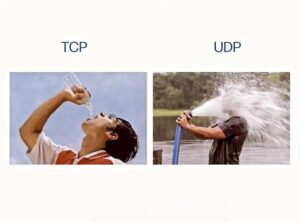
Think of TCP as EMS (postal) courier service. You send a package and get a receipt. The courier confirms it arrived. If it gets lost, they send another. Everything is tracked and guaranteed. Use TCP when your data must arrive perfectly.

Think of UDP as a dispatch rider on a Lagos expressway. They ride fast, deliver without stopping for confirmation, and do not come back if the delivery is missed. Use UDP when speed matters more than the occasional missed packet.

In short, both models have their place in Nigerian networking. Choosing the right one depends on what your application needs most: reliability or speed.


TCP, UDP, and the CCNA Exam

TCP and UDP are tested in the CCNA 200-301 exam. You need to know:

  • The key features and differences between TCP and UDP.
  • The TCP three-way handshake (SYN, SYN-ACK, ACK).
  • Which protocols use TCP and which use UDP (see port numbers below).
  • Common port numbers: HTTP (80), HTTPS (443), DNS (53 UDP/TCP), DHCP (67/68 UDP), FTP (21 TCP), SSH (22 TCP), SMTP (25 TCP).

In short, TCP vs UDP is a guaranteed topic in every CCNA exam sitting. Abuja Data School covers it in detail in the CCNA course with exam-standard practice questions.


Free Resource: Wireshark

In addition to Abuja Data School’s live CCNA training, Abuja Data School recommends Wireshark as the best free tool for any Nigerian networking student who wants to see TCP and UDP in action. Wireshark is a free, open-source network packet analyser. It captures live network traffic on your laptop and lets you read every TCP handshake, every UDP packet, every DNS query, and every HTTP request as real data.

Also, it is free to download and runs on Windows, Mac, and Linux. Moreover, it is used by network engineers worldwide and is referenced in CCNA exam preparation. As a result, any Nigerian who uses Wireshark alongside their Abuja Data School CCNA training will see TCP/IP theory become real, observable network behaviour.

Use Wireshark to see TCP and UDP live on your own network. Use Abuja Data School’s live CCNA course for the structured knowledge, lab practice, and exam preparation that get you certified and employed.


How Abuja Data School Teaches TCP and UDP

Abuja Data School’s CCNA course covers TCP and UDP in the transport layer module with live Saturday instruction, Packet Tracer labs, and Wireshark captures. Students observe real TCP handshakes and compare them to UDP traffic. Also, exam-standard questions on TCP vs UDP are covered in every mock exam session. In short, Abuja Data School builds the TCP/UDP knowledge that passes the CCNA exam and works in real Nigerian network engineering roles.

To enrol, visit the Abuja Data School Data Analysis page.


Frequently Asked Questions: TCP vs UDP

Q1: Is TCP Always Better Than UDP?

No. TCP is better when reliability matters. UDP is better when speed matters. There is no universally superior protocol. In short, the right choice depends on what your application needs. A banking app needs TCP; a live video call needs UDP.

Q2: Can TCP and UDP Run at the Same Time?

Yes. In fact, your device runs many network connections at once. Your web browser uses TCP. Also, your video call uses UDP. Your DNS queries use UDP. All of these run simultaneously on the same device. In short, TCP and UDP are not competing. They serve different needs and run in parallel.

Q3: Why Is UDP Faster Than TCP?

Also, UDP has much less overhead. There is no handshake, no acknowledgement, no retransmission, and no flow control. UDP just sends data immediately. The 8-byte UDP header is also much smaller than TCP’s 20+ byte header. In short, UDP is faster because it does far less work.

Q4: Does WhatsApp Use TCP or UDP?

WhatsApp uses both. Text messages use TCP to ensure they arrive. Voice and video calls use UDP for low latency. Also, the WhatsApp protocol adds its own reliability layer on top of UDP for calls to recover from brief losses without TCP’s overhead. In short, most modern Nigerian communication apps use whichever protocol fits each type of data.


TCP vs UDP Mastered Now Build Your CCNA at Abuja Data School

Ultimately, TCP and UDP are not competing standards. They are two different tools for two different jobs. Every Nigerian network engineer must understand both deeply. The CCNA exam tests both. Real Nigerian networks use both every second of every day. The Nigerians who understand the difference are the ones who build, maintain, and secure those networks.

To that end, take your next step today. Visit the Abuja Data School Data Analysis page and enrol in the CCNA course. As a result, TCP, UDP, and every other networking protocol will be clear, certified skills in your Nigerian tech career toolkit.

af2eea069e87086c8da63c6c87daa8e0

CCNA Certification Training in Abuja: Your Complete Guide

Are you wondering what the CCNA cert is and whether it is worth it in 2026? If so, your search ends here. Abuja Data School is Nigeria’s top live technology training centre. The CCNA (Cisco Certified Network Associate) is the world’s most recognised entry-level networking cert. It proves that you can set up, manage, and fix networks using Cisco equipment the standard hardware in Nigerian banks, telecoms, and government agencies.

So, this guide answers every key question. What does the CCNA cover, what does it cost, what does it pay in Nigeria, and how do you prepare and pass? As a result, by the end you will have a clear, honest answer on whether CCNA is the right next step for your Nigerian tech career.

139a4480566c0ad417e877171971154d

What Is the CCNA Certification?

The CCNA (Cisco Certified Network Associate) is an entry-level networking cert issued by Cisco. It covers the core skills needed to build, manage, and fix small-to-medium networks. A single exam (200-301) covers the full syllabus. There is no prerequisite; anyone can sit it.

The CCNA was redesigned in 2020 and now covers six main areas:

  • Network fundamentals: IP addressing, subnetting, network types, and the OSI model.
  • Network access: VLANs, trunking, spanning tree, and wireless basics.
  • IP connectivity: routing protocols, static routes, and IPv4/IPv6.
  • IP services: DHCP, DNS, NAT, NTP, and SNMP.
  • Security fundamentals: access control lists, port security, VPNs, and firewall basics.
  • Automation and programmability: REST APIs, JSON, Python basics for network automation, and Cisco DevNet.

In short, the 2026 CCNA is a broad, modern cert that covers both traditional networking and the automation skills Nigerian employers increasingly value.


Is the CCNA Still Worth It in 2026? The Honest Answer

Yes. The CCNA is still the best entry-level networking cert for any Nigerian who wants a career in IT infrastructure, network engineering, or cybersecurity. Here is why:

  • Cisco dominates Nigerian enterprise networks: The routers and switches in most Nigerian banks, telecoms, and government offices are Cisco devices. A CCNA proves you can work with the hardware already in the building.
  • Strong salary premium: A CCNA holder in Nigeria earns significantly more than an uncertified IT support worker. The cert is a direct salary lever.
  • Gateway to higher Cisco certs: CCNA is the foundation for CCNP (Professional) and CCIE (Expert), the highest-paying networking certs in Nigeria.
  • Employer recognition: Nigerian ISPs, banks, telecoms firms, and system integrators all list CCNA in their network engineer job ads.
  • Global portability: The CCNA is respected worldwide. Nigerian tech workers who hold it can target remote global roles or emigrate with a cert that is valued anywhere.

In short, the CCNA is not fading. It is evolving. The addition of automation and programmability content makes it more relevant in 2026 than it was six years ago.


CCNA vs CompTIA Network+: Which Is Better for Nigeria?

Feature
CCNA
CompTIA Network+
Difficulty Higher. Requires hands-on lab practice. Lower. More conceptual.
Vendor focus Cisco-specific (dominant in Nigeria) Vendor-neutral
Nigerian employer recognition Very high. Listed in most Nigerian network job ads. Moderate. Less specific.
Validity 3 years (recertify or pass higher cert) 3 years
Best for Anyone targeting Nigerian network engineer roles Those wanting a broad IT foundation first

In short, for a Nigerian who wants a network engineering career, CCNA is the stronger choice. Network+ is a good first step if you have no networking background at all.


Who Should Get the CCNA?

The CCNA is right for you if:

  • You work in IT support and want to move into network engineering.
  • You are studying computer science, electrical engineering, or a related field.
  • Moving into cybersecurity is a goal (CCNA is a strong base for security certs).
  • You want a career at a Nigerian ISP, telecoms firm, bank, or government agency.
  • Working remotely for a global network engineering firm is your target.
  • You already hold a CompTIA Network+ and want to add a Cisco-specific credential.

The CCNA is not the best next step if you have no IT background at all. In that case, start with CompTIA IT Fundamentals or Network+ first. Come to the CCNA with a basic understanding of how computers connect. Build the rest at Abuja Data School.


How to Prepare for the CCNA Exam: A Realistic Study Plan

Step 1: Understand the Exam Format

The CCNA 200-301 exam is taken at a Pearson VUE test centre. It lasts 120 minutes and has around 100 to 120 questions: multiple choice, drag-and-drop, fill-in-the-blank, and simulation labs. Also, the passing score is roughly 825 out of 1000 (Cisco does not publish the exact pass mark). In short, you need both theory and hands-on lab practice to pass.

Step 2: Use Cisco Packet Tracer

Cisco Packet Tracer is a free network simulation tool that is used by most CCNA students worldwide. It lets you build virtual networks, configure routers and switches, and test your setups all without any physical hardware. Also, it is free for registered Cisco NetAcad students. In short, Packet Tracer is the most important free tool for any Nigerian CCNA student.

Step 3: Follow a Structured Course

Do not try to learn from YouTube alone. A structured CCNA course at Abuja Data School covers every exam topic in the right order, with labs at every stage. Also, live instruction means you get answers to your questions immediately. In short, self-study alone has a very high dropout rate. Live, structured training dramatically increases your pass rate.

Step 4: Practice with Exam Dumps and Mock Tests

Use official Cisco practice exams and reputable third-party mock tests to simulate the real exam. Aim to score above 85% on mocks consistently before booking the real exam. Also, time yourself. 120 minutes for 100+ questions is tight. In short, mock tests build both knowledge and exam speed.

Step 5: Book and Pass the Exam

Book through Pearson VUE. Test centres are available in Abuja, Lagos, and other major Nigerian cities. The exam fee of around $330 USD is paid through Pearson VUE. Also, pay in advance and set a clear exam date to keep your study on track. Booking the exam is the commitment that makes preparation real.


Free Resource: Cisco Packet Tracer

In addition to Abuja Data School’s live CCNA training, Abuja Data School recommends Cisco Packet Tracer as the best free tool for any Nigerian CCNA student. Packet Tracer is a free, full-featured network simulation app from Cisco. It lets you build, configure, and test networks with virtual Cisco routers, switches, and end devices all on your laptop. Also, it is free for anyone who registers with Cisco NetAcad. Moreover, Abuja Data School’s CCNA course uses Packet Tracer for every hands-on lab. As a result, any Nigerian can practise real CCNA lab scenarios at home at zero cost.

Use Packet Tracer to build your hands-on skills. Abuja Data School then offers Data School’s live CCNA course for structured learning, exam prep, and career support. Together, they are the fastest path to CCNA success for any Nigerian.


How Abuja Data School Prepares You for the CCNA

Abuja Data School’s CCNA course covers every topic in the Cisco 200-301 syllabus. Students configure real Cisco routers and switches alongside Packet Tracer labs. Every topic is tested with mock exams before the real sitting. Also, career support helps graduates apply to Nigerian ISPs, banks, and telecoms firms. In short, Abuja Data School graduates the CCNA with both the cert and the real-world skill to back it up.

To enrol, visit the Abuja Data School Data Analysis page.


Frequently Asked Questions: CCNA 2026

Q1: How Long Does It Take to Prepare for the CCNA?

Most Abuja Data School students with some networking background are ready to sit the exam in 3 to 6 months of part-time study. Complete beginners need 6 to 9 months. In short, 3 to 6 months of focused study at Abuja Data School is the most common timeline for a Nigerian CCNA pass.

Q2: Can I Pass the CCNA Without Buying Cisco Hardware?

Yes. Cisco Packet Tracer provides a full lab environment at no cost. Most CCNA students at Abuja Data School pass without owning any physical Cisco equipment. In short, a laptop and Packet Tracer are all the hardware you need.

Q3: How Often Must the CCNA Be Renewed?

The CCNA is valid for 3 years. You renew it by passing a higher Cisco exam (such as CCNP), passing the CCNA again, or completing Cisco Continuing Education credits. In short, plan your renewal strategy before your 3-year window closes.

Q4: Is CCNA Good for Cybersecurity in Nigeria?

Yes. The CCNA is a strong base for Cisco’s security track (CyberOps Associate, CCNP Security) and for CompTIA Security+. Many Nigerian cybersecurity engineers hold both CCNA and Security+. In short, CCNA is the smartest foundation for any Nigerian who wants to move into cybersecurity.


The CCNA Is Worth It in 2026, Start Preparing at Abuja Data School

Ultimately, the CCNA is one of the best-returning tech certs a Nigerian can earn in 2026. It opens doors at Nigerian banks, telecoms, ISPs, and government agencies. The pay is strong at every level, and it is the foundation for every higher Cisco cert. And it is globally portable, opening remote roles and emigration paths that most other Nigerian IT certs cannot match.

To that end, take your next step today. Visit the Abuja Data School Data Analysis page and enrol in the CCNA course. As a result, your CCNA cert, your network engineering career, and your highest-ever Nigerian tech salary are just one enrolment at Abuja Data School away.

Hi, How Can We Help You?