

Are you struggling with subnetting? If so, your search ends here. Abuja Data School is Nigeria’s top live technology training centre. Subnetting is one of the most feared topics for CCNA students in Nigeria. But it does not have to be. Once you understand the logic, subnetting becomes a fast, repeatable skill. This guide breaks it down step by step, with Nigerian examples, a method you can do mentally, and a cheat sheet to memorise.
So, this guide covers what a subnet is, why we subnet, the key terms, the magic number method, a worked Nigerian example, and a subnetting cheat sheet. In addition, it covers CIDR notation and how to calculate the number of hosts. As a result, by the end you will be able to subnet any /24, /25, /26, /27, /28, /29, or /30 network in under 30 seconds.
What Is a Subnet?
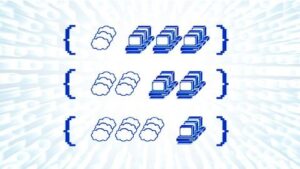
A subnet (short for sub-network) is a smaller, logically divided section of a larger IP network. Subnetting is the process by which one large network is divided into multiple smaller ones.
Think of a large Abuja bank office. The whole building uses the network 192.168.1.0/24. Without subnetting, all 254 devices share the same broadcast domain. Every broadcast goes to every device. Traffic is noisy and hard to secure. With subnetting, the bank divides the network: Floor 1 (Retail) gets 192.168.1.0/26. The second floor (IT) gets 192.168.1.64/26. Third floor (Finance) gets 192.168.1.128/26. The top floor (Management) gets 192.168.1.192/26. Now each floor is isolated. Broadcasts are contained within each subnet. Traffic is cleaner and far easier to secure.
In short, subnetting reduces broadcast traffic, improves security, and lets network engineers control traffic flow between Nigerian departments and sites.
Key Terms You Must Know
- IP address: A 32-bit number written as four octets (e.g. 192.168.1.100). Identifies a specific device.
- Subnet mask: A 32-bit number that defines which part of the IP address is the network and which part is the host. Written as 255.255.255.0 or as /24 in CIDR notation.
- Network address: The first address in a subnet. All host bits are 0. Not assignable to a device (e.g. 192.168.1.0).
- Broadcast address: The last address in a subnet. All host bits are 1. Not assignable. Packets sent here go to all hosts in the subnet (e.g. 192.168.1.255).
- Usable hosts: Total addresses minus 2 (network and broadcast). A /24 has 256 total addresses and 254 usable hosts.
- CIDR notation: Slash notation for the subnet mask. /24 means 24 network bits. /26 means 26 network bits.
- Host range: All usable IP addresses between the network address and the broadcast address.
The Subnet Bit Chart: Your Foundation
In fact, all subnetting is based on powers of 2. Memorise this row:
| Bit position (from right) | 7 | 6 | 5 | 4 | 3 | 2 | 1 | 0 |
| Value | 128 | 64 | 32 | 16 | 8 | 4 | 2 | 1 |
Also, the key subnetting numbers are all powers of 2: 256, 128, 64, 32, 16, 8, 4, 2. Also, every subnet size is one of these numbers. In short, if you know your powers of 2, you can subnet.
The Magic Number Method: Subnet Any Network in 4 Steps
The magic number method is the fastest way to subnet, and no long binary conversion is needed. In short, here is the method:
- Step 1: Find the magic number. Subtract the last non-255 octet of the subnet mask from 256. That is your block size (the magic number).
- Step 2: List the subnets. Start at 0 and add the magic number repeatedly: 0, 32, 64, 96, 128, 160 …
- Step 3: Find the network address. The subnet your IP falls in is the largest multiple of the magic number that is still less than or equal to the host octet.
- Step 4: Find the broadcast address. Take the next multiple of the magic number and subtract 1.
In short, four steps, no binary needed. So, let us now apply this to a real Nigerian example.
Worked Example: Subnetting a Nigerian Bank Network
A network engineer at an Abuja bank needs to subnet the address 10.0.0.50/27. Find the network address, broadcast address, host range, and number of usable hosts.
Step 1: Find the Magic Number
A /27 mask is 255.255.255.224. Last octet: 224. So: 256 − 224 = 32. That gives a block size (magic number) of 32.
Step 2: List the Subnets
Start at 0 and count up in steps of 32: 0, 32, 64, 96, 128 …
Step 3: Find the Network Address
The host IP is 10.0.0.50. Host octet: 50. Largest multiple of 32 that is ≤ 50: that is 32. So the network address is 10.0.0.32.
Step 4: Find the Broadcast Address
The next subnet starts at 10.0.0.64. So the broadcast address is 10.0.0.63 (one less).
Results
- Network address: 0.0.32
- Broadcast address: 0.0.63
- Host range: 0.0.33 to 10.0.0.62
- Usable hosts: 30 (32 − 2)
Also, the same method works for any prefix length. Practise this on 5 different IPs, and you will be subnetting mentally within an hour.
The Subnetting Cheat Sheet: Memorise This Table
| CIDR | Subnet Mask | Block Size | Total Addresses | Usable Hosts | Nigerian Use Case |
| /24 | 255.255.255.0 | 256 | 256 | 254 | Large office LAN (e.g. Abuja bank floor) |
| /25 | 255.255.255.128 | 128 | 128 | 126 | Medium LAN, split a /24 in two |
| /26 | 255.255.255.192 | 64 | 64 | 62 | Department subnet (e.g. 62-device floor) |
| /27 | 255.255.255.224 | 32 | 32 | 30 | Small department (e.g. 30-device office) |
| /28 | 255.255.255.240 | 16 | 16 | 14 | Small team subnet (e.g. 14 IP phones) |
| /29 | 255.255.255.248 | 8 | 8 | 6 | Router-to-router WAN link with small LAN |
| /30 | 255.255.255.252 | 4 | 4 | 2 | Point-to-point WAN link between two routers |
| /31 | 255.255.255.254 | 2 | 2 | 0* | P2P link only (RFC 3021). No broadcast. |
| /32 | 255.255.255.255 | 1 | 1 | 1 | Single host route (loopback, specific IP rule) |
In short, /30 is the classic CCNA point-to-point link subnet. /24 to /27 are the most common in Nigerian enterprise networks.
How to Calculate the Number of Hosts
In short, the formula is simple: 2ⁿ − 2. Where n is the number of host bits (32 minus the prefix length).
- /24: 32 − 24 = 8 host bits. 2⁸ − 2 = 254 hosts.
- /26: 32 − 26 = 6 host bits. 2⁶ − 2 = 62 hosts.
- /27: 32 − 27 = 5 host bits. 2⁵ − 2 = 30 hosts.
- /28: 32 − 28 = 4 host bits. 2⁴ − 2 = 14 hosts.
- /30: 32 − 30 = 2 host bits. 2² − 2 = 2 hosts.
Also, the formula for the number of subnets is 2ˢ, where s is the number of borrowed subnet bits. In short, both formulas are essential CCNA exam knowledge.
Free Resource: SolarWinds Subnet Calculator
In addition to Abuja Data School’s live CCNA training, Abuja Data School recommends the SolarWinds Advanced Subnet Calculator as the best free tool for Nigerian CCNA students to check their subnetting work. This free online tool takes any IP address and CIDR prefix and instantly shows the network address, broadcast address, host range, and number of usable hosts. Also, it is free with no account needed. Moreover, Abuja Data School students use it to verify manual subnetting during practice. As a result, any Nigerian CCNA student can use it to check calculations until the magic number method is fully memorised.
Use the subnet calculator to verify your manual work. Use Abuja Data School’s live CCNA course to build the speed and accuracy needed to subnet under exam pressure without any tool.
How Abuja Data School Teaches Subnetting
Abuja Data School’s CCNA course covers subnetting across multiple live sessions with timed drills and worked Nigerian network examples. Students learn the magic number method, the binary method, and VLSM (Variable Length Subnet Masking). Also, every subnetting lesson ends with a timed test: subnet 10 networks in 5 minutes. By the time an Abuja Data School student sits the CCNA exam, subnetting is automatic. In short, Abuja Data School makes subnetting the easiest part of the CCNA, not the hardest.
To enrol, visit the Abuja Data School Data Analysis page.
Frequently Asked Questions: Subnetting
Q1: Do I Need to Know Binary for CCNA Subnetting?
First, you need to understand binary at a basic level for the CCNA. But the magic number method lets you subnet most questions without converting to binary. Also, Abuja Data School teaches both methods, so you have a fast shortcut and a deep backup. In short, binary helps, but the magic number method is what gets you through the exam quickly.
Q2: What Is VLSM?
VLSM (Variable Length Subnet Masking) means using different subnet sizes for different parts of the same network. For example, a Nigerian corporate WAN link uses /30 (2 hosts), while the branch LAN uses /25 (126 hosts). Also, VLSM conserves IP address space by giving each segment only the addresses it needs. Moreover, VLSM is a CCNA exam topic. In short, VLSM is subnetting applied flexibly to real Nigerian network design.
Q3: How Fast Should I Be Able to Subnet for the CCNA Exam?
Any subnetting question should be answered in under 45 seconds. The CCNA exam has 100+ questions in 120 minutes. Slow subnetting wastes valuable time. Also, Abuja Data School’s timed drills build this speed before you sit the real exam. In short, speed comes from repetition. Practise 10 subnets a day for two weeks.
Subnetting Is Learnable: Master It at Abuja Data School
Ultimately, subnetting is not magic. It is a four-step process based on simple arithmetic and powers of 2. Every Nigerian CCNA student who commits to daily practice masters it. The magic number method removes the fear. A good cheat sheet removes the guesswork. Live instruction at Abuja Data School removes the confusion.
To that end, take your next step today. Visit the Abuja Data School Data Analysis page and enrol in the CCNA course. As a result, subnetting will become your fastest and most confident CCNA skill.