Do you want to build robots and smart devices in Abuja? If so, your search ends here. Abuja Data School is the FCT’s top robotics, Arduino, and Raspberry Pi training centre. Every course is live, hands-on, and kit-based. Students build real circuits and real robots from the very first class. Also, every graduate leaves with a full portfolio of working projects. That is why Abuja Data School is rated the best robotics and electronics training centre in Nigeria.
So, this guide covers all you need to know. It explains what Arduino and Raspberry Pi are, what you can build, and why these skills matter in Abuja. In addition, it shows what Abuja Data School teaches at each stage. Also, it covers what you can earn and who will hire you. As a result, by the end, you will have a clear plan to start your robotics journey in the FCT today.
Why Learning Robotics in Abuja Is the Smartest Tech Move of 2026
Simply put, robots and smart devices now run the world. Factories, farms, hospitals, and homes all use automated systems. Someone has to build them. That someone can be you.
Also, Abuja is growing fast as a tech hub. NITDA, the NCC, and federal innovation funds all back tech training in the FCT. So Abuja is a great place to learn to build smart systems. Yet with them, you can build a security alarm, an automated farm, or a smart home device. As a result, building robots and smart devices in Abuja is one of the best skill moves you can make in 2026.
Arduino vs Raspberry Pi: Know the Difference Before You Choose
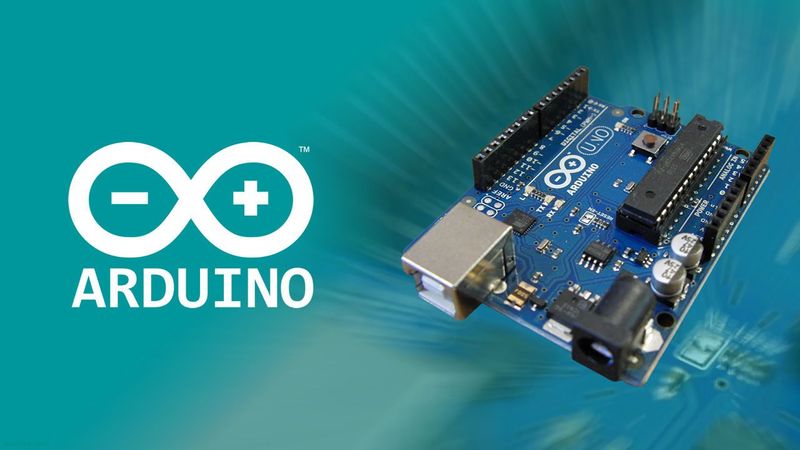
Many Abuja learners ask: should I start with Arduino or Raspberry Pi? Here is the clear answer:
| Factor | Arduino | Raspberry Pi |
| What it is | A small microcontroller board | A tiny, full Linux computer |
| Best for | Real-time hardware control: sensors, motors, LEDs | Tasks that need an OS: web servers, AI, camera apps |
| Power use | Very low power can run on batteries | Needs a power supply; uses more power |
| Ease of start | Easiest for total beginners | Requires Linux basics to get started |
| Language | C++ (simplified for Arduino IDE) | Python, C, Node.js, and more |
| Best project types | Robot cars, alarms, weather stations, smart locks | Home servers, CCTV, AI cameras, voice assistants |
| Cost in Abuja | N10k–N18k for a starter kit | N25k–N50k for a full Pi kit |
In short, start with Arduino if you are new to electronics. Switch to Raspberry Pi when you want to add Linux, AI, or internet features. Also, Abuja Data School teaches both. So you can start with one and add the other as your skills grow.
6 Amazing Projects You Build at Abuja Data School
- Project 1: LED Blinker and Buzzer Alert: Your very first circuit. An LED blinks on and off. A buzzer sounds when a button is pressed. Simple but this is where every great engineer starts.
- Project 2: Obstacle-Avoiding Robot: You build a robot on a chassis with two DC motors. An ultrasonic sensor is added at the front to detect walls. The robot drives forward and stops when it sees a wall. It turns and drives the other way. This runs all by itself.
- Project 3: Smart Security Alarm: You wire a PIR motion sensor to the Arduino. When motion triggers the sensor, a buzzer sounds and an LED flashes. Also, the GSM module sends an SMS to your phone. Your home is now protected by your own code.
- Project 4: Weather Station with LCD Display: You connect a temperature and humidity sensor to the board. Readings show on an LCD screen in real time. Also, you log the data to a file on an SD card. Your own weather station, built from scratch.
- Project 5: Raspberry Pi Web Server: A Raspberry Pi is set up to run a small web server. You create and host a web page on the Pi. Anyone on the same Wi-Fi can open it in a browser. In addition, sensor data from the Pi is shown live on the page.
- Project 6: IoT Smart Home Controller: Lights, a fan, and a door lock are controlled from a phone app over Wi-Fi. The ESP8266 module connects your Arduino to the internet. A simple dashboard displays each device’s state in real time.
Also, every project is documented and pushed to GitHub. So your portfolio is live and shareable from the moment you finish. Best of all, your projects prove your skills better than any certificate ever could.
Abuja Data School: The Only Dedicated Robotics Training Centre in Abuja
When it comes to robotics and Arduino training in Abuja, Abuja Data School leads the FCT. Indeed, it is Abuja’s most trusted robotics and embedded systems training centre. Every instructor is a working electronics engineer or IoT developer. So you learn from people who build real smart devices and automation systems for real Abuja clients every week. Also, every student receives their own kit on day one. You do not share. You own your components. That is why Abuja Data School robotics graduates arrive at their first client or employer with genuine, hands-on build experience.
In addition, Abuja Data School believes every Nigerian from a 10-year-old student to a 50-year-old professional can learn to build smart devices. Electronics is not hard. It is just new. So Abuja Data School built its robotics programme to take a complete beginner from a blinking LED to a working, connected smart device in four to twelve weeks. As a result, graduates build real projects, win real clients, and launch real tech careers in Abuja.
To explore all robotics and tech courses, visit the Abuja Data School Data Analysis page.
How Abuja Data School Trains You Differently From Every Other Robotics Course
Here is what makes Abuja Data School the clear first choice for robotics training in the FCT:
- Your own kit on day one: Every student gets their own Arduino or Raspberry Pi starter kit at the start of the course. Components are not just shown on a screen. You wire them, power them, and test them in every class. So you leave with genuine hands-on circuit skills.
- Real projects, not simulations: Every module ends with a working project. By week two, your first robot is moving. Week eight ends with a full IoT system live and running. Also, every project goes to GitHub as part of your portfolio. As a result, you have real proof of your skills before you apply for any role.
- Code and hardware together: Abuja Data School teaches both the electronics and the code side of every project. In addition, you learn to debug faulty circuits and broken code. So you develop the full skill set of a real embedded engineer, not just a hobbyist.
- Kids and adults, beginners and pros: Robotics classes at Abuja Data School welcome ages 10 and above. Also, adult beginners, engineering students, and working professionals all train together. In short, no one is left behind.
- Flexible timing: All courses run in the evenings and at weekends. Moreover, online options come with a kit delivered to your door. So Lagos traffic is never a reason to miss your class.
- Career and client links: Every graduate receives CV help, a GitHub portfolio review, and direct referrals to Abuja tech firms, schools, and STEM hubs. In other words, Abuja Data School takes you from circuit beginner to hired embedded engineer.
Master Every Level: Full Robotics Course List at Abuja Data School 2026
Here is the complete robotics, Arduino, and Raspberry Pi training course list at Abuja Data School in 2026:
| Course | Key Skills and Projects Built | Duration | Level |
| Arduino Foundations | IDE setup, LED, buzzer, button, first circuit project | 2 weeks | Beginner |
| Sensors and Circuits | Ultrasonic, PIR, IR, LDR, temp sensors, circuit builds | 3 weeks | Beginner–Mid |
| Motor Control and Movement | DC motors, servo, L298N driver, mobile robot chassis | 3 weeks | Intermediate |
| Obstacle-Avoiding Robot | Sensor+motor project: autonomous moving robot build | 4 weeks | Intermediate |
| Smart Home and IoT Projects | ESP8266, Wi-Fi control, Blynk app, IoT dashboard | 4 weeks | Intermediate |
| Raspberry Pi Foundations | Pi setup, Linux basics, GPIO, Python on Pi, web server | 3 weeks | Intermediate |
| Raspberry Pi AI Projects | Camera, face detection, voice control, AI on edge | 4 weeks | Advanced |
| Robotics for Kids (Age 10–15) | Lego Mindstorms, Arduino basics, fun robot projects | Ongoing | Beginner |
| Full Robotics Career Path | All above tracks, complete embedded engineer programme | 5 months | Beginner |
Build Your Skills Stage by Stage: What You Learn at Abuja Data School
Abuja Data School builds your robotics skills in clear, exciting stages. Each stage adds new hardware and code power. Also, every stage ends with a real, working project you can show and be proud of. So here is your journey from stage one to stage six:
Stage 1: Your First Circuit Week 1 to 2
First, you set up the Arduino IDE on your laptop. A USB cable connects the board. Also, you write your first sketch: the classic LED blink. Set a pin high and low in a loop. Moreover, you add a buzzer and wire a push button. In addition, you open the serial monitor to read sensor values. As a result, by the end of week two, you know how digital input and output work and you have built your very first circuit.
Stage 2: Sensors and Signals Weeks 3 to 5
Next, Abuja Data School introduces sensors as the eyes and ears of any robot. You wire an ultrasonic sensor to the Arduino and measure distance. So you read the value and print it on screen. Also, a PIR sensor detects motion and your buzzer sounds. Moreover, a light sensor dims the LED as the room gets dark. In addition, a temperature sensor logs data every ten seconds. As a result, your robot can now sense and respond to the physical world.
Stage 3: Motors and Movement Weeks 6 to 8
In addition, Abuja Data School teaches motor control as the movement layer. Indeed, every mobile robot needs motors. So you wire a DC motor to an L298N driver board. Also, you code the motor to spin forward, backward, and stop. Moreover, you control speed using PWM signals. In addition, a servo motor sweeps 0 to 180 degrees on command. As a result, you build and drive a real, moving robot chassis for the first time.
Stage 4: Autonomous Robot Build Weeks 9 to 12
Also, Abuja Data School builds a full autonomous robot as the core project. Not only that, the obstacle-avoiding robot is the project that gets every Abuja Data School robotics student the most attention at job fairs and STEM events. So you mount the ultrasonic sensor on a servo at the robot’s front. Also, the robot drives forward on its own. When it gets too close to a wall, it stops, sweeps left and right, and turns toward the clearer path. As a result, your robot moves around a room entirely on its own.
Stage 5: IoT and Smart Devices Weeks 13 to 16
Furthermore, Abuja Data School teaches IoT and wireless control as the advanced layer. Indeed, most real-world robots and smart devices are controlled remotely. So you add an ESP8266 Wi-Fi module to the Arduino. Also, you set up a phone app to send commands over Wi-Fi. Moreover, you control lights, a fan, and a door lock from the phone. In addition, a live dashboard shows each device’s state in real time. As a result, you build a real smart home controller that works from anywhere in the room or across the internet.
Stage 6: Raspberry Pi and AI at the Edge
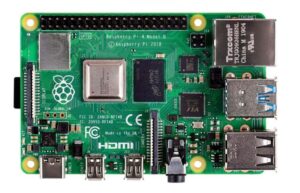
Additionally, Abuja Data School teaches Raspberry Pi as the final, most powerful layer. Indeed, Raspberry Pi is a full Linux computer the size of a credit card. So you write Python directly on the Pi to control GPIO pins. Also, you connect a Pi camera and set up a live video feed. Moreover, you use OpenCV to detect faces in the camera feed. In addition, you build a voice command system: the Pi listens, understands, and acts. As a result, you build AI-powered smart devices that can see, hear, and react right here in Abuja.
Who Will Hire You? 6 Sectors That Need Robotics Skills in Abuja
Also, Abuja Data School robotics graduates land roles and clients across the FCT and beyond. Here is where they work:
- STEM schools and training centres: Abuja’s growing STEM education sector hires Arduino tutors and robotics lab managers. As a result, STEM teaching is the most common first income stream for Abuja Data School robotics graduates.
- Engineering and manufacturing firms: Abuja factories and engineering firms hire embedded engineers for automation, monitoring, and control systems. So manufacturing offers stable, well-paid roles for robotics-trained professionals.
- Agri-tech and smart farming: Nigerian agri-tech firms use Arduino-based soil sensors, irrigation controllers, and weather stations. Moreover, funded agri-tech projects in the FCT actively hire IoT engineers.
- Security and surveillance firms: Smart alarms, PIR-triggered cameras, and automated gate systems are built for Abuja homes and offices. In addition, security product firms hire Arduino developers to design and test their devices.
- Federal government and NITDA: NITDA and federal innovation programmes back local tech makers and embedded engineers. Furthermore, government-backed hackathons and grants reward Abuja robotics talent.
- Freelance smart device building: Best of all, many graduates go fully freelance. A skilled Abuja IoT developer can serve three to five clients and earn N500k to N2m per month building custom smart systems for homes, farms, and businesses.
Start Today: 4 Simple Steps to Join Abuja Data School Robotics
Step 1: Pick Your Course and Get Your Kit
First, visit the Abuja Data School Data Analysis page and pick your robotics course. Never touched electronics before? Start with Arduino Foundations. It takes two weeks. Also, your starter kit is included no extra cost, no separate purchase needed. Want to go straight to smart homes or Raspberry Pi? Choose the right track for your goal. Moreover, Abuja Data School’s team will match you to the right course at no cost. So, do not guess, just contact us.
Step 2: Apply and Receive Your Kit
Next, apply online or in person at the Abuja Data School office. It is simple. It takes under fifteen minutes to complete. Also, no electronics or coding experience is needed. So Abuja Data School welcomes complete beginners, engineering students, school children with a parent, and curious adults of all ages. In addition, once you apply, the school prepares your kit before your first class. Moreover, online students get their kit delivered to their Abuja address. As a result, you arrive at your first class ready to plug in and build.
Step 3: Build Real Projects in Every Class
In addition, every Abuja Data School robotics session is a live build session. So you wire circuits and write code in every class. Also, you complete a working mini-project in each module. Moreover, your instructor reviews your build and gives direct, clear feedback on your wiring, your code, and your circuit logic. As a result, you finish the course with a portfolio of four to six real, working projects on GitHub. Consequently, any Abuja employer, school, or client can see and test your builds before they hire you.
Step 4: Get Hired, Teach, or Launch Your Robotics Business
Finally, Abuja Data School career support starts the moment you finish your course. So you receive CV polish, a GitHub portfolio review, and direct referrals to Abuja tech firms, STEM schools, and agri-tech companies. Also, graduates who want to freelance get a guide to finding Abuja clients, setting project rates, and pitching smart device builds. Moreover, Abuja Data School hosts regular STEM and tech hiring events. As a result, many graduates land their first robotics role, their first tutor contract, or their first freelance client within 30 to 60 days.
Free Resource: Build More With the Official Arduino Project Hub
In addition to the training at Abuja Data School, Abuja Data School recommends the Arduino Project Hub as the best free external resource for robotics students in Abuja. The Arduino Project Hub is the official Arduino community platform. It has thousands of free, step-by-step project guides for every skill level from beginner LED projects to advanced robot arms and AI systems. Also, every project has a full parts list, a circuit diagram, and working code you can copy and adapt. As a result, every Abuja Data School robotics student can use the Project Hub to find new project ideas, extend their class builds, and keep improving between sessions.
Arduino Project Hub works best alongside Abuja Data School’s live, kit-based training. The Hub gives you thousands of project ideas and a global maker community. But it cannot replace the personal build feedback, real Abuja project briefs, and career links that Abuja Data School provides in every class. So use both resources together for the fastest path from LED blink to IoT engineer in Abuja.
Got Questions? Here Are the Answers Abuja Students Ask Most
Q1: Is Abuja Data School Truly the Best Robotics School in Abuja?
Yes, without doubt. Abuja Data School is the top robotics, Arduino, and Raspberry Pi training centre in the FCT. It has kit-inclusive courses, real project builds, code and hardware trained together, kids and adult tracks, flexible timing, and strong career support. Its robotics graduates teach in STEM schools, build for agri-tech firms, serve as IoT engineers, and win freelance clients. No other Abuja robotics course puts a real kit in your hands and has you building from the very first class. So Abuja Data School is the clear first choice.
Q2: Do I Need Any Electronics or Coding Background to Start?
No, not at all. You need zero prior electronics or coding knowledge to start the Arduino Foundations course. Abuja Data School teaches everything from scratch. Also, the Arduino programming language is a beginner-friendly version of C++. In short, if you can follow step-by-step instructions and you enjoy building things, you are ready. Abuja Data School will have you blinking LEDs and wiring circuits on your very first day.
Q3: How Old Do You Need to Be to Start Robotics Training in Abuja?
Abuja Data School welcomes students from age 10 upwards. Children aged 10 to 15 join the Robotics for Kids track. It uses Lego Mindstorms and basic Arduino with age-appropriate projects and games. Also, adults of all ages are welcome in the standard tracks. In short, whether your child is 10 or you are 50, Abuja Data School has a robotics course designed for you.
Q4: How Long Does Robotics Training Take at Abuja Data School?
Arduino Foundations takes two weeks. Sensors and Motor Control courses each take three weeks. The Obstacle-Avoiding Robot and Smart Home courses each take four weeks. Raspberry Pi Foundations takes three weeks. The Raspberry Pi AI course takes four weeks. All tracks together form the Full Robotics Career Path, which runs for five months. Also, all courses run part-time. So you build robots while you keep your current job or school schedule.
Q5: Does Abuja Data School Offer Online Robotics Training?
Yes, Abuja Data School offers live online robotics and Arduino training. A starter kit is delivered to your home before your first class. So you follow along with every live build, wire the same circuits, and write the same code as the in-class students. You get the same instructor feedback on your wiring and your code. Also, all session recordings are open after every class. In short, whether you are in Abuja, Kaduna, or anywhere in Nigeria, great robotics training is available to you through Abuja Data School.
The Future Is Built by Makers Start Building Yours at Abuja Data School Today
Ultimately, robotics, Arduino, and Raspberry Pi training in Abuja has never been more within reach. The tools are cheap. The skills are powerful. Jobs are real and the pay is strong. And Abuja Data School has built the clearest path from your first blinking LED to a working, funded, tech career in the FCT.
Whether you want to teach robotics at an Abuja school, build smart farms for agri-tech clients, work as an IoT engineer for a global remote firm, or simply build cool things that move and think Abuja Data School has the right course for you. Best of all, no degree is needed. No prior experience is required. All you need is curiosity and a desire to build. Abuja Data School gives you the kit, the code, and the community.
Your First Robot Is Waiting Take the First Step Today
To that end, do not wait for the next intake. Indeed, the Abuja engineers now earning N1.8m per month and building smart devices for global clients all started with one class. One LED. One blinking light. That is where every great maker begins. So, visit the Abuja Data School Data Analysis page right now, pick your robotics course, and apply. As a result, your first robot and your first robotics career in Abuja are just one enrolment at Abuja Data School away.