
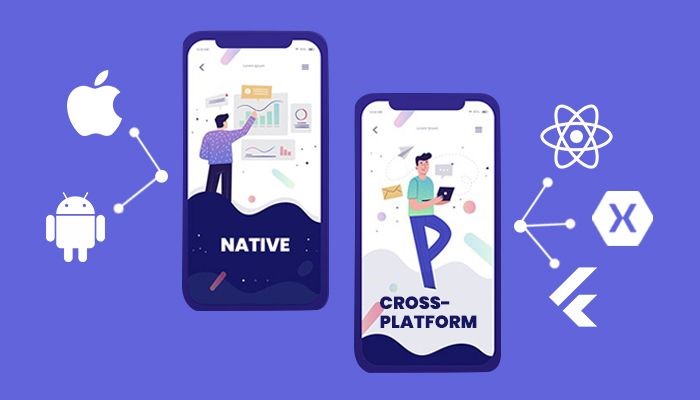
Are you wondering what the difference is between native and cross-platform app development? If so, your search ends here. Abuja Data School is Nigeria’s top live technology training centre. Among the most important choices any Nigerian mobile developer faces is this one; the wrong decision can cost months and thousands of dollars. This guide explains both approaches clearly and honestly, with real Nigerian examples.
So, this guide covers what native and cross-platform development each mean, their real pros and cons, a full side-by-side comparison, Nigerian use cases for each, and which to choose for your specific goal in 2026. In addition, it covers how Abuja Data School teaches cross-platform development with Flutter. As a result, by the end, you will know exactly which approach fits your Nigerian project.
What Is Native App Development?
Native app development means building an app specifically for one platform using that platform’s official language and tools. Android native development uses Kotlin (or older Java) with Android Studio. iOS uses Swift (or older Objective-C) with Xcode.
A native app runs directly on the platform’s operating system with no translation layer in between. Also, it has full access to every device feature: camera, GPS, Bluetooth, biometrics, push notifications, and hardware sensors. Moreover, Google and Apple optimise their platforms for their own native tools first, so native apps generally deliver the best possible performance and user experience.
In short, native development means building the best possible app for one platform, but you build it twice if you want both Android and iOS.
What Is Cross-Platform App Development?
Cross-platform development means building one codebase that runs on both Android and iOS (and often web and desktop too). Instead of writing separate code for each platform, you write once and deploy everywhere.
The most popular cross-platform frameworks in Nigeria are Flutter (Google, Dart) and React Native (Meta, JavaScript). Also, newer options like Kotlin Multiplatform Mobile (KMM) and Ionic exist, though they are less common in the Nigerian market. In short, cross-platform development trades some platform depth for a big saving in time and cost.
Native vs Cross-Platform: The Full Comparison
|
Factor
|
Native (Android/iOS)
|
Cross-Platform (Flutter/React Native)
|
| Language | Kotlin/Java (Android) or Swift (iOS) | Dart (Flutter) or JavaScript (React Native) |
| Codebase | Separate code for each platform | One codebase for all platforms |
| Performance | Best possible (no abstraction layer) | Very good (small gap with modern frameworks) |
| Device access | Full access to all APIs | Good; some advanced APIs need native plugins |
| UI look | Perfectly matches each platform’s style | Consistent cross-platform (Flutter) or native-style (RN) |
| Development speed | Slower (two separate codebases) | Faster (one codebase, faster iteration) |
| Cost to build | Higher (two teams or twice the time) | Lower (one team, one codebase) |
| Maintenance | Double the work (two codebases) | Easier (one codebase to update) |
| Nigerian job ads | Fewer (mostly banks and large firms) | More (startups, fintechs, product companies) |
| Best for | Complex apps needing max performance | Startups, MVPs, apps for both platforms quickly |
When to Choose Native Development for a Nigerian App
Native development is the right choice in specific Nigerian scenarios. Here is when to go native:
- High-performance banking or financial apps: GTBank, Access, and Zenith all maintain native Android and iOS apps because their apps process millions of transactions and need direct access to biometric authentication, hardware security chips, and bank-grade APIs. Also, Nigerian banking regulators sometimes have performance and security requirements that favour native.
- Apps that need deep hardware access: A Nigerian health app that uses continuous Bluetooth glucose monitoring, or an Abuja smart city app that interfaces with IoT sensors, may need native access to hardware APIs that cross-platform frameworks cannot reach.
- Games and GPU-intensive apps: Native tools give the most direct access to the device GPU. Nigerian game studios targeting the global market often choose native Android (Kotlin) with game engines.
- Large teams with platform specialists: A large Nigerian fintech with separate Android and iOS teams will often prefer native because each team moves faster within its domain.
In short, choose native when performance, security, and full device access are your top priorities, and you have the budget and team to maintain two codebases.
When to Choose Cross-Platform for a Nigerian App
Cross-platform development is the right choice for most Nigerian startups, freelancers, and product builders in 2026. Here is when to go cross-platform:
- You are a solo Nigerian developer or small team: Building one Flutter codebase is far faster than building two native apps. Also, you only need to hire developers who know one framework.
- You need both Android and iOS quickly: Most Nigerian fintech startups and consumer apps need to reach both Android and iPhone users. Cross-platform delivers this in half the time.
- You are building an MVP: If you are a Nigerian founder testing a product idea, cross-platform lets you get to market fast, collect feedback, and iterate. You can always rewrite in native later if you raise funding.
- Your budget is limited: For most Nigerian businesses, maintaining two separate codebases is not cost-effective. One Flutter app serves both platforms at a fraction of the cost.
- Your app is not hardware-intensive: Most Nigerian business apps e-commerce, fintech, NGO tools, health booking, logistics trackers do not need features that cross-platform frameworks cannot provide.
In short, cross-platform is the smarter choice for 90% of Nigerian mobile projects in 2026. Only a small set of complex apps truly need native development.
Real Nigerian App Examples: Native vs Cross-Platform
| Nigerian App Type | Best Approach | Why |
| Major Nigerian bank (GTBank, Zenith) | Native (Android + iOS) | Max security, biometrics, CBN compliance |
| Nigerian fintech startup (MVP) | Cross-platform (Flutter) | Fast to market, one team, both platforms |
| Nigerian e-commerce app | Cross-platform (Flutter or React Native) | Same UI on Android and iPhone; fast updates |
| NGO beneficiary tracker (Abuja) | Cross-platform (Flutter) | Works on low-end Android phones; fast to build |
| Nigerian health booking app | Cross-platform (Flutter) | Reaches all patients regardless of phone brand |
| Nigerian mobile game | Native Android (Unity or Kotlin) | GPU access; max performance |
| Abuja smart city IoT app | Native Android | Deep Bluetooth/sensor hardware access needed |
| Nigerian news or content app | Cross-platform (Flutter) | Same reading experience on any phone |
Free Resource: Android Developers Official Site
In addition to Abuja Data School’s live training, Abuja Data School recommends the Android Developers official site as the definitive free resource for any Nigerian who wants to understand native Android development. The site covers Kotlin fundamentals, Android Studio setup, the Android component model (Activities, Fragments, Services), and Jetpack Compose for modern Android UI. Also, it includes free codelabs for every major Android topic. Moreover, it explains exactly which device APIs are available natively, helping any Nigerian developer understand what cross-platform frameworks can and cannot access. As a result, any Nigerian who reads the Android Developers site alongside Abuja Data School’s Flutter course will have both a deep understanding of the native layer and a practical cross-platform skill.
Use the Android Developers site to understand the native layer. Abuja Data School’s Flutter course to build the practical cross-platform skill that gets most Nigerian mobile developer jobs.
How Abuja Data School Teaches Mobile App Development
Abuja Data School’s Mobile App Development course teaches cross-platform development using Flutter, the approach that fits most Nigerian developer and startup needs. Students learn Dart, Flutter widgets, state management, API calls, Firebase back ends, and Google Play Store submission. Also, the course includes an introduction to the native layer, so students understand why Flutter works the way it does. In short, Abuja Data School gives Nigerian developers the fastest, most practical path to a working, deployed mobile app.
To enrol, visit the Abuja Data School Data Analysis page.
Frequently Asked Questions: Native vs Cross-Platform
Q1: Will Cross-Platform Apps Feel Slower Than Native Apps on Nigerian Phones?
On mid-range and high-end phones, the difference is not noticeable. On very low-end Nigerian Android phones, native apps can feel slightly faster for complex animations. However, most Nigerian business apps do not run complex animations. In short, Flutter and React Native apps perform well on the majority of Nigerian phones in active use today.
Q2: Can I Convert a Cross-Platform App to Native Later?
You can, but it means a full rewrite. Most Nigerian startups choose not to convert because the performance gap is no longer large enough to justify the cost. Also, Flutter’s performance has improved enough that most Nigerian apps will never need native. In short, build cross-platform first and only consider a native rewrite if a specific hardware or performance need demands it.
Q3: Do Nigerian Employers Prefer Native or Cross-Platform Developers?
Most Nigerian mobile developer job ads in 2026 request Flutter or React Native skills. Also, native Kotlin or Swift roles are mostly limited to large Nigerian banks and established product companies. In short, cross-platform skills open more Nigerian job doors in 2026 than native skills do for most developers.
Choose Your Approach: Build Your Nigerian App at Abuja Data School
Ultimately, the right choice between native and cross-platform depends on your project, your team, and your timeline. For most Nigerian developers, founders, and freelancers in 2026, cross-platform with Flutter is the answer. It is fast, cost-effective, and delivers apps that Nigerian users are happy to use on both Android and iPhone.
To that end, take your next step today. Visit the Abuja Data School Data Analysis page and enrol in the Mobile App Development course. As a result, your first cross-platform Nigerian app, your first Play Store listing, and your first mobile development income are just one enrolment at Abuja Data School away.