image1_3d06e7533b

Zapier Workflow Automation Training in Abuja: Complete Guide


27e35c526450efbe5beb9cfadb0feb13

Do you want to learn to automate workflows with Zapier in Abuja? If so, your search ends here. Abuja Data School is the FCT’s top Zapier and workflow automation training centre. Every course is live and build-based. Students create real Zaps and automate real tasks from the very first class. Also, every graduate leaves with a full set of Zapier skills that saves their employer or business hours of work every week. That is why Abuja Data School is rated the best workflow automation training centre in Nigeria.

So, this guide covers all you need to know. It explains what Zapier is, what you can automate, and why these skills are in high demand in Abuja. In addition, it shows what Abuja Data School teaches at each stage. Also, it covers what you can earn and who will hire you. By the end, you will have a clear plan to start your Zapier journey in Abuja today.


Why Zapier Automation Is the No-Code Skill Every Abuja Professional Needs in 2026

Simply put, Abuja businesses waste thousands of hours every year on tasks that a machine can do. Copying data from a form to a spreadsheet. Sending the same email every time a sale lands. Moving files from one folder to another. These are all repetitive tasks. Zapier ends them all without any code.

Also, Zapier connects over 7,000 apps. Google Sheets, Gmail, Slack, Trello, Typeform, and Mailchimp all connect inside one Zap. So any Abuja firm that uses cloud tools can automate its workflow with Zapier. Moreover, no coding knowledge is required. You just click, connect, and go. As a result, Zapier training is one of the highest-return no-code skills any Abuja professional can build in 2026.


What Is Zapier and How Does It Work? A Clear Guide for Abuja Learners

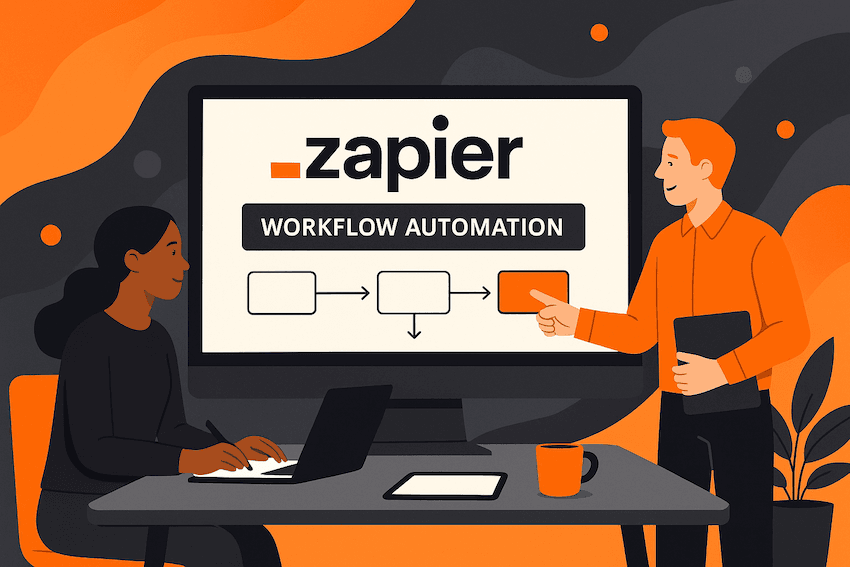
In fact, Zapier is a no-code automation tool. It connects your apps and automates the tasks between them. Each automation is called a Zap. A Zap has two parts: a Trigger and one or more Actions.

Here is how a simple Zap works:

  • Trigger: something happens in App A. For example, a new form is submitted on Typeform.
  • Action: Zapier does something in App B. The response is then added as a new row in Google Sheets.
  • Second Action: Zapier then does something in App C. For example, a Slack message is sent to the team.

Also, Zaps run in the background all day, every day. No one needs to be at a desk. So while an Abuja business owner is in a meeting, Zapier files leads, sends alerts, and updates records. In short, Zapier is your digital staff member that never sleeps and never makes a data-entry mistake.


7 Real Zaps You Build at Abuja Data School

At Abuja Data School, you do not study theory. You build real Zaps from day one. Here are seven real Zapier automations that every student creates during the course:


Zap Number Trigger Action Business Value
Zap 1 New Google Form response Add row to Google Sheets + send Gmail Auto-log every lead or enquiry instantly
Zap 2 New sale in Paystack Send Slack alert to sales team + log to Sheets Team knows every sale the moment it lands
Zap 3 New email in Gmail (labelled) Create a Trello card + notify the team on Slack Auto-create tasks from important emails
Zap 4 New row in Google Sheets Send personalised Gmail to each row contact Mass outreach without typing one email
Zap 5 Calendly booking confirmed Send WhatsApp reminder via Twilio + add to CRM Zero no-shows; CRM always up to date
Zap 6 New Typeform response Upload to Google Drive + tag in Airtable Auto-file every form response cleanly
Zap 7 Monday.com task marked Done Send report PDF by email + archive in Drive Instant client reporting, zero manual work


Also, every Zap you build at Abuja Data School is shared to your Zapier account. So your portfolio of working Zaps is live and shareable from the moment you graduate. Best of all, your Zaps are still running for real Abuja clients while you sleep.


Abuja Data School: The Home of Zapier and Workflow Automation Training in Abuja

When it comes to Zapier and workflow automation training in Abuja, Abuja Data School leads the FCT. Indeed, it is Abuja’s most trusted no-code automation training centre. Every instructor is a working Zapier expert and automation consultant. So you learn from people who build and manage Zaps for real Abuja businesses, NGOs, and global remote clients every week. Also, every class uses real Abuja business scenarios. You do not practise on fake data. That is why Abuja Data School Zapier graduates build real Zaps and win real clients fast.

In addition, Abuja Data School believes every Nigerian professional deserves to master the automation tools that save time, cut errors, and grow income. So it takes a complete beginner to a skilled Zapier automation expert in two to eight weeks. As a result, graduates build working Zaps, save hours for Abuja clients, and start earning from their automation skills within weeks of training.

To explore all Zapier and automation courses, visit the Abuja Data School Data Analysis page.


Why Abuja Data School Is the Best Place to Learn Zapier in the FCT

Here is what sets Abuja Data School apart from every other automation course in Abuja:

  • Real Zaps from day one: You open Zapier and build a working Zap in your very first class. No slides only. No theory first. Also, every Zap you build is connected to real apps: your Gmail, your Google Sheets, your Slack. As a result, you leave every class with a running automation, not just notes.
  • Business context training: Every Zap at Abuja Data School is designed around a real Abuja business need: an NGO lead form, a retail sale alert, a hotel booking system, or a federal agency data pipeline. In addition, you learn how to spot where a Zap will save the most time in any Abuja workplace. So your automation skills are practical from day one.
  • Multi-step and advanced Zaps: Many Zapier courses stop at simple two-step Zaps. Abuja Data School does not. Moreover, you build multi-step Zaps with filters, paths (if/then logic), formatters, and delays. As a result, you build the kind of advanced automations that Abuja firms are willing to pay for.
  • Freelance and consulting skills: Abuja Data School also teaches you how to find Abuja automation clients, quote a Zapier project, and deliver and hand over a Zap professionally. In short, you leave as a Zapier expert and a freelance automation consultant.
  • Small cohorts: Class sizes are deliberately kept small. So every student gets direct feedback on their Zaps throughout the course.
  • Career support: Every graduate receives CV help, a Zapier portfolio review, LinkedIn coaching, and direct referrals to Abuja tech firms, NGOs, and digital agencies. In other words, Abuja Data School takes you from Zapier beginner to hired automation specialist.


Full Zapier and Automation Course List at Abuja Data School 2026

Here is the complete Zapier and workflow automation training course list at Abuja Data School in 2026:


Course Key Skills and Zaps Built Duration Level
Zapier Foundations Triggers, actions, Zap editor, Google Sheets + Gmail Zap 2 weeks Beginner
Zapier for Business Workflows CRM Zaps, lead capture, task creation, and sales alerts 3 weeks Beginner–Mid
Multi-Step and Advanced Zaps Filters, paths (if/then), formatters, delays, webhooks 3 weeks Intermediate
Zapier and CRM Integration HubSpot, Salesforce, Zoho CRM + email + task automation 3 weeks Intermediate
Zapier for NGOs and Donor Reporting M&E data flows, donor alerts, report auto-generation 2 weeks Intermediate
Zapier and AI Tools ChatGPT in Zaps, AI content generation, AI-driven routing 3 weeks Advanced
Freelance Zapier Consulting Client discovery, Zap quoting, delivery, and handover 2 weeks All levels
Full Zapier Career Path All the above tracks complete the automation specialist programme 3 months Beginner


What You Learn at Each Stage of the Zapier Course at Abuja Data School

Abuja Data School builds your Zapier skills in clear, exciting stages. Each stage adds new automation power. Also, every stage ends with a real Zap running in your Zapier account. So here is your journey from day one to advanced automation:


Stage 1: Your First Zap

First, you open your Zapier account and explore the Zap editor. Also, you connect two apps: Google Forms and Sheets. A form is set as the Trigger: whenever a new response comes in, the Zap fires. Moreover, a Google Sheets row is the Action: the form data drops into the right columns at once. In addition, the Zap is turned on and tested live. As a result, by the end of stage one, you have a working automation that logs every form response without anyone touching a keyboard.

Stage 2: Add More Apps and Actions

Next, Abuja Data School teaches multi-app Zaps. Your first Zap is upgraded. So a second Action is added: a Gmail is sent to the form submitter with a confirmation message. Also, a third Action fires a Slack message to the Abuja team. Moreover, you build a second Zap from scratch: a new Paystack sale triggers a Google Sheets log and an email receipt. As a result, your Zaps now touch three or four apps in one run and do the work of a full-time data entry clerk.

Stage 3: Filters and Paths

In addition, Abuja Data School teaches Filters and Paths as the most powerful Zapier features. Indeed, not every trigger should run the same action. So a Filter is added: the Zap only runs if the form score is above 70%. Also, a Path is built with two branches: high-priority leads go to one Slack channel; low-priority leads go to another. Moreover, a Formatter step cleans the phone number format before it hits the CRM. As a result, your Zap now makes smart decisions and routes data to the right place every time.

Stage 4: Webhooks and API Connections

Also, Abuja Data School teaches Webhooks as a key advanced layer. Not only that, webhooks let your Zap talk to any app in the world, even apps that are not listed in the Zapier directory. So a webhook URL is created inside Zapier. Also, an app sends a POST request to the webhook when a key event happens. Moreover, Zapier catches the data and routes it to Gmail, Slack, or Google Sheets. In addition, you use the Zapier Code step to run a small Python snippet inside a Zap. As a result, no app in the world is out of reach for your automation.

Stage 5: AI-Powered Zaps

Furthermore, Abuja Data School teaches AI-powered automation as the most exciting advanced layer. Indeed, Zapier now has a direct ChatGPT integration. So you connect OpenAI to a Zap. Also, when a new support email arrives in Gmail, the AI reads it and writes a draft reply. Moreover, the draft is sent back to the team via Slack for one-click approval. In addition, AI tags and routes incoming leads based on their message content. As a result, your Zaps are now driven by both rules and real intelligence.

Stage 6: Freelance Zap Delivery

Additionally, Abuja Data School teaches freelance Zapier consulting as a live business layer. Indeed, many Abuja businesses need Zapier help but do not know where to find it. So you learn how to run a Zapier discovery call with an Abuja client. Also, you map their current manual workflow and spot every step that Zapier can replace. Moreover, a Zap project proposal is written and priced. In addition, the Zap is built, tested, and handed over with a clear guide for the client. As a result, you can charge N50,000 to N300,000 per Zapier project and deliver it in one to three days.


Who Hires Zapier Automation Experts in Abuja? 6 Key Sectors

Also, Abuja Data School Zapier graduates land roles and win clients across every sector in the FCT. Here is where they work:

  • Tech startups and SaaS firms: Abuja tech startups need Zapier to move fast with small teams. As a result, startups are the biggest employers of Zapier automation experts in the FCT. Every startup with a CRM, a form, and a Slack team needs Zapier.
  • NGOs and donor-funded projects: Abuja NGOs use Typeform, Airtable, Google Sheets, and email tools that all connect via Zapier. So NGOs are a key Zapier market in the FCT. Moreover, NGO Zapier roles pay well and often include remote and flexible work.
  • Digital marketing agencies: Abuja digital agencies use Zapier to auto-create client reports, move leads from ads to CRMs, and trigger email sequences. In addition, agencies hire Zapier experts to manage automation for multiple clients at once.
  • E-commerce and retail: Abuja e-commerce shops use Zapier to sync orders, send receipts, track stock, and alert staff when sales come in. Furthermore, e-commerce Zapier projects are recurring and grow as the shop grows.
  • Banks, fintechs, and financial firms: Abuja fintechs and financial firms use Zapier to move data between tools, alert teams, and trigger workflows when key events happen. Also, financial Zapier roles often come with above-average pay and stability.
  • Freelance and remote clients: Best of all, many Abuja Data School Zapier graduates work fully remote. A skilled Zapier consultant in Abuja can serve global clients in the US, UK, and Canada and earn $3,000 to $8,000 per month from their laptop.


Start Your Zapier Journey: 4 Simple Steps to Enrol at Abuja Data School

Step 1: Choose Your Zapier Course

First, visit the Abuja Data School Data Analysis page and pick your Zapier course. New to automation? Start with Zapier Foundations. It takes two weeks. Also, all you need is a free Zapier account and a Gmail account. No tools to buy. Want to go straight to advanced Zaps or AI-powered automation? Pick the right track for your goal. Moreover, Abuja Data School’s admissions team will match you to the right course at no cost. So do not guess, just ask.

Step 2: Apply and Get Your Zapier Account Ready

Next, apply online or in person at the Abuja Data School office. The process is simple and takes under fifteen minutes. Also, no tech or coding background is needed. So Abuja Data School welcomes HR officers, marketers, project managers, business owners, and anyone who does repetitive tasks and wants to stop. In addition, once your place is confirmed, you receive a pre-course setup guide for Zapier, Gmail, and Google Sheets. Moreover, you join the Abuja Data School Zapier cohort group right away. As a result, your peer automation community is live before the first class starts.

Step 3: Build Real Zaps in Every Class

In addition, every Abuja Data School Zapier session is a live build session. So you open Zapier and build a real Zap in every class. Also, you complete a full working automation in every module. Moreover, your instructor reviews your Zap and gives direct, clear feedback on your trigger setup, your action config, and your filter logic. As a result, you finish the course with a portfolio of seven or more working Zaps in your Zapier account. Consequently, any Abuja employer or client can see your live Zaps running before they hire you.

Step 4: Go Live, Get Clients, and Start Earning

Finally, Abuja Data School career support starts the moment you finish your course. So you receive CV polish, a Zapier portfolio link, LinkedIn coaching, and direct referrals to Abuja startups, NGOs, and digital agencies. Also, graduates who want to freelance get a guide to pricing Zapier projects, writing proposals, and finding Abuja and remote clients. Moreover, Abuja Data School hosts regular no-code and automation hiring events. As a result, many graduates land their first paid Zapier project within two to four weeks of finishing.


Free Resource: Zapier University Learn Directly From Zapier

In addition to the training at Abuja Data School, Abuja Data School recommends Zapier University as the best free external resource for Zapier students in Abuja. Zapier University is Zapier’s own free learning platform. It includes step-by-step video tutorials, guided Zap builds, and structured learning paths for every skill level. Also, Zapier University covers Zapier for specific roles: marketing, sales, operations, and IT. Moreover, it is always up to date because Zapier itself maintains it. As a result, every Abuja Data School Zapier student can use Zapier University to reinforce class learning, explore new Zap ideas, and stay current with every new Zapier feature.

Zapier University works best alongside Abuja Data School’s live, business-focused training. Zapier’s own platform gives you the official tutorials and a huge library of Zap templates. But it cannot replace the real Abuja business scenarios, direct instructor feedback, and freelance consulting skills that Abuja Data School provides in every class. So use both resources together for the fastest path to Zapier mastery and income in Abuja.


Frequently Asked Questions (FAQs)

Q1: Is Abuja Data School the Best Zapier Training Centre in Abuja?

Yes, without doubt. Abuja Data School is the top workflow automation and Zapier training centre in the FCT. It has live build sessions, real Abuja business Zaps, multi-step and advanced Zap training, AI-powered Zap courses, freelance consulting skills, small cohorts, and strong career support. Its Zapier graduates build Zaps for Abuja startups, NGOs, and global remote clients. No other Zapier course in Abuja has students building and running seven or more live Zaps before they leave class. So Abuja Data School is the clear first choice in 2026.

Q2: Do I Need to Know How to Code to Learn Zapier?

No, not at all. Zapier is a no-code tool. You build Zaps by clicking, selecting apps, and mapping data fields. No code is written. Also, Abuja Data School teaches Zapier from scratch: what a trigger is, what an action is, and how to test a Zap. In short, if you can use Gmail and Google Sheets, you can learn Zapier. Abuja Data School takes care of the rest.

Q3: Is Zapier Free to Use?

Zapier has a free plan. It lets you build Zaps with two steps and run 100 tasks per month. So the free plan is enough to learn and practise. For professional work, a paid Zapier plan is needed. Starter plans begin at around $20 per month. Also, as a Zapier consultant, your client pays for their Zapier plan. You just build and manage their Zaps. In short, you can learn Zapier for free and earn from it without paying a large subscription fee.

Q4: How Long Does Zapier Training Take at Abuja Data School?

Zapier Foundations takes two weeks. Business Workflows, Multi-Step Zaps, CRM Integration, and AI Zaps each take three weeks. The NGO course and Freelance Consulting course each take two weeks. All tracks together form the Full Zapier Career Path, which runs for three months. Also, all courses run part-time on evenings and weekends. So you build Zapier skills while you keep your current job in Abuja.

Q5: Does Abuja Data School Offer Online Zapier Training?

Yes, Abuja Data School offers live online Zapier training. Online students join the same cohort as in-person students. So you open Zapier in your browser and build real Zaps alongside the class in real time. You receive the same instructor feedback on your Zap setup and your filter logic. The same career support and client referrals apply to all graduates. Also, all session recordings are open after every class. In short, whether you are in Abuja, Kaduna, or anywhere in Nigeria, great Zapier training is open to you through Abuja Data School.


Stop Doing It Manually, Start Automating With Zapier at Abuja Data School

Ultimately, workflow automation training with Zapier in Abuja has never been more valuable. Abuja businesses waste time on tasks that Zapier can handle in seconds. The firms that automate grow faster, serve clients better, and hire fewer people to do the same work. And Abuja professionals who build these automations are in short supply and high demand.

Whether you want to get hired, grow your own Abuja business, or consult for global clients, Abuja Data School has the right course for you. Best of all, no coding is needed. No expensive software is required. All you need is a free Zapier account and the decision to start. Abuja Data School gives you the Zaps, the skills, and the clients.

Your Zaps Are Waiting. Enrol at Abuja Data School Today

To that end, do not wait. Indeed, the Abuja automation experts now earning $5,000 per month and serving global clients all started with one Zap at Abuja Data School. Yours can be built this week. So, visit the Abuja Data School Data Analysis page today, pick your Zapier course, and apply. As a result, your first working Zap and your first paid automation client in Abuja are just one enrolment at Abuja Data School away.


Shutterstock_2358805037.

Workflow Automation Training in Abuja: Your 2026 Guide

nigeria_workflow_automation_experts-900x313-1

Are you looking for workflow automation training in Abuja? If so, your search ends here. Indeed, workflow automation is the most practical productivity skill in Nigeria’s modern workplace. Abuja Data School is the FCT’s leading provider of practical, career-ready workflow automation training. Furthermore, every lesson connects to real Nigerian business processes and Abuja-specific career challenges. That is why you learn the exact automation skills that Abuja employers, organisations, and global firms need and pay for right now.

So, this guide covers everything you need to know about workflow automation training in Abuja. It explains what workflow automation is and why it matters in 2026. In addition, it covers what you study at Abuja Data School, how long each course takes, and what you can earn. Furthermore, it answers the questions most Abuja learners ask before they sign up. As a result, by the end, you will have all the facts to take your first step toward an automation-powered career in the FCT.


So, Why Learn Workflow Automation in Abuja in 2026?

Simply put, workflow automation is the fastest way for Nigerian organisations to cut costs, reduce errors, and get more done with fewer people. Nigerian banks, telecoms, NGOs, government agencies, and SMEs all waste hours every week on repetitive manual tasks. Moreover, data entry, report generation, email routing, file processing, and approval workflows all consume valuable staff time. Similarly, every minute spent on these manual tasks is a minute not spent on high-value work. That is why organisations that invest in automation gain a clear competitive advantage over those that do not.

Furthermore, workflow automation skills are now in high demand across every sector in Abuja. Organisations actively seek professionals who can design, build, and manage automated systems. As a result, automation-trained professionals command some of the highest salaries in Nigeria’s tech and operations job market. What is more, many automation tools require no coding knowledge. So professionals from any background can master Power Automate, Zapier, or n8n in just a few weeks. In addition, Python-based automation skills open even more powerful opportunities for those who want to go further. On top of that, remote automation roles with global firms pay $2,000 to $8,000 per month, making this one of the most financially rewarding skills to learn in 2026.


What Is Workflow Automation and How Does It Work?

In fact, workflow automation is the process of using software to perform repetitive tasks without manual human input. Specifically, you define a trigger — such as receiving an email or updating a spreadsheet. Furthermore, you then set up a sequence of actions that run automatically every time that trigger fires. So instead of checking inboxes, copying data, or sending notifications by hand, the system does all of it for you instantly and accurately.

Furthermore, two broad categories of automation tools exist. First, no-code and low-code platforms like Microsoft Power Automate, Zapier, Make, and n8n let non-developers build powerful automations using visual drag-and-drop interfaces. These tools connect apps like Gmail, Excel, Slack, SharePoint, and hundreds more. Second, code-based automation with Python allows engineers to build more complex, custom workflows for data processing, file handling, web scraping, and API integration. Moreover, Abuja Data School teaches both categories at its workflow automation training centre in Abuja. As a result, every learner finds a pathway that matches their technical background and career goals.


What Can You Do With Workflow Automation Skills in Abuja?

In fact, workflow automation skills open many high-value doors across Abuja’s business, government, and tech sectors. Specifically, here are the most powerful ways Abuja professionals apply automation every day:

  • Report generation and distribution: You automate the creation and delivery of daily, weekly, and monthly reports. So your team receives accurate, up-to-date reports without anyone spending time building them manually.
  • Email and notification workflows: You build systems that send automatic alerts, confirmations, reminders, and follow-ups. Furthermore, your customers and colleagues always receive timely communication without any manual effort.
  • Data collection and entry automation: You connect forms, surveys, and databases so data flows automatically between systems. Consequently, your organisation eliminates transcription errors and saves hours of data entry every week.
  • Approval and escalation workflows: You design automated approval chains for procurement, HR requests, and compliance sign-offs. Therefore, decisions move faster, and nothing falls through the cracks.
  • File and document processing: You automate the renaming, sorting, conversion, and archiving of files across your organisation’s systems. As a result, your team spends less time managing documents and more time delivering value.
  • API and system integration: You connect separate business applications so data moves between them automatically and in real time. Moreover, your organisation’s systems work as one seamless, integrated platform.


Abuja Data School: The Home of Workflow Automation Training in Abuja

When it comes to workflow automation training in Abuja, Abuja Data School stands above every other option in the FCT. Indeed, it is Abuja’s most trusted data and technology training centre. That is why Abuja Data School builds practical automation skills that lead directly to jobs, business impact, and income. Unlike generic online platforms with no local context, it teaches automation using Nigerian business processes and Abuja-specific workplace scenarios. Moreover, every course uses real Nigerian case studies, from automating government procurement workflows to building automated reporting systems for NGOs and Nigerian banks.

Furthermore, Abuja Data School operates on a clear belief. Every Nigerian professional deserves world-class automation training. In other words, it must be hands-on, low-cost, and tied to real career outcomes. To that end, Abuja Data School designed its automation programme to take learners from zero to job-ready automation specialists in four to ten weeks. As a result, Abuja Data School automation graduates work in process automation, operations, IT, and data roles. Consequently, they serve Nigerian banks, government agencies, NGOs, tech startups, and global remote employers.

So, to explore the full range of automation and data programmes, visit the Abuja Data School Data Analysis page.


What Makes Abuja Data School the Best Place for Workflow Automation Training in Abuja?

Next, here is exactly what sets Abuja Data School apart from every other automation training option in the FCT:

  • Nigerian context: Abuja Data School uses Nigerian business processes and real workplace scenarios in every class. So you never practise on generic examples that do not reflect how Abuja organisations actually work.
  • Hands-on project learning: Every module includes live automation-building sessions and real workflow projects. Therefore, you build actual automation systems rather than just studying theoretical concepts alone.
  • Small cohorts: Abuja Data School keeps class sizes deliberately small. Consequently, every learner gets direct feedback and one-on-one mentorship throughout the entire programme.
  • Flexible study: Automation courses run in-person in Abuja and as live online sessions. As a result, you choose the format that best fits your schedule and professional commitments.
  • Career support: Every graduate gets CV review, LinkedIn coaching, portfolio help, and referrals to Abuja Data School’s employer network. In other words, your job search begins the moment your final project is submitted.
  • Always current: Abuja Data School updates its automation curriculum every quarter. Moreover, this ensures you always learn the latest tools and platforms that the Abuja job market actively demands.


Workflow Automation Courses at Abuja Data School: What You Can Study

Abuja Data School offers a clear set of workflow automation courses for learners at every level. Furthermore, here is specifically what is open in 2026:


Course Key Skills Duration Level
Automation Foundations Automation concepts, tools overview, trigger-action logic 3 weeks Beginner
Power Automate Mastery Flows, approvals, SharePoint, Teams, Office 365 integration 6 weeks Beginner–Mid
Zapier and Make (Integromat) Multi-step zaps, webhooks, filters, and app connections 4 weeks Beginner–Mid
n8n Advanced Automation Self-hosted workflows, APIs, custom nodes, data routing 6 weeks Intermediate
Python for Workflow Automation File automation, web scraping, email bots, API calls 8 weeks Intermediate
AI-Powered Automation AI APIs, ChatGPT in workflows, LangChain agents 6 weeks Intermediate
Full Automation Career Path All tracks above,  complete automation programme 4 months Beginner


What You Learn in Workflow Automation Training at Abuja Data School

Abuja Data School builds your workflow automation skills in clear, progressive layers. Each layer adds new automation power. Furthermore, each layer brings you closer to a job-ready automation specialist level. So, here is exactly what you cover:


Layer 1: Workflow Automation Foundations

First, every Abuja Data School automation learner starts with a solid conceptual foundation. You learn what workflow automation is and how trigger-action logic works across different platforms. Moreover, you also explore the automation landscape, comparing no-code tools, low-code platforms, and code-based solutions. In addition, Abuja Data School ensures every beginner understands when to automate, what to automate first, and how to measure the time savings a workflow delivers. As a result, you approach every automation challenge with the strategic thinking of a real automation professional. That is why this foundation layer makes every advanced module faster and easier to apply.

Layer 2: Microsoft Power Automate

Next, Abuja Data School teaches you Microsoft Power Automate in depth. Specifically, you build cloud flows that connect Microsoft 365 applications, including Outlook, SharePoint, Excel, and Teams. Furthermore, you also design approval workflows for procurement, leave requests, and document sign-off processes. What is more, every exercise uses a real Nigerian government or corporate workflow scenario. So you practise solving the exact automation problems that Abuja organisations face every day. As a result, you leave this layer able to immediately save your organisation hours of manual work every single week.

Layer 3: Zapier and Make for Multi-App Automation

In addition, Abuja Data School teaches a dedicated module on Zapier and Make, two of the world’s most popular no-code automation platforms. Indeed, these tools connect thousands of apps, making them essential for businesses that use multiple software systems. So you build multi-step zaps and scenarios that move data between CRM systems, email platforms, spreadsheets, and messaging tools. Furthermore, you also use webhooks and filters to create intelligent, conditional automation paths. Moreover, every workflow you build connects to a real Nigerian SME or NGO use case. As a result, you graduate ready to serve any Abuja business that wants to connect its digital tools seamlessly.

Layer 4: n8n Advanced Automation and API Workflows

Furthermore, Abuja Data School teaches n8n, a powerful open-source automation platform that gives you complete control over your data and workflows. Not only that, this layer sets Abuja Data School apart from basic automation courses across the FCT. So you deploy n8n on a server, build complex multi-step workflows, and connect to REST APIs directly. In addition, you also create custom nodes and data transformation steps within n8n flows. Moreover, Abuja Data School connects every n8n exercise to a real Nigerian tech or government integration scenario. As a result, you leave this layer with the advanced automation engineering skills that Abuja’s most technical employers actively seek.

Layer 5: Python for Workflow Automation

Additionally, Abuja Data School offers a dedicated Python automation module. Specifically, this layer unlocks a new level of automation power for learners who want to go beyond no-code tools. So you write Python scripts that automate file management, email sending, web scraping, and scheduled reporting. Furthermore, you also use Python’s requests library to call external APIs and process their responses automatically. Moreover, every script you write solves a real Nigerian workplace automation problem. As a result, you graduate with a portfolio of Python automation tools that impress technical employers and consulting clients across Abuja.

Layer 6: AI-Powered Automation

Finally, Abuja Data School adds a cutting-edge AI automation module to its programme. Indeed, this is one of the most in-demand skill sets in Nigeria’s technology sector in 2026. So you integrate AI APIs, including OpenAI and Google Gemini, directly into your automation workflows. Furthermore, you also use LangChain to build AI agents that make intelligent decisions within automated pipelines. Moreover, every AI automation project uses a real Nigerian business scenario, from AI-powered email triage to automated document summarisation for government ministries. As a result, you graduate as an AI-fluent automation engineer who commands top salaries in Abuja and globally.


Workflow Automation Salaries in Abuja: What You Can Earn After Training

One of the first questions Abuja Data School learners ask is: What will workflow automation skills pay me? So, here is a clear salary guide for automation-related roles in Abuja and Nigeria in 2026:


Role Experience Abuja Salary/Month Remote Pay (USD/Mo)
Automation Specialist 0–1 year N200k–N380k $1,000–$2,500
Power Automate Developer 1–2 years N280k–N520k $1,500–$3,500
No-Code Automation Engineer 1–3 years N300k–N600k $2,000–$4,500
Python Automation Developer 2–3 years N400k–N750k $2,500–$5,500
AI Automation Engineer 2–4 years N500k–N950k $3,500–$7,000
Senior Automation Consultant 3+ years N700k–N1.5m $5,000–$10,000


Who Hires Workflow Automation Professionals in Abuja?

Furthermore, Abuja Data School workflow automation graduates land roles across every major sector in the FCT and beyond. Specifically, here is where they work:

  • Banking and financial services: Access Bank, Zenith Bank, Kuda, and Stanbic IBTC all invest in automation to reduce manual processes and cut operational costs. Consequently, they hire automation specialists to build and manage internal workflow systems.
  • Federal government and public sector: Federal ministries, NITDA, NCC, and the Office of the Head of Service all pursue digital process automation. So they hire automation engineers to digitise procurement, HR, and citizen service workflows.
  • International NGOs and donor-funded projects: UNICEF, USAID, WHO, and bilateral project offices in Abuja use automation for reporting and data management. Therefore, they seek M&E and operations staff with strong automation tool skills.
  • Consulting and professional services: Deloitte, PwC, KPMG, and Abuja-based management consulting firms deploy automation in client engagements. As a result, they actively hire automation-literate analysts and consultants.
  • Technology startups: Abuja and Lagos-based startups in fintech, healthtech, edtech, and logistics build automation into their core product offerings. Moreover, they hire no-code and Python automation engineers to scale their operations efficiently.
  • Remote global employers: Abuja Data School automation graduates also land remote roles with US, UK, and EU companies. Furthermore, they earn premium salaries in dollars on Upwork, Toptal, and through direct hire contracts.


How to Start Workflow Automation Training at Abuja Data School: 4 Steps

Step 1: Choose Your Automation Course

First, visit Abuja Data School and review the full workflow automation course list. If you are completely new to automation, start with Automation Foundations. Specifically, it takes three weeks. Furthermore, it gives you the conceptual base that every other module builds on. If you already use Microsoft 365 at work, the Power Automate Mastery course is the most practical starting point. Moreover, Abuja Data School’s admissions team will help you choose the right course for your background and goals. Best of all, this guidance costs nothing. So, do not guess, just ask.

Step 2: Apply and Secure Your Place

Next, apply online or in person at the Abuja Data School office. Indeed, the sign-up process is simple. Furthermore, it takes less than fifteen minutes. What is more, there are no entry tests or technical prerequisites. So Abuja Data School welcomes learners from all professional backgrounds, including those with zero IT experience. In addition, once you secure your place, you get immediate access to pre-course reading materials and tool setup guides. Moreover, you also join the Abuja Data School student community group right away. As a result, you connect with your new cohort before the first class even begins.

Step 3: Learn Automation With Real Workflow Projects

In addition, every Abuja Data School automation session centres on building real workflows with real business data. Specifically, you complete a live automation exercise in every class. Likewise, you deliver a real workflow project in every module. Furthermore, your instructor reviews your flows and scripts and gives you direct, actionable feedback on your design and logic. As a result, by the time you finish the course, you will have built a portfolio of real automation projects. Consequently, Abuja employers and global clients see solid proof of your automation capability before they hire you.

Step 4: Get Hired With Abuja Data School Career Support

Finally, Abuja Data School career support begins the moment you finish your course. Specifically, you get CV review, LinkedIn optimisation, portfolio coaching, and mock interviews. In addition, you also receive direct referrals to Abuja Data School’s employer and business partner network. Moreover, Abuja Data School runs regular hiring events where you meet recruiters from banks, NGOs, consulting firms, and tech companies face-to-face. As a result, many Abuja Data School automation graduates land their first paid role within 60 to 90 days of completing their training. Furthermore, to see what past graduates have achieved, visit the Abuja Data School Portfolio page.


Recommended External Resources to Support Your Automation Learning

In addition to the structured training at Abuja Data School, several trusted external resources help workflow automation learners deepen their skills. Specifically, here are four platforms that automation professionals across Nigeria recommend:

  • Microsoft Power Automate Documentation — This is the official Microsoft reference for Power Automate. Furthermore, it includes step-by-step tutorials, flow templates, and connector guides for every Microsoft 365 application. So you always have a reliable technical source when building enterprise automation flows.
  • Zapier Learn — Zapier’s official learning hub offers free guides, tutorials, and use-case libraries for automation beginners. Consequently, thousands of professionals worldwide use it to get started with no-code automation quickly.
  • n8n Official Documentation — This is the complete reference for the n8n open-source automation platform. Moreover, it covers workflow design, custom nodes, API integrations, and self-hosting guides for advanced automation engineers.
  • Automate the Boring Stuff with Python — This free, widely recommended online book teaches Python automation from the ground up. As a result, thousands of professionals use it to learn file handling, email automation, web scraping, and scheduling with Python.

While these external resources help you grow, they work best alongside Abuja Data School’s structured training. So online tutorials answer specific technical questions quickly. However, they cannot replace the guided, project-driven, Nigerian-context learning environment that Abuja Data School provides.


Frequently Asked Questions (FAQs)

Q1: So, Is Abuja Data School the Best Place for Workflow Automation Training in Abuja?

Yes, without doubt. Abuja Data School is the only workflow automation training centre in the FCT with this powerful combination: Nigerian-context learning, small cohorts, real project work, and full career support in one programme. Furthermore, its automation graduates work at banks, government agencies, NGOs, consulting firms, tech startups, and global remote employers. Indeed, no other automation school in Abuja matches that track record. So, if you want to learn workflow automation in Abuja and get hired fast, Abuja Data School is the clear first choice.

Q2: Furthermore, Do I Need Any IT or Coding Experience to Join?

No coding experience is required for the no-code and low-code tracks. Specifically, the Automation Foundations, Power Automate, Zapier, and Make courses all use visual interfaces that anyone can learn. Furthermore, many of Abuja Data School’s most successful automation graduates came from HR, finance, administration, and operations backgrounds. In short, if you can use a computer and a browser, you can master no-code automation. So start with the Foundations course and progress at your own pace. Moreover, if you want to learn Python automation later, Abuja Data School will guide you through that path too.

Q3: Also, How Long Does Workflow Automation Training Take at Abuja Data School?

It depends on the track you choose. Specifically, the Automation Foundations course takes three weeks. Furthermore, focused tracks like Power Automate Mastery or Zapier and Make take four to six weeks each. Moreover, the Python for Workflow Automation course takes eight weeks. Best of all, the Full Automation Career Path, which covers all tracks, takes four months. In addition, Abuja Data School runs all courses part-time. So you study while you work. Likewise, most students spend five to seven hours per week in class and a similar amount practising on their own. As a result, the learning fits comfortably around a full-time job.

Q4: Additionally, How Much Does Workflow Automation Training at Abuja Data School Cost?

Abuja Data School offers some of the most competitive fees for workflow automation training in Abuja. For example, individual courses start from N65,000. Furthermore, the full four-month Automation Career Path is priced to be reachable for working Nigerians and fresh graduates. Moreover, Abuja Data School offers flexible payment plans. So you spread the cost over two to three months with no added fees. In addition, scholarship slots exist for learners who show strong commitment but need financial support. That is why cost should never stop you from building a career in workflow automation.

Q5: Finally, Does Abuja Data School Offer Online Workflow Automation Training?

Yes, Abuja Data School offers fully live online workflow automation courses. Specifically, these suit learners who cannot attend in person. So online students join the same live cohort as in-person students. Furthermore, you build automation flows and scripts alongside the class in real time. What is more, you get the same instructor feedback on your workflows and code. Likewise, you submit the same portfolio projects as in-person students. Moreover, Abuja Data School makes session recordings available after every class. So you review any workflow or technique at your own pace. In short, whether you are in Abuja, Lagos, Kano, Enugu, or anywhere in Nigeria, Abuja Data School brings world-class workflow automation training directly to you.


Conclusion: Start Your Workflow Automation Training at Abuja Data School Today

Ultimately, workflow automation training in Abuja has never been more valuable or more within reach than it is in 2026. Specifically, the demand for automation skills grows across every sector of Nigeria’s economy. Furthermore, the salaries are strong. Moreover, the tools are learnable by anyone. So, whether your goal is to automate your current job, build workflows for Abuja businesses, or land a remote automation role with a global tech firm, Abuja Data School has the right course for you. In addition, it also has the instructors, the Nigerian-context curriculum, and the career support to get you there faster than anywhere else in the FCT.

Take the First Step Today

To that end, do not wait for the perfect moment or the next intake. Indeed, the Abuja professionals now earning N300k to N1.5m per month in automation roles did not wait. They started. Above all, the sooner you begin, the sooner you automate. So, visit Abuja Data School today, pick your workflow automation course, and apply. As a result, your first automated workflow and your first automation career milestone are just one enrolment at Abuja Data School away.


Hi, How Can We Help You?