
Generative-AI-and-AI-Prompt-Engineering-768x768-1.

What Is Generative AI: How Can You Use It in Nigeria?

So, what is generative AI and why is everyone in Nigeria talking about it in 2026? Simply put, generative AI is a type of AI that creates new content, text, images, code, audio, and video  based on patterns it has learned from massive amounts of data. It is the tech behind ChatGPT, Claude, Gemini, Midjourney, and GitHub Copilot. In short, these tools can write, design, code, and think alongside you in ways that were not possible just three years ago.

Specifically, this guide is for Nigerians who want to understand generative AI clearly and start using it right away. It explains what generative AI is in plain language, how it differs from regular AI, the best use cases for Nigerian workers and firms, the top free tools to try today, and the career paths it opens up. Furthermore, it covers the key risks and how to use these tools wisely. So, whether you are a student, a business owner, a civil servant, or a developer, this guide is your starting point.

Understanding-Generative-AI-and-AI-Tools-768x768-1

So, What Exactly Is Generative AI?

Simply put, generative AI is AI that generates — it creates something new rather than just sorting or guessing. Regular AI reads data and makes a decision. For example, it detects fraud in a bank payment or flags spam in your inbox. Generative AI goes further: it produces new output. Ask it to write a business proposal and it writes one, tell it to create a logo concept and it draws one. When you want to build a Python script, it codes one.

In fact, generative AI works by training on huge amounts of text, images, or code. During training, it learns the patterns of human language, art, and logic. After training, it uses those patterns to create new content that feels natural and clear. Furthermore, the latest generative AI models — like GPT-4o, Claude 3.5, and Gemini 2.0 — are now so capable that many Nigerian workers use them daily for writing, research, and business tasks.

How Generative AI Differs From Regular AI

Before going further, it helps to understand the difference. Regular AI predicts or classifies. For instance, a fraud detection model at a Nigerian bank looks at a payment and says yes or no — fraud or not fraud. Generative AI, on the other hand, creates. It does not just answer a yes/no question. Instead, it produces a full response, a complete image, or a working block of code. This creative ability is what makes it so powerful and so widely used right now.

The Key Generative AI Tools Every Nigerian Should Know

Indeed, the generative AI space moves fast. However, these are the core tools that Nigerian workers, students, and businesses are using most in 2026:

  • Also, ChatGPT (OpenAI): The most widely used AI tool in the world — great for writing, research, short recaps, and coding help
  • Furthermore, Claude (Anthropic): Known for handling long documents, nuanced analysis, and clear structured writing
  • Also, Gemini (Google): Integrates with Google Docs, Sheets, Gmail, and Drive — ideal for workspace users
  • Moreover, GitHub Copilot: AI coding assistant that writes and completes code in real time — used by Nigerian developers daily
  • Also, Midjourney and DALL-E: AI image tools that create visuals from text prompts — used in design, marketing, and social media
  • Finally, ElevenLabs: AI voice tool that clones and generates speech — used in podcasts, audiobooks, and video content


How Does Generative AI Actually Work?

Most generative AI tools are built on what are called large language models, or LLMs. These models are trained on billions of pages of text from the internet, books, and code. During training, the model learns to predict what word, pixel, or note comes next in a sequence. After training, this ability grows so powerful that the model can produce full essays, images, or code from a single sentence.

Furthermore, you interact with generative AI through prompts — plain language instructions that tell the model what you want. The quality of your prompt shapes the quality of the output. A vague prompt gives a vague result. A clear, detailed prompt gives a focused, useful result. For example, asking ChatGPT ‘write about Nigeria’ gives a vague, generic response. A clear, specific prompt gives you a focused and far more useful result.

What Generative AI Cannot Do

However, it is also important to know the limits. Generative AI tools can produce text that sounds correct but contains wrong facts — a problem called hallucination. So, always verify key facts, names, dates, and figures before using AI-generated content. In addition, AI tools do not know your specific business, your local Nigerian market context, or the latest news unless you give them that information. Therefore, think of generative AI as a very capable assistant — not an all-knowing expert.


Real Ways Nigerians Are Using Generative AI in 2026

Now let us get practical. Indeed, here are the most common and valuable ways that Nigerian businesses, workers, and students are using generative AI tools right now:

1. Writing and Content Creation

First, writing is the most popular use case for generative AI in Nigeria. Specifically, small firm owners use ChatGPT and Claude to write product descriptions, social media posts, email newsletters, and blog content in minutes. Furthermore, journalists and bloggers use AI to speed up research, draft first versions of articles, and check grammar and clarity. Also, marketing teams at Nigerian banks, telecoms, and brands use AI to produce copy at a scale that was not possible before. As a result, a solo founder can now produce the same volume of content as a full marketing team.

2. Customer Service and Chatbots

Next, Nigerian firms are using generative AI to build smart customer service chatbots. Specifically, platforms like WhatsApp Business, combined with AI tools, let Nigerian brands answer customer questions 24 hours a day without adding staff. Furthermore, fintech firms like Flutterwave and Paystack use AI to handle common support queries instantly. As a result, customers get faster responses and businesses cut their support costs. In addition, the AI can be trained on a company’s own FAQs and product info so it gives accurate, brand-specific answers.

3. Coding and Software Development

In addition, Nigerian coders are using GitHub Copilot and ChatGPT to write code faster and with fewer errors. Specifically, these tools can suggest entire functions, fix bugs on demand, and explain complex code in plain English. Furthermore, junior coders in Lagos and Abuja use AI to close skill gaps and deliver work that used to require a senior engineer. As a result, development teams are shipping products faster and at lower cost. Moreover, non-coders can now use AI to write simple scripts and auto-work tools without any coding background at all.

4. Research and Data Analysis

Also, researchers, analysts, and students in Nigeria use generative AI to speed up their work greatly. Specifically, tools like Google NotebookLM can read and sum up entire research papers, policy documents, and financial reports in seconds. Furthermore, AI tools can help analysts write data reports, draft research reviews, and explain stats results in plain language. In addition, students across Nigerian universities use Claude and ChatGPT to understand complex topics, get essay outlines, and check their writing before submission.

5. Business Planning and Strategy

Furthermore, Nigerian founders use generative AI as a low-cost business consultant. Specifically, AI tools can help draft business plans, cash forecasts, market analysis reports, and pitch deck text. Moreover, a Lagos-based startup founder can use Claude to test investor questions, stress-test assumptions, and rewrite their pitch in the language and style that suits different audiences. As a result, founders who cannot yet afford a consultant get strategic support from AI at zero cost.

6. Education and Skills Training

Finally, students and self-learners across Nigeria use generative AI as a personal tutor. Specifically, AI tools can explain any topic at any level — from secondary school maths to postgraduate research methods. In addition, tools like Khanmigo, built on ChatGPT, provide structured tutoring in maths and science. Furthermore, Nigerian learners use AI to practise English writing, prepare for exams, and get instant feedback on their work. As a result, quality learning support is now available to any Nigerian with a smartphone and internet access.


Top Free Generative AI Tools for Nigerians in 2026

Indeed, here are the best free generative AI tools available to Nigerians right now — with what each one does best:

Tool Best For Free Plan? Access
ChatGPT Writing, research, coding, short recaps Yes — GPT-4o free tier chat.openai.com
Claude Long docs, analysis, clear writing Yes — free tier claude.ai
Gemini Google Workspace tasks, research Yes — fully free gemini.google.com
Microsoft Copilot Word, Excel, Outlook, Teams Yes — with Microsoft 365 copilot.microsoft.com
NotebookLM Sum up PDFs and research docs Yes — fully free notebooklm.google.com
DALL-E (via ChatGPT) AI image creation from text Limited free tier chat.openai.com
GitHub Copilot Code writing and bug fixing Free for students github.com/copilot
Canva AI Design, images, slides Yes — free plan canva.com


Key Risks to Know Before You Use Generative AI in Nigeria

Specifically, generative AI is powerful — but it comes with real risks that every Nigerian user should understand before relying on it at work or in business.

Hallucination: AI Can Get Facts Wrong

First, AI tools can produce content that sounds confident and correct but contains wrong facts. This problem is called hallucination — and it happens most often with specific dates, statistics, names, and legal or medical details. Therefore, always verify any specific fact, figure, or quote that an AI tool gives you before you publish or use it. In addition, use AI as a drafting and thinking tool — not as the final authority on any factual matter.

Data Privacy and Confidentiality

Next, be careful about what you share with AI tools. When you type a prompt into ChatGPT or Claude, that text is sent to a remote server. Therefore, never input private business data, client details, financial records, or sensitive employee information into a public AI tool. Furthermore, Nigerian firms that handle customer data must also consider data protection rules under the NDPR — the Nigeria Data Protection Law — before using AI tools to process that data.

Copyright and Originality

Also, AI-generated content raises real questions about ownership and credit. For instance, if you use AI to write an article, design a logo, or create marketing copy, the output may closely resemble existing work in the AI’s training data. Furthermore, Google and other search engines are more and more able to detect AI-made content that lacks fresh insight. Therefore, always add your own expertise, local context, and original point of view to any AI-written draft. As a result, your content will be more trustworthy and more useful to your audience.

Over-Reliance and Skill Decline

Finally, one risk that is easy to overlook is over-reliance. Using AI to write everything for you can weaken your own writing and thinking skills over time. Therefore, use AI as a partner — not a replacement for your own voice and judgement. In addition, the most valuable AI users in Nigeria’s job market are not those who let AI do everything, but those who direct AI well, spot its errors, and add real human insight to its output.


Career Paths That Generative AI Opens Up for Nigerians

Furthermore, generative AI is not just a productivity tool — it is also a career path. Indeed, the Nigerian and global job market is now full of roles that did not exist three years ago. Here are the most in-demand generative AI careers for Nigerians in 2026:

  • Also, AI Prompt Engineer: Designs and tests prompts that get the best results from AI tools — earns N200k–N500k/month locally, $2k–$5k/month remotely
  • Furthermore, Generative AI Developer: Builds AI-powered apps using Python, LangChain, and APIs — earns N350k–N800k/month locally, $3k–$8k/month remotely
  • Also, AI Content Strategist: Uses AI to plan and produce content at scale — earns N150k–N400k/month locally, $1.5k–$4k/month remotely
  • Moreover, AI Solutions Consultant: Helps Nigerian businesses adopt AI tools and workflows — earns N400k–N1m/month locally
  • Also, AI Trainer / Data Labeller: Labels and reviews AI training data — flexible remote work, earns $500–$2k/month
  • Finally, Freelance AI Specialist: Offers AI skills on Upwork, Fiverr, and Toptal — earns $1k–$4k/month from global clients


How to Start Using Generative AI in Nigeria Today: 4 Simple Steps

Step 1: Pick One Tool and Try It This Week

First, do not try to learn every AI tool at once. Start with ChatGPT — it is free, easy to use, and handles the widest range of tasks. Create a free account at chat.openai.com and spend 30 minutes asking it to do something you normally spend an hour on. For instance, ask it to write a product description, sum up a document, or draft a business email. As a result, you will see its value right away — and want to go further.

Step 2: Learn How to Write Good Prompts

Next, the quality of your AI output depends on the quality of your prompt. A good prompt gives the AI context, a clear task, and a format. For example: ‘You are a copywriter. Write a 200-word Instagram caption for a Lagos fashion brand. Target women aged 18–30. Use a warm, confident tone.’ Furthermore, the more specific you are, the more useful the result. So, practise writing detailed prompts and refine them until you get what you need.

Step 3: Apply It to One Real Work Task

In addition, after trying AI on a test task, apply it to one real piece of work this week. Use it to draft a report you have been putting off, write a proposal for a client, or sum up a long email thread. As a result, you will learn faster by using AI on real problems than by watching tutorials. Furthermore, save the prompts that work well — you can reuse them every time you face the same type of task.

Step 4: Build Your AI Skill Over 30 Days

Finally, commit to 30 days of daily AI use. Each day, try one new use case — customer email reply on day one, social media caption on day two, data summary on day three, and so on. In addition, follow Nigerian AI communities on LinkedIn and X to see how others are applying generative AI to local business problems. Moreover, consider a short course in prompt engineering or generative AI — free options from Google and DeepLearning.AI take less than five hours. As a result, within 30 days you will have a practical AI skill set that sets you apart in the Nigerian job market.


Frequently Asked Questions (FAQs)

Q1: So, Is Generative AI Free to Use in Nigeria?

Yes — many of the best generative AI tools have free plans that work well for everyday tasks. Specifically, ChatGPT, Claude, Gemini, and Microsoft Copilot all offer free tiers that are open to users in Nigeria. Furthermore, Google’s NotebookLM and Canva AI are fully free. In addition, most tools accept Nigerian payment cards for paid plans — so upgrading is easy if you need more power. So, there is no financial barrier to getting started with generative AI in Nigeria today.

Q2: Furthermore, Do I Need to Know How to Code to Use Generative AI?

No, you do not. Specifically, the most popular generative AI tools — ChatGPT, Claude, Gemini, and Copilot — all work in plain English. You type what you want and the AI responds. No coding, no installation, and no technical background are needed. However, if you want to build AI apps or automate business workflows, basic Python skills will help you go much further. In addition, free Python courses on Codecademy and freeCodeCamp take just four to six weeks and cost nothing.

Q3: Also, How Is Generative AI Different From a Search Engine?

A search engine finds existing pages on the web that match your query. Generative AI, on the other hand, creates a brand new response based on your specific request. Google Search gives you links to read. ChatGPT writes you a custom answer. Furthermore, generative AI can hold a conversation, remember context within a session, and refine its output based on your follow-up questions. However, unlike a search engine, AI can also get facts wrong — so always verify important claims with trusted sources.

Q4: Also, Is Generative AI Legal to Use for Business in Nigeria?

Yes — generative AI tools are legal to use for business in Nigeria. However, you must follow data protection rules under the NDPR when handling customer or employee data with AI tools. In addition, be careful about copyright when using AI-made images or text in commercial work — the legal position on AI-generated content is still developing globally. Furthermore, some industries in Nigeria — banking, health, and telecoms — have sector-specific rules on data handling that apply to AI use. So, check your sector’s guidelines if you are unsure.

Q5: Finally, What Is the Best Way to Learn Generative AI in Nigeria?

The best first step is to start using the tools — daily practice beats any course. Use ChatGPT or Claude for one real task each day this week. After that, take Google’s free Generative AI Learning Path on Cloud Skills Boost — it takes five to ten hours and gives you a solid foundation. Furthermore, DeepLearning.AI offers free short courses on prompt engineering and LangChain on Coursera. In addition, Abuja Data School runs hands-on generative AI courses with Nigerian business case studies for those who want structured in-person or online training.


Conclusion

Ultimately, generative AI is not a distant tech — it is here, it is free, and it is already changing how Nigerians work, learn, and build businesses in 2026. Whether you use it to write faster, build smarter customer service, code better, or launch an AI-powered career, the tools are open to any Nigerian with a smartphone and internet access. In addition, the learning curve is gentle and the gains in speed and output quality are real from day one.

Start Today — Not Next Month

To that end, open ChatGPT or Claude right now and give it one real task from your work or studies. Do not wait for the perfect course or the ideal moment. Above all, the Nigerians who will lead the AI economy in 2026 are the ones who start practising today — not the ones who wait to feel ready. As a result, your first AI-assisted project, your first AI skill, and your first AI-powered career move are all just one prompt away. Start now.

https://www.abujadataschool.com/artificial-intelligence-and-robotics-training-in-abuja-nigeria/

How-to-Become-a-Data-Analyst-in-Abuja-in-2026-Step-by-Step-Career-Guide

How to Become a Data Analyst in Abuja in 2026: Step-by-Step Career Guide

Introduction: Why Data Analytics Is the Career to Pursue in Abuja Right Now

Abuja is no longer just Nigeria’s political capital — it is fast becoming one of the country’s most exciting digital economies. From government agencies and international development organisations to fintech startups and healthcare companies, data is driving decisions across every sector in the Federal Capital Territory.

The demand for skilled data analysts in Abuja has never been higher. Companies like eHealth4everyone, Deloitte Human Capital Consulting, FairMoney, ValueGate Consulting, and international bodies like the IFPRI (International Food Policy Research Institute) are actively recruiting data professionals in the city. And the salaries reflect the demand: entry-level data analysts in Nigeria can earn between ₦150,000 and ₦350,000 per month, while experienced professionals command ₦900,000 to ₦1,500,000 or more.

Whether you are a fresh graduate in Abuja, a mid-career professional looking to pivot, or an NYSC member exploring in-demand digital skills, this guide walks you through exactly how to become a data analyst in Abuja in 2026 — step by step.

What Does a Data Analyst Actually Do?

Before diving into the how, it helps to understand the what. A data analyst collects, cleans, interprets, and visualises data to help organisations make better decisions. In Abuja’s job market, data analysts typically:

  • Gather and clean data from business systems, surveys, and databases
  • Build dashboards and reports using tools like Power BI or Tableau
  • Identify trends, patterns, and anomalies in datasets
  • Work with cross-functional teams to translate data into business strategy
  • Support public health, government, finance, and NGO programmes with evidence-based insights

The role sits at the intersection of business and technology — you do not need to be a software engineer, but you do need to be comfortable working with numbers, tools, and stakeholders.

Step 1: Understand the Educational Requirements

You do not need a specific degree to become a data analyst in Abuja, but having a background in a quantitative or technical field gives you a solid foundation. Employers frequently recruit from graduates with degrees in:

  • Statistics or Mathematics
  • Computer Science or Information Technology
  • Economics or Accounting
  • Engineering (especially Electrical, Systems, or Industrial)
  • Public Health or Social Sciences (especially for NGO and government roles)

If your degree is in an unrelated field, do not be discouraged. Many of Abuja’s top data analysts transitioned from non-technical backgrounds. What matters most in 2026 is demonstrable skill — which is where certifications and training come in.

Step 2: Build the Core Technical Skills

Employers in Abuja consistently look for a defined set of technical skills when hiring data analysts. Here are the most in-demand tools and competencies you need to master:

Microsoft Excel

Excel remains the baseline skill for data analysis roles across Nigeria. Entry-level jobs frequently require proficiency in Excel for data manipulation, pivot tables, VLOOKUP, and basic statistical functions. If you are just starting out, Excel is your first stop.

SQL (Structured Query Language)

SQL is used to query databases and extract specific data for analysis. It is one of the most commonly required skills in Nigerian data analyst job descriptions. Learning SQL will allow you to work directly with company databases and significantly increases your employability.

Python or R

As you progress beyond the entry level, Python becomes essential. It is the most widely used programming language for data analysis in Nigeria, used for data wrangling, statistical analysis, and machine learning. R is preferred in research-heavy environments such as public health and academia.

Power BI and Tableau

Data visualisation tools like Power BI and Tableau are the most in-demand tools in Nigeria’s data analytics job market right now. These tools allow you to turn raw data into interactive dashboards that business stakeholders can understand and act on. Power BI, as a Microsoft product, is especially popular among Abuja-based organisations and government-adjacent roles.

Data Storytelling and Communication

Technical skills alone are not enough. Abuja employers — especially in consulting, development finance, and public sector roles — place a high premium on analysts who can communicate findings clearly to non-technical audiences through presentations, reports, and visualisations.

Step 3: Get Certified

Certifications validate your skills and give you a competitive edge, especially if you are transitioning from a non-technical background or applying for your first data analytics role. The most valued certifications for data analysts in Nigeria include:

  • Google Data Analytics Professional Certificate — A beginner-friendly programme covering data cleaning, problem-solving, and data visualisation. Available on Coursera and widely recognised by Nigerian employers.
  • Microsoft Certified: Data Analyst Associate — Demonstrates proficiency in Power BI, Excel, and data visualisation. Highly valued for roles in organisations that use Microsoft tools.
  • IBM Data Science Professional Certificate — Covers Python, SQL, and data wrangling. Ideal if you want to grow from data analyst into data science.
  • Tableau Desktop Specialist — Focused on data visualisation. A strong addition if you are targeting BI-heavy roles.
  • Certified Analytics Professional (CAP) — A more advanced credential for those seeking to demonstrate broader analytics principles and methodology.

All of these certifications can be completed online through platforms like Coursera, edX, and LinkedIn Learning — many at low cost or even for free with financial aid.

Step 4: Train With a Local Programme in Abuja

Online certifications are valuable, but hands-on, in-person training in Abuja gives you structured learning, real-world projects, community, and local mentorship. Several training institutions in the city offer data analytics programmes:

  • DataLab Analytics (Karu Site, Abuja) — Offers a 3-month hands-on data analytics training programme covering Python, Excel, SQL, Power BI, and Machine Learning. They also offer weekend classes and online training with mentorship from industry experts.
  • CodeBridge Hub (Abuja) — Actively trains young learners in data analysis and visualisation, with a focus on practical skill development.
  • Coursera / edX (Online, self-paced) — Partnered with global universities and companies. Ideal for self-motivated learners who want flexibility alongside local training.

When choosing a training programme, look for ones that offer project-based learning, mentorship, alumni networks, and job placement support. Certificates with no portfolio work are far less valuable than programmes that help you build real deliverables.
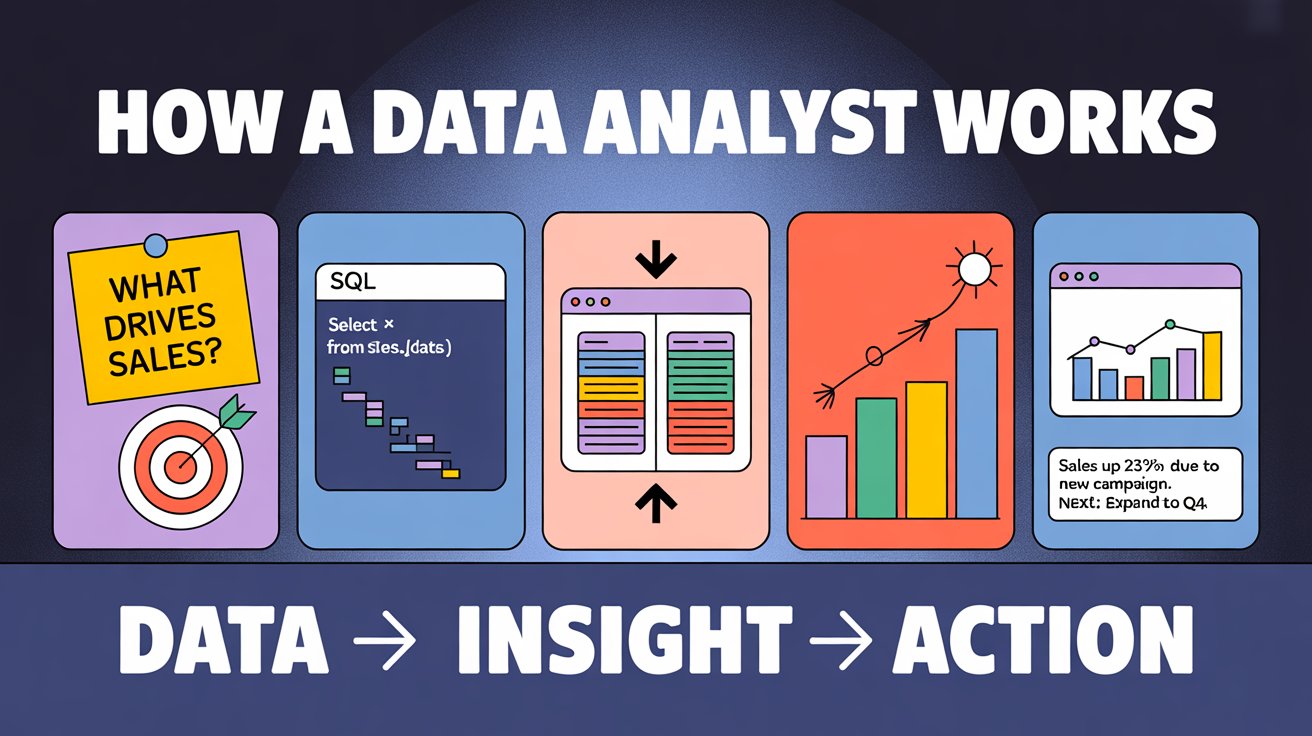


data analysis training in Abuja


Step 5: Build a Portfolio

Your portfolio is your proof of skill. In Abuja’s data analytics job market, employers want to see evidence that you can translate data into insights — not just a list of certifications on a CV.

Here is how to build a strong portfolio as a beginner in Abuja:

  • Work with publicly available Nigerian datasets — NIMET (weather data), NBS (National Bureau of Statistics), INEC (election data), or CBN (financial data) are great starting points.
  • Build dashboards in Power BI or Tableau — Create visual reports on topics relevant to Nigerian industries, such as food price inflation, health outcomes by state, or voter turnout analysis.
  • Complete capstone projects from your training programme — These real-world simulations give you work samples that are immediately relevant to local employers.
  • Upload your projects to GitHub — Showcasing your code and methodology on GitHub signals technical credibility to hiring managers and international remote employers.
  • Document your work on LinkedIn — Write posts or articles about the insights you uncovered from your projects. This builds your personal brand and increases your visibility in Abuja’s tech community.

Step 6: Know the Abuja Job Market

Understanding where to look for data analyst roles in Abuja will save you time and help you focus your job search.

Top employers hiring data analysts in Abuja include:

  • eHealth4everyone — A digital health organisation recruiting public health analysts and data professionals
  • Deloitte Human Capital Consulting — Regularly hiring analysts for consulting and advisory roles
  • IFPRI (International Food Policy Research Institute) — Recruits research analysts with strong data and statistical skills
  • ValueGate Consulting — A global consulting firm with data analyst and technical specialist openings
  • FairMoney — A fast-growing fintech with strong demand for data-driven professionals
  • BuyPower and Brooks Advisory Services — Technology and advisory firms with active data roles

Where to search for jobs:

  • Jobberman Nigeria
  • MyJobMag
  • LinkedIn Jobs (filter by Abuja)
  • Glassdoor Nigeria
  • Indeed Nigeria
  • HotNigerianJobs

Set up job alerts on these platforms using keywords like “data analyst Abuja,” “business intelligence Nigeria,” and “SQL analyst FCT” so you are notified as soon as new roles are posted.

Step 7: Understand What You Can Earn

Salary is a major factor in career planning, and the data analytics market in Nigeria offers strong earning potential — especially as you grow your skills and experience.

Here is a realistic salary breakdown for data analysts in Abuja and Nigeria in 2026:

Experience Level Monthly Salary Range
Entry-Level (0–2 years) ₦150,000 – ₦350,000
Mid-Level (3–5 years) ₦300,000 – ₦600,000
Senior-Level (5+ years) ₦600,000 – ₦1,500,000+
Remote / International roles ₦1,200,000 – ₦3,000,000+
Freelance analysts ₦800,000 – ₦2,500,000+

Companies in Lagos and Abuja generally pay higher salaries than other Nigerian cities, though fully remote roles are increasingly narrowing that geographic gap. Fintech, banking, consulting, and international development organisations consistently offer the best compensation packages.

Step 8: Keep Learning and Specialising

The data analytics field evolves rapidly, and continuous learning is what separates good analysts from great ones. Once you have secured your first role in Abuja, here is how to keep growing:

  • Specialise in an industry vertical — Analysts who develop deep domain expertise in finance, public health, agriculture, or telecoms command higher salaries and more senior roles.
  • Learn cloud tools — Platforms like Google BigQuery, AWS, and Microsoft Azure are increasingly part of enterprise data stacks in Nigeria.
  • Explore machine learning — Moving from analytics into data science can dramatically increase your earning potential. Python libraries like Pandas, Scikit-learn, and TensorFlow are your next frontier.
  • Join the Abuja data community — Attend meetups, follow local tech communities like HNG Internship, Ingressive for Good, and She Code Africa. Networking in Abuja’s growing tech ecosystem accelerates your career.
  • Pursue remote opportunities — With strong skills and a solid portfolio, many Abuja-based analysts now work for international companies, earning in dollars or pounds while living in the FCT.

Frequently Asked Questions

Can I become a data analyst in Abuja without a degree in computer science? Yes. Many successful data analysts in Abuja have degrees in Economics, Statistics, Business, or even the Arts. What matters is your skill set and portfolio.

How long does it take to become a data analyst in Abuja? With focused training and self-study, most beginners can become job-ready in 3 to 6 months. Structured programmes like DataLab’s 3-month course are designed precisely for this timeline.

Is data analytics a good career in Abuja in 2026? Absolutely. Demand is growing across government, NGOs, fintech, healthcare, and consulting. Combined with the rise of remote work, data analytics offers one of the strongest career trajectories in Nigeria’s digital economy.

What is the best certification for data analysts in Nigeria? The Google Data Analytics Professional Certificate is the best starting point for beginners. The Microsoft Certified: Data Analyst Associate is highly valued for Power BI-heavy roles in Abuja’s corporate and government sectors.

Conclusion: Your Data Analytics Career in Abuja Starts Now

Abuja’s data economy is growing fast, and skilled analysts are among the most sought-after professionals in the city. The path to becoming a data analyst does not require years of study or expensive university programmes. With the right skills, a strong portfolio, and the right certifications, you can launch a high-earning, future-proof career in data analytics in Abuja in 2026.

Start with Excel and SQL. Build your way to Python and Power BI. Get certified. Take a structured training programme in Abuja. Build a portfolio using Nigerian datasets. And apply to the companies and platforms where Abuja’s top employers are hiring.

The data is in your favour — it is time to make your move.

Building-An-AI-Agent-Training-in-Abuja-Nigeria

Building an AI Agent with n8n Zapier and Activepieces

An AI agent is defined as an autonomous computational entity that perceives its environment through sensors,
processes this information to make informed decisions, and acts upon the environment through effectors (or
actuators). Simply put, an AI agent continuously cycles through three core steps:

1. Perception: Gathering data from its environment.
2. Decision-making: Processing data to select optimal actions.
3. Action: Executing selected actions, thereby influencing the environment.
The cycle repeats, enabling the agent to adapt to changing conditions and continuously refine its decisions.


Building a practical AI agent requires a clear understanding of various software tools, libraries, and technologies.
This section details key components that entry-level software engineers need to familiarize themselves with
before developing their AI agents.

Some of the tools for building AI Agents are n8n, Zapier, Activepieces and Make


a)The Complete n8n Course Introduction
➢Course Overview & What You Will Learn
➢Sneak Peek: Explore 3 Powerful AI Voice Agents You’ll Build with n8n


b)Kickstart Your Journey with n8n, AI Agents & Automations
➢Introduction to n8n – What it is & why it matters
➢Workflows, Automations & AI Agents – Understanding the differences
➢Setting up your n8n account & exploring the interface
➢Step-by-step guide to building your first n8n workflow
➢Hands-on exercise: Create your first project in n8n


c)Take Complete Control – Self-Host & Maintain n8n
➢Updating your n8n Cloud Instance
➢Importing Workflows in n8n
➢Using the Executions Log for Monitoring & Debugging
➢Understanding the Three Ways to Run n8n
➢Self-Hosting n8n for Unlimited Workflows & Full Control (Hostinger VPS)
➢Updating your Self-Hosted n8n Instance on Hostinger using Docker
➢Self-Hosting n8n Locally on Your Machine with Node.js (Windows)
➢Updating Your Locally Self-Hosted n8n Instance with Node.js


d)Create Your First n8n Automations & AI Workflows
➢Setting Up Your Credentials for Quick Access
➢Exercise: Create a Telegram Chatbot
➢Exercise: Automate Tasks Between Google Drive and Airtable
➢Exercise: Build an AI-Powered Audio Transcriber
➢Exercise: Sync Files Between Google Drive and Notion
➢Exercise: Use AI to Summarize Documents in Seconds


e)Foundations of Automation, APIs, and n8n Essentials
➢Introduction to Automation: Principles and Benefits
➢Workflow Automation Explained: How It Works and Why It Matters
➢Understanding Large Language Models (LLMs) and Their Functionality
➢Exploring Node Types & Categories in n8n
➢Triggers in n8n: When and How to Use Them
➢Core Nodes in n8n: Functions and Applications
➢Introduction to APIs: Basics and Importance
➢Introduction to Webhooks: How n8n Connects with External Systems
➢Working with Data in n8n: Best Practices
➢Optimizing Workflow Testing: Pinning & Editing Data
➢Introduction to Vector Databases: Tools and Use Cases
➢Understanding Retrieval-Augmented Generation (RAG) and Its Applications


Workflow Automation Training in Abuja with n8n


f) Mastering AI Agents, Multi-Agent Systems & RAG Workflows
➢Understanding Key Concepts: Traditional Automation vs. AI Automation vs. AI
Agents
➢Exploring AI Agents, AI Assistants, Retrieval-Augmented Generation (RAG), and
Multi-Agent Systems — Implementation and Best Practices in n8n


g) Setting Up Credentials in n8n – LLMs, APIs & Messaging Tools
➢Connecting n8n to External Services: Step-by-Step Credential Setup Guide
➢Integrating OpenAI’s LLM with n8n
➢Connecting Telegram to n8n
➢Integrating Claude (Anthropic Models) with n8n
➢Connecting LLMs via Grok Fast API Inference
➢Integrating Google Gemini with n8n
➢Connecting DeepSeek Models to n8n (Main Method)
➢Connect WhatsApp to n8n in 6 Minutes
➢Connecting Any LLM to n8n via OpenRouter & HTTP Requests (DeepSeek Example)
➢Integrating Google Services: Gmail, Drive, Docs, and Sheets in n8n
➢Integrating Perplexity with n8n
➢Using Community Nodes in n8n: Benefits & Applications
➢Connecting Notion to n8n


h)Building Basic Automations, AI Workflows & AI Agents in n8n
➢Create AI Automations Using a Pre-Made Template
➢Build an Automated Feedback Collection Form
➢Develop Your First AI Agent from Scratch in n8n
➢Build an AI Agent to Deliver the Best Daily News on Any Topic
➢Generate Stunning Videos Using Google Veo3 Model
➢Professional LinkedIn Post Generator
➢Automate Gmail Email Management and Classification with AI
➢Enhance Your AI Agent Using the “Think” Node for Smarter Workflows
➢Create an AI Story Generator with n8n
➢Automate Viral YouTube Video Posting
➢Generate Social Media Content in Seconds

At the end of the training program, participants will learn to build and deploy functional AI Agents.

AI-Automation-Training-in-Abuja-Nigeria

Learning Artificial Intelligence Automation Training in Abuja Nigeria

As AI rapidly reshapes the workplace, organizations are seeking professionals who can do more than just interact with AI, individuals are needed who can design intelligent, automated systems that drive measurable results. Workflow automation powered by AI agents is emerging as a critical skill for professionals who want to lead innovation, boost efficiency, and reduce manual work across teams and functions.

This course is built for professionals ready to move from AI tinkering to building real, automated systems. No coding required. Ideal for those in Operations, Marketing, Education, HR, Consulting, and Entrepreneurship.

AI-Automation-Training-in-Abuja-Nigeria


Module 1: Introduction to AI and Automation Fundamentals

      • Defining AI, Machine Learning, and Automation.
      • Impact of AI on business and productivity.
      • Identifying automation opportunities and defining goals

Module 2: Essential No-Code Automation Tools

        • Introduction to Make.com, Zapier, and Airtable.
        • Building basic workflows (Triggers, Actions, Logic).
        • Connecting applications (Email, CRM, Spreadsheets).

Module 3: AI Integration & Workflow Automation

      • Integrating LLMs (ChatGPT, Claude) into workflows.
      • Structuring, summarizing, and extracting data from documents.
      • Building, testing, and iterating on AI agents.

Module 4: Chatbot Development & Customer Support

      • Designing conversational flows using platforms like n8n, Zapier, activepieces or Make.com.
      • Implementing, training, and deploying AI chatbots.

Module 5: Advanced AI Concepts & Ethics

      • Emotionally intelligent AI and sentiment analysis.
      • Ethical AI, data security, and bias management.

Module 6: Final Project & Implementation

      • Building a complete, automated end-to-end system.

Top Artificial Intelligence Platforms Available for Businesses in Nigeria

In the era when Artificial Intelligence (AI) continues to expand rapidly and open‑source tools are at the heart of this transformation, especially for developers and startups in Nigeria and across Africa, there is a need for low‑cost, high‑impact resources.


ChatGPT

ChatGPT is expected to become even more powerful, with enhanced problem-solving abilities and industry-specific applications. With more businesses in Nigeria moving online, ChatGPT can be key in automating customer interactions and content creation.


Jasper AI

Jasper AI will likely become a go-to tool for marketers and content creators in Nigeria, providing more advanced language models, cultural sensitivity in writing, and integrations with local platforms like Paystack or Flutterwave.


DALL-E

DALL-E is expected to redefine how Nigerian businesses and creatives approach visual content creation. With improved versions, it could support higher-resolution designs, allowing for more detailed custom work for industries like fashion, advertising, and e-commerce.


Canva (Pro)

As more Nigerian businesses recognize the importance of visual branding, Canva is poised to lead in providing quick, accessible, and professional design options. AI features such as automated design suggestions will only enhance productivity.


TensorFlow

TensorFlow is an open‑source machine language and deep learning framework by Google that provides flexible tools for building and deploying AI applications.


Grammarly

Grammarly is becoming increasingly vital in Nigeria as more people engage in content writing, professional communication, and remote work. Its AI will continue to improve, offering deeper insights into writing tone and style, which could be beneficial for Nigerian businesses targeting global audiences.


Synthesia

AI-generated avatars and automated video content are likely to gain traction in Nigeria’s corporate training and marketing spaces. Synthesia is expected to continue improving avatar realism and making the tool more accessible for Nigerian businesses.

Artificial intelligence platforms for businesses in Nigeria

Copy.ai

Copy.ai will continue to grow in popularity as businesses in Nigeria look to optimize their online marketing efforts. Its AI will likely improve in creating region-specific content, catering to local Nigerian businesses looking to stand out with compelling copy.


Pictory

Pictory’s ability to generate video content with minimal manual effort will make it a key player in Nigeria’s digital content scene. As mobile video content becomes increasingly important for engagement, tools like Pictory will help businesses keep up with consumer demands.


Lumen5

With the rise of video content, tools like Lumen5 will play a significant role in Nigeria’s digital marketing space. As mobile video consumption continues to rise in the country, Lumen5’s AI features will become increasingly valuable for quick and affordable video production.


Conclusion

AI tools are becoming indispensable across various sectors, from content creation to customer engagement. In Nigeria, businesses and individuals alike can leverage these tools to reduce costs, improve productivity, and stay competitive. While AI tools like ChatGPT, Jasper AI, and Canva are already showing immense potential, the future holds even more possibilities as technology continues to evolve and become more accessible.

1 2 3 9
Hi, How Can We Help You?