
How-to-Become-a-Data-Analyst-in-Abuja-in-2026-Step-by-Step-Career-Guide

How to Become a Data Analyst in Abuja in 2026: Step-by-Step Career Guide

Introduction: Why Data Analytics Is the Career to Pursue in Abuja Right Now

Abuja is no longer just Nigeria’s political capital — it is fast becoming one of the country’s most exciting digital economies. From government agencies and international development organisations to fintech startups and healthcare companies, data is driving decisions across every sector in the Federal Capital Territory.

The demand for skilled data analysts in Abuja has never been higher. Companies like eHealth4everyone, Deloitte Human Capital Consulting, FairMoney, ValueGate Consulting, and international bodies like the IFPRI (International Food Policy Research Institute) are actively recruiting data professionals in the city. And the salaries reflect the demand: entry-level data analysts in Nigeria can earn between ₦150,000 and ₦350,000 per month, while experienced professionals command ₦900,000 to ₦1,500,000 or more.

Whether you are a fresh graduate in Abuja, a mid-career professional looking to pivot, or an NYSC member exploring in-demand digital skills, this guide walks you through exactly how to become a data analyst in Abuja in 2026 — step by step.

What Does a Data Analyst Actually Do?

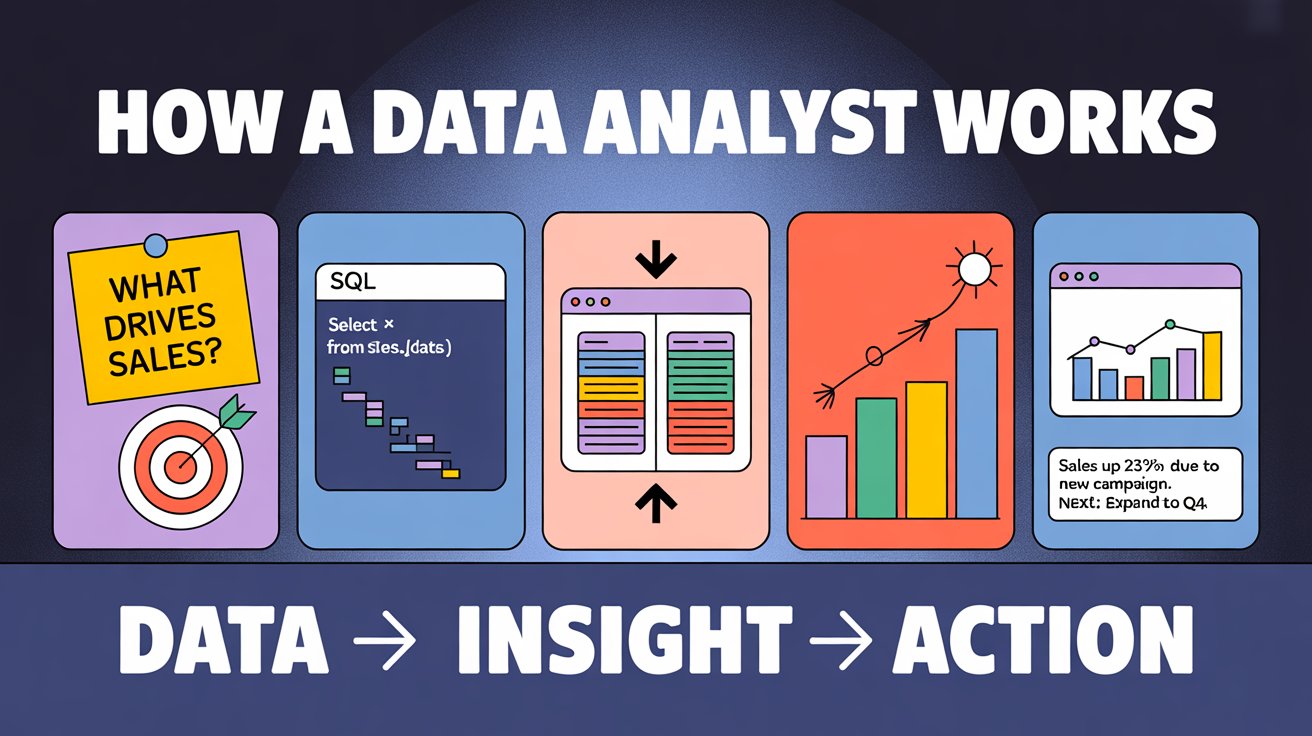
Before diving into the how, it helps to understand the what. A data analyst collects, cleans, interprets, and visualises data to help organisations make better decisions. In Abuja’s job market, data analysts typically:

  • Gather and clean data from business systems, surveys, and databases
  • Build dashboards and reports using tools like Power BI or Tableau
  • Identify trends, patterns, and anomalies in datasets
  • Work with cross-functional teams to translate data into business strategy
  • Support public health, government, finance, and NGO programmes with evidence-based insights

The role sits at the intersection of business and technology — you do not need to be a software engineer, but you do need to be comfortable working with numbers, tools, and stakeholders.

Step 1: Understand the Educational Requirements

You do not need a specific degree to become a data analyst in Abuja, but having a background in a quantitative or technical field gives you a solid foundation. Employers frequently recruit from graduates with degrees in:

  • Statistics or Mathematics
  • Computer Science or Information Technology
  • Economics or Accounting
  • Engineering (especially Electrical, Systems, or Industrial)
  • Public Health or Social Sciences (especially for NGO and government roles)

If your degree is in an unrelated field, do not be discouraged. Many of Abuja’s top data analysts transitioned from non-technical backgrounds. What matters most in 2026 is demonstrable skill — which is where certifications and training come in.

Step 2: Build the Core Technical Skills

Employers in Abuja consistently look for a defined set of technical skills when hiring data analysts. Here are the most in-demand tools and competencies you need to master:

Microsoft Excel

Excel remains the baseline skill for data analysis roles across Nigeria. Entry-level jobs frequently require proficiency in Excel for data manipulation, pivot tables, VLOOKUP, and basic statistical functions. If you are just starting out, Excel is your first stop.

SQL (Structured Query Language)

SQL is used to query databases and extract specific data for analysis. It is one of the most commonly required skills in Nigerian data analyst job descriptions. Learning SQL will allow you to work directly with company databases and significantly increases your employability.

Python or R

As you progress beyond the entry level, Python becomes essential. It is the most widely used programming language for data analysis in Nigeria, used for data wrangling, statistical analysis, and machine learning. R is preferred in research-heavy environments such as public health and academia.

Power BI and Tableau

Data visualisation tools like Power BI and Tableau are the most in-demand tools in Nigeria’s data analytics job market right now. These tools allow you to turn raw data into interactive dashboards that business stakeholders can understand and act on. Power BI, as a Microsoft product, is especially popular among Abuja-based organisations and government-adjacent roles.

Data Storytelling and Communication

Technical skills alone are not enough. Abuja employers — especially in consulting, development finance, and public sector roles — place a high premium on analysts who can communicate findings clearly to non-technical audiences through presentations, reports, and visualisations.

Step 3: Get Certified

Certifications validate your skills and give you a competitive edge, especially if you are transitioning from a non-technical background or applying for your first data analytics role. The most valued certifications for data analysts in Nigeria include:

  • Google Data Analytics Professional Certificate — A beginner-friendly programme covering data cleaning, problem-solving, and data visualisation. Available on Coursera and widely recognised by Nigerian employers.
  • Microsoft Certified: Data Analyst Associate — Demonstrates proficiency in Power BI, Excel, and data visualisation. Highly valued for roles in organisations that use Microsoft tools.
  • IBM Data Science Professional Certificate — Covers Python, SQL, and data wrangling. Ideal if you want to grow from data analyst into data science.
  • Tableau Desktop Specialist — Focused on data visualisation. A strong addition if you are targeting BI-heavy roles.
  • Certified Analytics Professional (CAP) — A more advanced credential for those seeking to demonstrate broader analytics principles and methodology.

All of these certifications can be completed online through platforms like Coursera, edX, and LinkedIn Learning — many at low cost or even for free with financial aid.

Step 4: Train With a Local Programme in Abuja

Online certifications are valuable, but hands-on, in-person training in Abuja gives you structured learning, real-world projects, community, and local mentorship. Several training institutions in the city offer data analytics programmes:

  • DataLab Analytics (Karu Site, Abuja) — Offers a 3-month hands-on data analytics training programme covering Python, Excel, SQL, Power BI, and Machine Learning. They also offer weekend classes and online training with mentorship from industry experts.
  • CodeBridge Hub (Abuja) — Actively trains young learners in data analysis and visualisation, with a focus on practical skill development.
  • Coursera / edX (Online, self-paced) — Partnered with global universities and companies. Ideal for self-motivated learners who want flexibility alongside local training.

When choosing a training programme, look for ones that offer project-based learning, mentorship, alumni networks, and job placement support. Certificates with no portfolio work are far less valuable than programmes that help you build real deliverables.


data analysis training in Abuja


Step 5: Build a Portfolio

Your portfolio is your proof of skill. In Abuja’s data analytics job market, employers want to see evidence that you can translate data into insights — not just a list of certifications on a CV.

Here is how to build a strong portfolio as a beginner in Abuja:

  • Work with publicly available Nigerian datasets — NIMET (weather data), NBS (National Bureau of Statistics), INEC (election data), or CBN (financial data) are great starting points.
  • Build dashboards in Power BI or Tableau — Create visual reports on topics relevant to Nigerian industries, such as food price inflation, health outcomes by state, or voter turnout analysis.
  • Complete capstone projects from your training programme — These real-world simulations give you work samples that are immediately relevant to local employers.
  • Upload your projects to GitHub — Showcasing your code and methodology on GitHub signals technical credibility to hiring managers and international remote employers.
  • Document your work on LinkedIn — Write posts or articles about the insights you uncovered from your projects. This builds your personal brand and increases your visibility in Abuja’s tech community.

Step 6: Know the Abuja Job Market

Understanding where to look for data analyst roles in Abuja will save you time and help you focus your job search.

Top employers hiring data analysts in Abuja include:

  • eHealth4everyone — A digital health organisation recruiting public health analysts and data professionals
  • Deloitte Human Capital Consulting — Regularly hiring analysts for consulting and advisory roles
  • IFPRI (International Food Policy Research Institute) — Recruits research analysts with strong data and statistical skills
  • ValueGate Consulting — A global consulting firm with data analyst and technical specialist openings
  • FairMoney — A fast-growing fintech with strong demand for data-driven professionals
  • BuyPower and Brooks Advisory Services — Technology and advisory firms with active data roles

Where to search for jobs:

  • Jobberman Nigeria
  • MyJobMag
  • LinkedIn Jobs (filter by Abuja)
  • Glassdoor Nigeria
  • Indeed Nigeria
  • HotNigerianJobs

Set up job alerts on these platforms using keywords like “data analyst Abuja,” “business intelligence Nigeria,” and “SQL analyst FCT” so you are notified as soon as new roles are posted.

Step 7: Understand What You Can Earn

Salary is a major factor in career planning, and the data analytics market in Nigeria offers strong earning potential — especially as you grow your skills and experience.

Here is a realistic salary breakdown for data analysts in Abuja and Nigeria in 2026:

Experience Level Monthly Salary Range
Entry-Level (0–2 years) ₦150,000 – ₦350,000
Mid-Level (3–5 years) ₦300,000 – ₦600,000
Senior-Level (5+ years) ₦600,000 – ₦1,500,000+
Remote / International roles ₦1,200,000 – ₦3,000,000+
Freelance analysts ₦800,000 – ₦2,500,000+

Companies in Lagos and Abuja generally pay higher salaries than other Nigerian cities, though fully remote roles are increasingly narrowing that geographic gap. Fintech, banking, consulting, and international development organisations consistently offer the best compensation packages.

Step 8: Keep Learning and Specialising

The data analytics field evolves rapidly, and continuous learning is what separates good analysts from great ones. Once you have secured your first role in Abuja, here is how to keep growing:

  • Specialise in an industry vertical — Analysts who develop deep domain expertise in finance, public health, agriculture, or telecoms command higher salaries and more senior roles.
  • Learn cloud tools — Platforms like Google BigQuery, AWS, and Microsoft Azure are increasingly part of enterprise data stacks in Nigeria.
  • Explore machine learning — Moving from analytics into data science can dramatically increase your earning potential. Python libraries like Pandas, Scikit-learn, and TensorFlow are your next frontier.
  • Join the Abuja data community — Attend meetups, follow local tech communities like HNG Internship, Ingressive for Good, and She Code Africa. Networking in Abuja’s growing tech ecosystem accelerates your career.
  • Pursue remote opportunities — With strong skills and a solid portfolio, many Abuja-based analysts now work for international companies, earning in dollars or pounds while living in the FCT.

Frequently Asked Questions

Can I become a data analyst in Abuja without a degree in computer science? Yes. Many successful data analysts in Abuja have degrees in Economics, Statistics, Business, or even the Arts. What matters is your skill set and portfolio.

How long does it take to become a data analyst in Abuja? With focused training and self-study, most beginners can become job-ready in 3 to 6 months. Structured programmes like DataLab’s 3-month course are designed precisely for this timeline.

Is data analytics a good career in Abuja in 2026? Absolutely. Demand is growing across government, NGOs, fintech, healthcare, and consulting. Combined with the rise of remote work, data analytics offers one of the strongest career trajectories in Nigeria’s digital economy.

What is the best certification for data analysts in Nigeria? The Google Data Analytics Professional Certificate is the best starting point for beginners. The Microsoft Certified: Data Analyst Associate is highly valued for Power BI-heavy roles in Abuja’s corporate and government sectors.

Conclusion: Your Data Analytics Career in Abuja Starts Now

Abuja’s data economy is growing fast, and skilled analysts are among the most sought-after professionals in the city. The path to becoming a data analyst does not require years of study or expensive university programmes. With the right skills, a strong portfolio, and the right certifications, you can launch a high-earning, future-proof career in data analytics in Abuja in 2026.

Start with Excel and SQL. Build your way to Python and Power BI. Get certified. Take a structured training programme in Abuja. Build a portfolio using Nigerian datasets. And apply to the companies and platforms where Abuja’s top employers are hiring.

The data is in your favour — it is time to make your move.

Building-An-AI-Agent-Training-in-Abuja-Nigeria

Building an AI Agent with n8n Zapier and Activepieces

An AI agent is defined as an autonomous computational entity that perceives its environment through sensors,
processes this information to make informed decisions, and acts upon the environment through effectors (or
actuators). Simply put, an AI agent continuously cycles through three core steps:

1. Perception: Gathering data from its environment.
2. Decision-making: Processing data to select optimal actions.
3. Action: Executing selected actions, thereby influencing the environment.
The cycle repeats, enabling the agent to adapt to changing conditions and continuously refine its decisions.


Building a practical AI agent requires a clear understanding of various software tools, libraries, and technologies.
This section details key components that entry-level software engineers need to familiarize themselves with
before developing their AI agents.

Some of the tools for building AI Agents are n8n, Zapier, Activepieces and Make


a)The Complete n8n Course Introduction
➢Course Overview & What You Will Learn
➢Sneak Peek: Explore 3 Powerful AI Voice Agents You’ll Build with n8n


b)Kickstart Your Journey with n8n, AI Agents & Automations
➢Introduction to n8n – What it is & why it matters
➢Workflows, Automations & AI Agents – Understanding the differences
➢Setting up your n8n account & exploring the interface
➢Step-by-step guide to building your first n8n workflow
➢Hands-on exercise: Create your first project in n8n


c)Take Complete Control – Self-Host & Maintain n8n
➢Updating your n8n Cloud Instance
➢Importing Workflows in n8n
➢Using the Executions Log for Monitoring & Debugging
➢Understanding the Three Ways to Run n8n
➢Self-Hosting n8n for Unlimited Workflows & Full Control (Hostinger VPS)
➢Updating your Self-Hosted n8n Instance on Hostinger using Docker
➢Self-Hosting n8n Locally on Your Machine with Node.js (Windows)
➢Updating Your Locally Self-Hosted n8n Instance with Node.js


d)Create Your First n8n Automations & AI Workflows
➢Setting Up Your Credentials for Quick Access
➢Exercise: Create a Telegram Chatbot
➢Exercise: Automate Tasks Between Google Drive and Airtable
➢Exercise: Build an AI-Powered Audio Transcriber
➢Exercise: Sync Files Between Google Drive and Notion
➢Exercise: Use AI to Summarize Documents in Seconds


e)Foundations of Automation, APIs, and n8n Essentials
➢Introduction to Automation: Principles and Benefits
➢Workflow Automation Explained: How It Works and Why It Matters
➢Understanding Large Language Models (LLMs) and Their Functionality
➢Exploring Node Types & Categories in n8n
➢Triggers in n8n: When and How to Use Them
➢Core Nodes in n8n: Functions and Applications
➢Introduction to APIs: Basics and Importance
➢Introduction to Webhooks: How n8n Connects with External Systems
➢Working with Data in n8n: Best Practices
➢Optimizing Workflow Testing: Pinning & Editing Data
➢Introduction to Vector Databases: Tools and Use Cases
➢Understanding Retrieval-Augmented Generation (RAG) and Its Applications


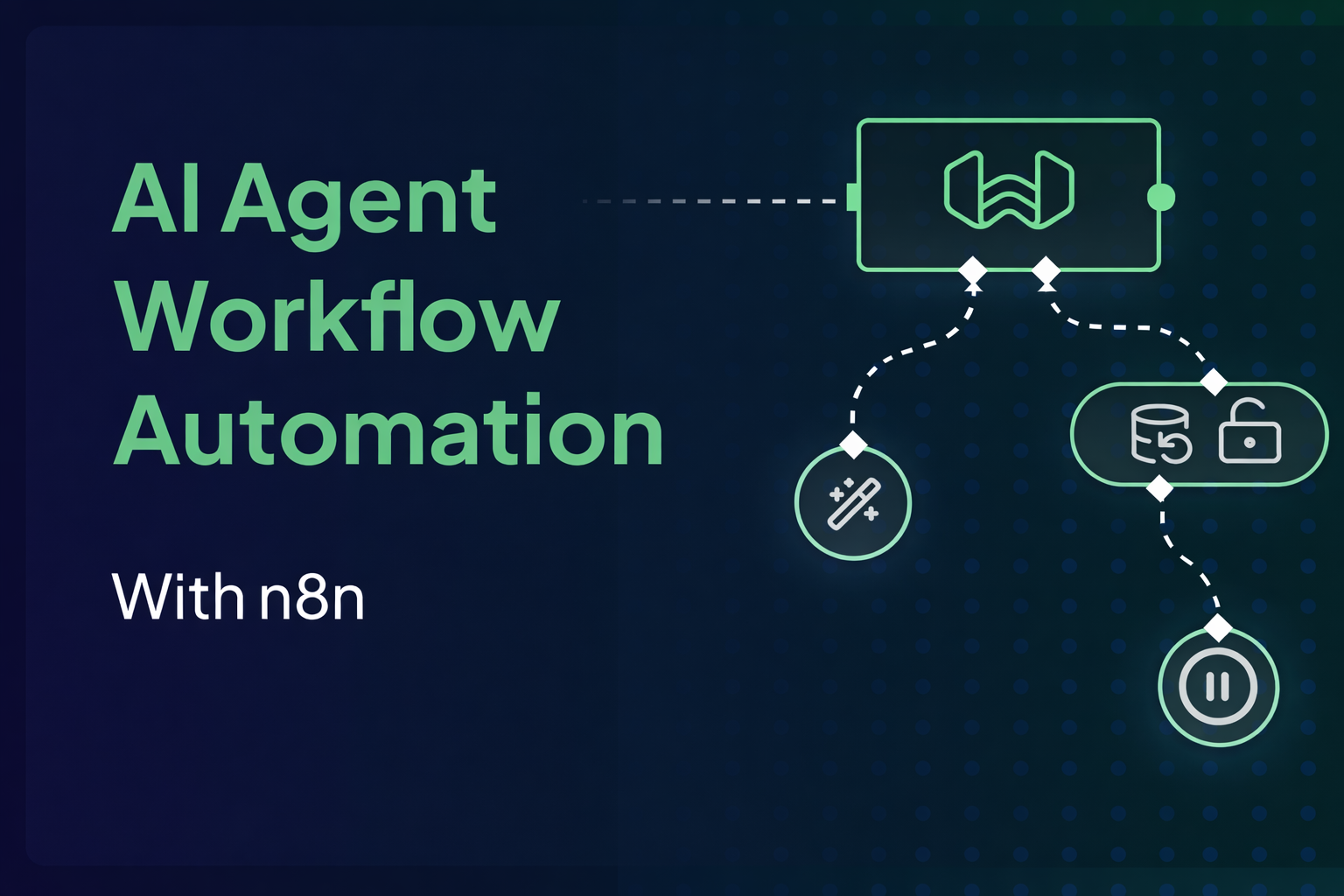
Workflow Automation Training in Abuja with n8n


f) Mastering AI Agents, Multi-Agent Systems & RAG Workflows
➢Understanding Key Concepts: Traditional Automation vs. AI Automation vs. AI
Agents
➢Exploring AI Agents, AI Assistants, Retrieval-Augmented Generation (RAG), and
Multi-Agent Systems — Implementation and Best Practices in n8n


g) Setting Up Credentials in n8n – LLMs, APIs & Messaging Tools
➢Connecting n8n to External Services: Step-by-Step Credential Setup Guide
➢Integrating OpenAI’s LLM with n8n
➢Connecting Telegram to n8n
➢Integrating Claude (Anthropic Models) with n8n
➢Connecting LLMs via Grok Fast API Inference
➢Integrating Google Gemini with n8n
➢Connecting DeepSeek Models to n8n (Main Method)
➢Connect WhatsApp to n8n in 6 Minutes
➢Connecting Any LLM to n8n via OpenRouter & HTTP Requests (DeepSeek Example)
➢Integrating Google Services: Gmail, Drive, Docs, and Sheets in n8n
➢Integrating Perplexity with n8n
➢Using Community Nodes in n8n: Benefits & Applications
➢Connecting Notion to n8n


h)Building Basic Automations, AI Workflows & AI Agents in n8n
➢Create AI Automations Using a Pre-Made Template
➢Build an Automated Feedback Collection Form
➢Develop Your First AI Agent from Scratch in n8n
➢Build an AI Agent to Deliver the Best Daily News on Any Topic
➢Generate Stunning Videos Using Google Veo3 Model
➢Professional LinkedIn Post Generator
➢Automate Gmail Email Management and Classification with AI
➢Enhance Your AI Agent Using the “Think” Node for Smarter Workflows
➢Create an AI Story Generator with n8n
➢Automate Viral YouTube Video Posting
➢Generate Social Media Content in Seconds

At the end of the training program, participants will learn to build and deploy functional AI Agents.

AI-Automation-Training-in-Abuja-Nigeria

Learning Artificial Intelligence Automation Training in Abuja Nigeria

As AI rapidly reshapes the workplace, organizations are seeking professionals who can do more than just interact with AI, individuals are needed who can design intelligent, automated systems that drive measurable results. Workflow automation powered by AI agents is emerging as a critical skill for professionals who want to lead innovation, boost efficiency, and reduce manual work across teams and functions.

This course is built for professionals ready to move from AI tinkering to building real, automated systems. No coding required. Ideal for those in Operations, Marketing, Education, HR, Consulting, and Entrepreneurship.

AI-Automation-Training-in-Abuja-Nigeria


Module 1: Introduction to AI and Automation Fundamentals

      • Defining AI, Machine Learning, and Automation.
      • Impact of AI on business and productivity.
      • Identifying automation opportunities and defining goals

Module 2: Essential No-Code Automation Tools

        • Introduction to Make.com, Zapier, and Airtable.
        • Building basic workflows (Triggers, Actions, Logic).
        • Connecting applications (Email, CRM, Spreadsheets).

Module 3: AI Integration & Workflow Automation

      • Integrating LLMs (ChatGPT, Claude) into workflows.
      • Structuring, summarizing, and extracting data from documents.
      • Building, testing, and iterating on AI agents.

Module 4: Chatbot Development & Customer Support

      • Designing conversational flows using platforms like n8n, Zapier, activepieces or Make.com.
      • Implementing, training, and deploying AI chatbots.

Module 5: Advanced AI Concepts & Ethics

      • Emotionally intelligent AI and sentiment analysis.
      • Ethical AI, data security, and bias management.

Module 6: Final Project & Implementation

      • Building a complete, automated end-to-end system.

Top Artificial Intelligence Platforms Available for Businesses in Nigeria

In the era when Artificial Intelligence (AI) continues to expand rapidly and open‑source tools are at the heart of this transformation, especially for developers and startups in Nigeria and across Africa, there is a need for low‑cost, high‑impact resources.


ChatGPT

ChatGPT is expected to become even more powerful, with enhanced problem-solving abilities and industry-specific applications. With more businesses in Nigeria moving online, ChatGPT can be key in automating customer interactions and content creation.


Jasper AI

Jasper AI will likely become a go-to tool for marketers and content creators in Nigeria, providing more advanced language models, cultural sensitivity in writing, and integrations with local platforms like Paystack or Flutterwave.


DALL-E

DALL-E is expected to redefine how Nigerian businesses and creatives approach visual content creation. With improved versions, it could support higher-resolution designs, allowing for more detailed custom work for industries like fashion, advertising, and e-commerce.


Canva (Pro)

As more Nigerian businesses recognize the importance of visual branding, Canva is poised to lead in providing quick, accessible, and professional design options. AI features such as automated design suggestions will only enhance productivity.


TensorFlow

TensorFlow is an open‑source machine language and deep learning framework by Google that provides flexible tools for building and deploying AI applications.


Grammarly

Grammarly is becoming increasingly vital in Nigeria as more people engage in content writing, professional communication, and remote work. Its AI will continue to improve, offering deeper insights into writing tone and style, which could be beneficial for Nigerian businesses targeting global audiences.


Synthesia

AI-generated avatars and automated video content are likely to gain traction in Nigeria’s corporate training and marketing spaces. Synthesia is expected to continue improving avatar realism and making the tool more accessible for Nigerian businesses.

Artificial intelligence platforms for businesses in Nigeria

Copy.ai

Copy.ai will continue to grow in popularity as businesses in Nigeria look to optimize their online marketing efforts. Its AI will likely improve in creating region-specific content, catering to local Nigerian businesses looking to stand out with compelling copy.


Pictory

Pictory’s ability to generate video content with minimal manual effort will make it a key player in Nigeria’s digital content scene. As mobile video content becomes increasingly important for engagement, tools like Pictory will help businesses keep up with consumer demands.


Lumen5

With the rise of video content, tools like Lumen5 will play a significant role in Nigeria’s digital marketing space. As mobile video consumption continues to rise in the country, Lumen5’s AI features will become increasingly valuable for quick and affordable video production.


Conclusion

AI tools are becoming indispensable across various sectors, from content creation to customer engagement. In Nigeria, businesses and individuals alike can leverage these tools to reduce costs, improve productivity, and stay competitive. While AI tools like ChatGPT, Jasper AI, and Canva are already showing immense potential, the future holds even more possibilities as technology continues to evolve and become more accessible.

Artificial-Intelligence-Career-Paths-in-Nigeria

Artificial Intelligence Career Paths

Starting a career in AI is becoming more popular as technology grows and impacts many areas of our daily lives. Nowadays, a lot of people are interested in employment involving computers, innovative equipment, and technology that appears to “think.”  Careers in this field are expanding significantly as the world changes quickly.


However, you don’t need to spend years learning or be a genius to get started. A successful career can be built over time by anyone who wants to explore this profession and follows a simple, step-by-step process.


Exploring the Artificial Intelligence Career Paths

Data Scientist: Data scientists gather, purify, and evaluate data for artificial intelligence. They create models to forecast results, translate complicated data into understandable insights, and assist enterprises in resolving practical issues through data-driven methods. A data scientist in artificial intelligence needs to be proficient in Python programming, statistics, data visualization, problem-solving, communication, and the capacity to clearly convey findings.


Machine Learning Engineer: Designs and builds AI models and systems to automate tasks. A machine learning engineer needs to be proficient in Python code, data manipulation, algorithm comprehension, problem-solving, and the use of artificial intelligence in real-world applications.

Natural Language Processing (NLP) Specialist: NLP specialists use artificial intelligence to create systems that can read, write, and react to language. They develop tools for customer service, grammatical checks, and translation so that machines can converse like people. Python coding, text analysis, linguistics, creativity, problem-solving, data processing, and familiarity with artificial intelligence techniques for language comprehension, translation, and intelligent conversation systems are among the competencies required of NLP specialists.


Robotics Engineer: Designs AI-powered robots, combining mechanics with intelligence. Key competencies include mechanical knowledge, creativity, problem-solving, coding, engineering fundamentals, and using artificial intelligence to create robots that can act, learn, and help with everyday activities.


Essential Skills You Need to Build a Career in Artificial Intelligence

Programming Skills: It assists you in building basic or sophisticated AI tools for practical projects, processing data, and creating models.

Statistics: They enable you to predict outcomes, comprehend data patterns, and confidently and properly assess model output.

Data Analysis: The management of data is essential to artificial intelligence. Information collection, cleaning, and interpretation must be done correctly.

Problem-Solving Skill: Making AI systems effective requires logical thinking, breaking down difficult problems into manageable chunks, and coming up with innovative, workable solutions.

Communication Skills: Effective communication is essential in artificial intelligence; you must communicate findings to teams.


Steps to Build a Successful Career in Artificial Intelligence

Choose your AI Career Focus: Determine which career path best suits your interests and abilities by researching several AI job alternatives to learn about daily duties, responsibilities, and growth prospects.

Gain Practical Experience: Take part in contests like Kaggle to get experience with real datasets, enhance your problem-solving skills, and acquire knowledge that the AI community will value.

Pursue Certifications and Courses: Select basic courses with hands-on activities and accredited certification to study methodically, build self-confidence, and acquire practical artificial intelligence abilities.

Build a Strong Portfolio: Make your work public, draw in chances, and show your diversity and inventiveness by using sites such as GitHub, LinkedIn, or a personal website.

Network with AI Professionals: Connecting with people in artificial intelligence helps you learn, gain advice, and discover opportunities. Networking opens doors to mentorship, collaboration, and job possibilities.


Conclusion

Starting a career in artificial intelligence can be both exciting and challenging, but every small step counts.

Hi, How Can We Help You?