
Introduction: Why Data Analytics Is the Career to Pursue in Abuja Right Now
Abuja is no longer just Nigeria’s political capital — it is fast becoming one of the country’s most exciting digital economies. From government agencies and international development organisations to fintech startups and healthcare companies, data is driving decisions across every sector in the Federal Capital Territory.
The demand for skilled data analysts in Abuja has never been higher. Companies like eHealth4everyone, Deloitte Human Capital Consulting, FairMoney, ValueGate Consulting, and international bodies like the IFPRI (International Food Policy Research Institute) are actively recruiting data professionals in the city. And the salaries reflect the demand: entry-level data analysts in Nigeria can earn between ₦150,000 and ₦350,000 per month, while experienced professionals command ₦900,000 to ₦1,500,000 or more.
Whether you are a fresh graduate in Abuja, a mid-career professional looking to pivot, or an NYSC member exploring in-demand digital skills, this guide walks you through exactly how to become a data analyst in Abuja in 2026 — step by step.
What Does a Data Analyst Actually Do?
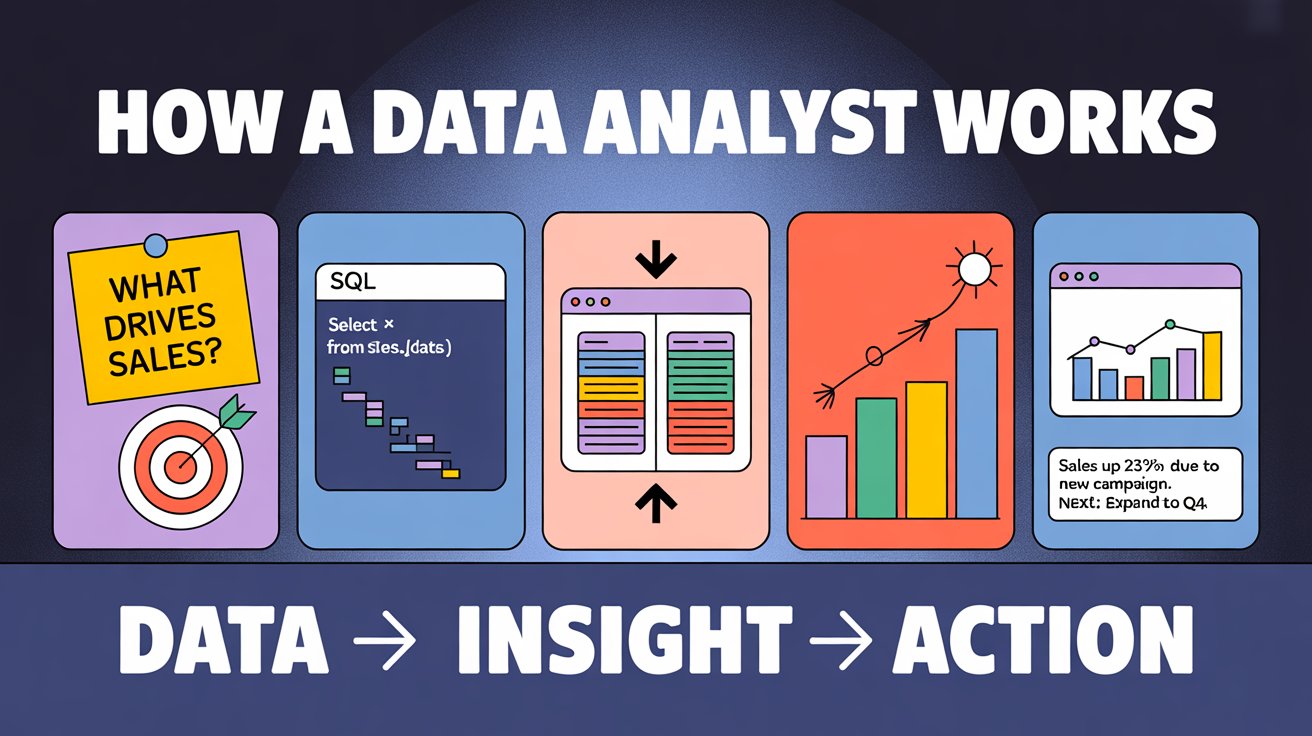
Before diving into the how, it helps to understand the what. A data analyst collects, cleans, interprets, and visualises data to help organisations make better decisions. In Abuja’s job market, data analysts typically:
- Gather and clean data from business systems, surveys, and databases
- Build dashboards and reports using tools like Power BI or Tableau
- Identify trends, patterns, and anomalies in datasets
- Work with cross-functional teams to translate data into business strategy
- Support public health, government, finance, and NGO programmes with evidence-based insights
The role sits at the intersection of business and technology — you do not need to be a software engineer, but you do need to be comfortable working with numbers, tools, and stakeholders.
Step 1: Understand the Educational Requirements
You do not need a specific degree to become a data analyst in Abuja, but having a background in a quantitative or technical field gives you a solid foundation. Employers frequently recruit from graduates with degrees in:
- Statistics or Mathematics
- Computer Science or Information Technology
- Economics or Accounting
- Engineering (especially Electrical, Systems, or Industrial)
- Public Health or Social Sciences (especially for NGO and government roles)
If your degree is in an unrelated field, do not be discouraged. Many of Abuja’s top data analysts transitioned from non-technical backgrounds. What matters most in 2026 is demonstrable skill — which is where certifications and training come in.
Step 2: Build the Core Technical Skills
Employers in Abuja consistently look for a defined set of technical skills when hiring data analysts. Here are the most in-demand tools and competencies you need to master:
Microsoft Excel
Excel remains the baseline skill for data analysis roles across Nigeria. Entry-level jobs frequently require proficiency in Excel for data manipulation, pivot tables, VLOOKUP, and basic statistical functions. If you are just starting out, Excel is your first stop.
SQL (Structured Query Language)
SQL is used to query databases and extract specific data for analysis. It is one of the most commonly required skills in Nigerian data analyst job descriptions. Learning SQL will allow you to work directly with company databases and significantly increases your employability.
Python or R
As you progress beyond the entry level, Python becomes essential. It is the most widely used programming language for data analysis in Nigeria, used for data wrangling, statistical analysis, and machine learning. R is preferred in research-heavy environments such as public health and academia.
Power BI and Tableau
Data visualisation tools like Power BI and Tableau are the most in-demand tools in Nigeria’s data analytics job market right now. These tools allow you to turn raw data into interactive dashboards that business stakeholders can understand and act on. Power BI, as a Microsoft product, is especially popular among Abuja-based organisations and government-adjacent roles.
Data Storytelling and Communication
Technical skills alone are not enough. Abuja employers — especially in consulting, development finance, and public sector roles — place a high premium on analysts who can communicate findings clearly to non-technical audiences through presentations, reports, and visualisations.
Step 3: Get Certified
Certifications validate your skills and give you a competitive edge, especially if you are transitioning from a non-technical background or applying for your first data analytics role. The most valued certifications for data analysts in Nigeria include:
- Google Data Analytics Professional Certificate — A beginner-friendly programme covering data cleaning, problem-solving, and data visualisation. Available on Coursera and widely recognised by Nigerian employers.
- Microsoft Certified: Data Analyst Associate — Demonstrates proficiency in Power BI, Excel, and data visualisation. Highly valued for roles in organisations that use Microsoft tools.
- IBM Data Science Professional Certificate — Covers Python, SQL, and data wrangling. Ideal if you want to grow from data analyst into data science.
- Tableau Desktop Specialist — Focused on data visualisation. A strong addition if you are targeting BI-heavy roles.
- Certified Analytics Professional (CAP) — A more advanced credential for those seeking to demonstrate broader analytics principles and methodology.
All of these certifications can be completed online through platforms like Coursera, edX, and LinkedIn Learning — many at low cost or even for free with financial aid.
Step 4: Train With a Local Programme in Abuja
Online certifications are valuable, but hands-on, in-person training in Abuja gives you structured learning, real-world projects, community, and local mentorship. Several training institutions in the city offer data analytics programmes:
- DataLab Analytics (Karu Site, Abuja) — Offers a 3-month hands-on data analytics training programme covering Python, Excel, SQL, Power BI, and Machine Learning. They also offer weekend classes and online training with mentorship from industry experts.
- CodeBridge Hub (Abuja) — Actively trains young learners in data analysis and visualisation, with a focus on practical skill development.
- Coursera / edX (Online, self-paced) — Partnered with global universities and companies. Ideal for self-motivated learners who want flexibility alongside local training.
When choosing a training programme, look for ones that offer project-based learning, mentorship, alumni networks, and job placement support. Certificates with no portfolio work are far less valuable than programmes that help you build real deliverables.
Step 5: Build a Portfolio
Your portfolio is your proof of skill. In Abuja’s data analytics job market, employers want to see evidence that you can translate data into insights — not just a list of certifications on a CV.
Here is how to build a strong portfolio as a beginner in Abuja:
- Work with publicly available Nigerian datasets — NIMET (weather data), NBS (National Bureau of Statistics), INEC (election data), or CBN (financial data) are great starting points.
- Build dashboards in Power BI or Tableau — Create visual reports on topics relevant to Nigerian industries, such as food price inflation, health outcomes by state, or voter turnout analysis.
- Complete capstone projects from your training programme — These real-world simulations give you work samples that are immediately relevant to local employers.
- Upload your projects to GitHub — Showcasing your code and methodology on GitHub signals technical credibility to hiring managers and international remote employers.
- Document your work on LinkedIn — Write posts or articles about the insights you uncovered from your projects. This builds your personal brand and increases your visibility in Abuja’s tech community.
Step 6: Know the Abuja Job Market
Understanding where to look for data analyst roles in Abuja will save you time and help you focus your job search.
Top employers hiring data analysts in Abuja include:
- eHealth4everyone — A digital health organisation recruiting public health analysts and data professionals
- Deloitte Human Capital Consulting — Regularly hiring analysts for consulting and advisory roles
- IFPRI (International Food Policy Research Institute) — Recruits research analysts with strong data and statistical skills
- ValueGate Consulting — A global consulting firm with data analyst and technical specialist openings
- FairMoney — A fast-growing fintech with strong demand for data-driven professionals
- BuyPower and Brooks Advisory Services — Technology and advisory firms with active data roles
Where to search for jobs:
- Jobberman Nigeria
- MyJobMag
- LinkedIn Jobs (filter by Abuja)
- Glassdoor Nigeria
- Indeed Nigeria
- HotNigerianJobs
Set up job alerts on these platforms using keywords like “data analyst Abuja,” “business intelligence Nigeria,” and “SQL analyst FCT” so you are notified as soon as new roles are posted.
Step 7: Understand What You Can Earn
Salary is a major factor in career planning, and the data analytics market in Nigeria offers strong earning potential — especially as you grow your skills and experience.
Here is a realistic salary breakdown for data analysts in Abuja and Nigeria in 2026:
| Experience Level | Monthly Salary Range |
| Entry-Level (0–2 years) | ₦150,000 – ₦350,000 |
| Mid-Level (3–5 years) | ₦300,000 – ₦600,000 |
| Senior-Level (5+ years) | ₦600,000 – ₦1,500,000+ |
| Remote / International roles | ₦1,200,000 – ₦3,000,000+ |
| Freelance analysts | ₦800,000 – ₦2,500,000+ |
Companies in Lagos and Abuja generally pay higher salaries than other Nigerian cities, though fully remote roles are increasingly narrowing that geographic gap. Fintech, banking, consulting, and international development organisations consistently offer the best compensation packages.
Step 8: Keep Learning and Specialising
The data analytics field evolves rapidly, and continuous learning is what separates good analysts from great ones. Once you have secured your first role in Abuja, here is how to keep growing:
- Specialise in an industry vertical — Analysts who develop deep domain expertise in finance, public health, agriculture, or telecoms command higher salaries and more senior roles.
- Learn cloud tools — Platforms like Google BigQuery, AWS, and Microsoft Azure are increasingly part of enterprise data stacks in Nigeria.
- Explore machine learning — Moving from analytics into data science can dramatically increase your earning potential. Python libraries like Pandas, Scikit-learn, and TensorFlow are your next frontier.
- Join the Abuja data community — Attend meetups, follow local tech communities like HNG Internship, Ingressive for Good, and She Code Africa. Networking in Abuja’s growing tech ecosystem accelerates your career.
- Pursue remote opportunities — With strong skills and a solid portfolio, many Abuja-based analysts now work for international companies, earning in dollars or pounds while living in the FCT.
Frequently Asked Questions
Can I become a data analyst in Abuja without a degree in computer science? Yes. Many successful data analysts in Abuja have degrees in Economics, Statistics, Business, or even the Arts. What matters is your skill set and portfolio.
How long does it take to become a data analyst in Abuja? With focused training and self-study, most beginners can become job-ready in 3 to 6 months. Structured programmes like DataLab’s 3-month course are designed precisely for this timeline.
Is data analytics a good career in Abuja in 2026? Absolutely. Demand is growing across government, NGOs, fintech, healthcare, and consulting. Combined with the rise of remote work, data analytics offers one of the strongest career trajectories in Nigeria’s digital economy.
What is the best certification for data analysts in Nigeria? The Google Data Analytics Professional Certificate is the best starting point for beginners. The Microsoft Certified: Data Analyst Associate is highly valued for Power BI-heavy roles in Abuja’s corporate and government sectors.
Conclusion: Your Data Analytics Career in Abuja Starts Now
Abuja’s data economy is growing fast, and skilled analysts are among the most sought-after professionals in the city. The path to becoming a data analyst does not require years of study or expensive university programmes. With the right skills, a strong portfolio, and the right certifications, you can launch a high-earning, future-proof career in data analytics in Abuja in 2026.
Start with Excel and SQL. Build your way to Python and Power BI. Get certified. Take a structured training programme in Abuja. Build a portfolio using Nigerian datasets. And apply to the companies and platforms where Abuja’s top employers are hiring.
The data is in your favour — it is time to make your move.