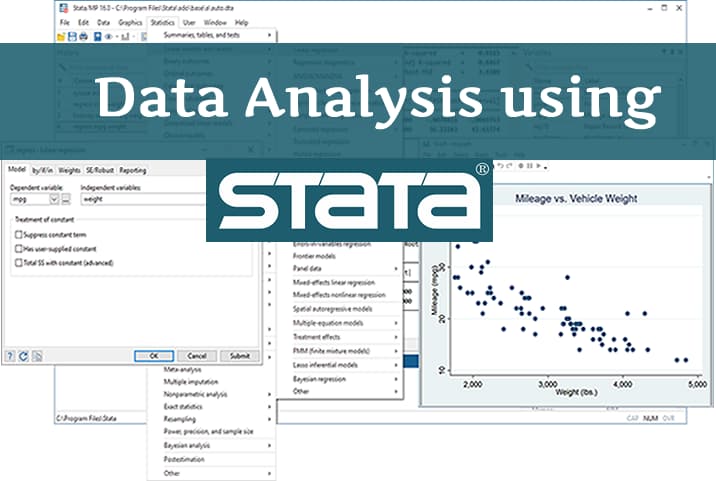

Are you looking for STATA training in Abuja? If so, your search ends here. Indeed, STATA is one of the most powerful statistical software tools in the world. Abuja Data School is the FCT’s leading provider of practical, career-ready STATA training. Furthermore, every lesson connects to real Nigerian research and economic data. That is why you learn the exact STATA skills that Abuja employers, researchers, and institutions need and pay for.
So, this guide covers everything you need to know about STATA training in Abuja. It explains what STATA is and why it matters in 2026. In addition, it covers what you study at Abuja Data School, how long each course takes, and what you can earn. Furthermore, it answers the questions most Abuja learners ask before they sign up. As a result, by the end, you will have all the facts to take your first step toward a STATA-powered career in the FCT.
So, Why Learn STATA in Abuja in 2026?
Simply put, STATA is one of the most sought-after statistical tools across Nigeria’s research, economic, and policy sectors. Nigerian universities, federal ministries, the CBN, World Bank-funded projects, and international NGOs all use STATA to process complex data. Moreover, economists use it for regression and panel data analysis. Similarly, public health researchers use it to run survival analysis and logistic models. That is why STATA is the skill that separates good researchers from great ones in Abuja.
Furthermore, STATA is learnable for professionals at all levels. Its command-line interface is logical and consistent. So new learners progress steadily, even without a programming background. As a result, economists, public health officers, policy analysts, and postgraduate students all succeed with STATA at Abuja Data School. What is more, STATA skills pay very well. Abuja-based research analyst roles with STATA experience start at N200k per month. On top of that, senior econometrics and policy roles reach N800k or more. Moreover, international donor-funded project roles often list STATA as a core requirement.
What Can You Do With STATA in Abuja?
In fact, STATA opens many doors across research, economics, and public health careers in Abuja. Specifically, here are the most common ways Abuja professionals apply STATA every day:
- Econometric analysis: You run OLS regression, fixed effects, and instrumental variable models. So you produce rigorous economic analysis for policy briefs and academic journals.
- Panel data analysis: You manage and analyse longitudinal data sets across time periods. Furthermore, you draw stronger causal conclusions from repeated observations.
- Public health statistics: You conduct survival analysis, logistic regression, and epidemiological modelling. Consequently, you support evidence-based health policy across Nigeria.
- Impact evaluation: You run difference-in-differences, regression discontinuity, and propensity score matching. Therefore, you measure the true impact of development programmes.
- Survey data analysis: You clean, weight, and analyse complex survey data, including LSMS, DHS, and NDHS data sets. As a result, you produce nationally representative research findings.
- Academic research and theses: You perform quantitative analysis for dissertations and journal articles. Moreover, you present results in tables that meet publication standards.
Abuja Data School: The Home of STATA Training in Abuja
When it comes to STATA training in Abuja, Abuja Data School stands above every other option in the FCT. Indeed, it is Abuja’s most trusted data and research training centre. That is why Abuja Data School builds practical STATA skills that lead directly to jobs and career advancement. Unlike generic online platforms with no local context, it teaches STATA using Nigerian economic data and Abuja-specific career guidance. Moreover, every course uses real Nigerian case studies from CBN monetary policy data to UNICEF programme evaluations and NBS household surveys.
Furthermore, Abuja Data School operates on a clear belief. Every Nigerian professional deserves world-class quantitative training. In other words, it must be hands-on, low-cost, and tied to real career outcomes. To that end, Abuja Data School designed its STATA programme to move learners from zero to job-ready in four to ten weeks. As a result, Abuja Data School STATA graduates work in economics, public health, M&E, and policy roles. Consequently, they serve federal agencies, donor-funded projects, NGOs, and academic institutions across the FCT and beyond.
So, to explore the full range of data programmes, visit the Abuja Data School Data Analysis page. Furthermore, you can also review real graduate projects and outcomes at the STATA FOR DATA ANALYSIS TRAINING IN ABUJA – Data Science & AI Training in Abuja | Abuja Data School.
What Makes Abuja Data School the Best Place to Learn STATA in Abuja?
Next, here is exactly what sets Abuja Data School apart from every other STATA training option in the FCT:
- Nigerian context: Abuja Data School uses Nigerian economic and research data in every class. So you never study generic examples that do not reflect local realities.
- Hands-on learning: Every module includes live STATA do-file exercises and real data projects. Therefore, you build actual analytical skills rather than just watching demonstrations.
- Small cohorts: Abuja Data School keeps class sizes small on purpose. Consequently, every learner gets direct feedback and one-on-one mentorship throughout the programme.
- Flexible study: STATA courses run in-person in Abuja and as live online sessions. As a result, you choose the format that best fits your schedule and lifestyle.
- Career support: Every graduate gets CV review, LinkedIn coaching, portfolio help, and referrals to Abuja Data School’s employer network. In other words, your job search starts before you even finish.
- Community: Graduates join a growing network of Abuja economists and researchers. Moreover, this network shares job leads, data, and support long after the course ends.
STATA Courses at Abuja Data School: What You Can Study
Abuja Data School offers a clear set of STATA courses for learners at every level. Furthermore, here is specifically what is open in 2026:
| Course | Key Skills | Duration | Level |
| STATA Foundations | Interface, do-files, data entry, basic descriptive | 4 weeks | Beginner |
| STATA for Data Analysis | Data cleaning, reshaping, merging, and tabulation | 4 weeks | Beginner–Mid |
| STATA for Regression Analysis | OLS, probit, logit, interpretation and reporting | 6 weeks | Beginner–Mid |
| STATA for Panel Data | Fixed effects, random effects, Hausman test, GMM | 6 weeks | Intermediate |
| STATA for Impact Evaluation | DiD, RDD, propensity score matching, IV estimation | 8 weeks | Intermediate |
| STATA for Health Research | Survival analysis, Cox regression, epidemiology models | 6 weeks | Beginner–Mid |
| Full STATA Research Path | All tracks above, complete research programme | 4 months | Beginner |
What You Learn in STATA Training at Abuja Data School
Abuja Data School builds your STATA skills in clear layers. Each layer adds new analytical power. Furthermore, each layer brings you closer to a job-ready level. So, here is exactly what you cover:
Layer 1: STATA Foundations
First, every Abuja Data School STATA learner starts with a solid base. You learn how STATA works the interface, command window, do-files, and log files. Moreover, you also enter and label real data variables from day one. In addition, Abuja Data School ensures every beginner understands how to run basic descriptive statistics and frequency tables. As a result, you gain the working instincts of a real quantitative analyst from the very first week. That is why this strong base makes every advanced layer faster and easier to learn.
Layer 2: STATA for Data Cleaning and Management
Next, Abuja Data School teaches you how to manage and prepare messy real-world data in STATA. Specifically, you learn how to import Excel and CSV files into STATA. Furthermore, you handle missing values, create new variables, and recode responses. You also merge multiple data sets and reshape data between wide and long formats. What is more, every exercise uses real Nigerian household survey data and administrative records. As a result, you practise on exactly the types of data you will face in real Abuja research and M&E jobs.
Layer 3: STATA for Regression Analysis
In addition, Abuja Data School teaches a full regression analysis module. Indeed, this layer is essential for every economist, public health researcher, and policy researcher in Abuja. So you run OLS regression, interpret coefficients, and test for heteroskedasticity. Furthermore, you also learn binary outcome models probit and logit using real Nigerian data. Moreover, Abuja Data School connects every regression result to a real Nigerian policy or business question. As a result, you leave this layer able to produce and present credible regression analysis with confidence.
Layer 4: STATA for Panel Data Analysis
Furthermore, Abuja Data School teaches a dedicated panel data module. Not only that, this layer sets Abuja Data School apart from basic STATA courses across Abuja. So you manage longitudinal data sets and apply fixed effects and random effects models. In addition, you also run the Hausman specification test to choose the right model. Moreover, Abuja Data School uses real Nigerian state-level panel data in every exercise. As a result, you leave this layer ready for advanced econometrics roles at the CBN, NBS, World Bank projects, and leading universities.
Layer 5: STATA for Impact Evaluation
Additionally, Abuja Data School offers a full impact evaluation module. Specifically, this is one of the most in-demand skill sets across Nigeria’s NGO and donor-funded sector. So you run difference-in-differences to compare treatment and control groups. Furthermore, you apply a regression discontinuity design to exploit policy cut-offs. You also use propensity score matching and instrumental variable estimation. Moreover, every technique connects to a real Nigerian programme evaluation scenario. As a result, you graduate ready to lead M&E and impact evaluation work at top Abuja organisations.
Layer 6: STATA for Health Research and Survival Analysis
Finally, Abuja Data School adds a dedicated health research module to its STATA programme. Indeed, it is one of the few training centres in Abuja to offer survival analysis training. So you learn the Kaplan-Meier estimator and run Cox proportional hazards regression. Furthermore, you also apply logistic regression to clinical and epidemiological data. Moreover, every exercise uses real Nigerian health data from NDHS, NCDC, and hospital records. As a result, you graduate ready to work in public health agencies, clinical research units, and international health NGOs in Abuja.
STATA Career Salaries in Abuja: What You Can Earn After Training
One of the first questions Abuja Data School learners ask is: What will STATA skills pay me? So, here is a clear salary guide for STATA-related roles in Abuja and Nigeria in 2026:
| Role | Experience | Abuja Salary/Month | Key Employers |
| Research Assistant | 0–1 year | N150k–N250k | Universities, think tanks, NGOs |
| Quantitative Data Analyst | 1–2 years | N250k–N450k | CBN, NBS, federal agencies |
| M&E Officer (STATA) | 1–3 years | N300k–N550k | UNICEF, USAID, World Bank projects |
| Econometrician | 2–4 years | N400k–N750k | Research institutes, universities |
| Impact Evaluation Specialist | 2–4 years | N450k–N850k | Donor projects, policy think tanks |
| Senior Research Analyst | 4+ years | N600k–N1.2m | CBN, IMF, World Bank, consulting firms |
Who Hires STATA Analysts in Abuja?
Furthermore, Abuja Data School STATA graduates land roles across every major research and policy sector in the FCT and beyond. Specifically, here is where they work:
- Federal government agencies: CBN, NBS, FIRS, DMO, and NITDA hire STATA analysts to process economic and fiscal data. Consequently, they produce research that drives national policy decisions.
- Academic and research institutions: ABU, UNIABUJA, NDA, and leading think tanks hire STATA experts. Therefore, they support econometric research, thesis supervision, and institutional publications.
- International NGOs and UN agencies: UNICEF, USAID, WHO, and UNHCR offices in Abuja hire STATA-trained M&E officers. As a result, their programme evaluations meet the highest donor reporting standards.
- World Bank and donor-funded projects: World Bank, DFID, EU, and DFAT-funded projects in Abuja hire STATA impact evaluation specialists. So they measure programme outcomes with rigorous statistical methods.
- Public health institutions: NCDC, FMOH, and Abuja teaching hospitals hire STATA analysts. Moreover, they process clinical trial data and epidemiological surveillance results.
- Consulting and policy firms: EFInA, CSEA, and Abuja-based economic consulting firms use STATA for policy research. Furthermore, they deliver high-quality quantitative analysis to government and private sector clients.
How to Start STATA Training at Abuja Data School: 4 Steps
Step 1: Choose Your STATA Course
First, visit Abuja Data School and review the full STATA course list. If you are new to statistical software, start with STATA Foundations. Specifically, it takes four weeks. Furthermore, it gives you the base that every other module builds on. If you already work in research or economics, a focused track like Regression Analysis or Panel Data may be the faster route. Moreover, Abuja Data School’s admissions team will help you choose the right course for your background and goals. Best of all, this guidance service costs nothing. So, do not guess, just ask.
Step 2: Apply and Secure Your Place
Next, apply online or in person at the Abuja Data School office. Indeed, the sign-up process is simple. Furthermore, it takes less than fifteen minutes. What is more, there are no entry tests. So Abuja Data School welcomes learners from all professional and academic backgrounds. In addition, once you secure your place, you get immediate access to pre-course STATA reading materials. Moreover, you also join the Abuja Data School student community group right away. As a result, you connect with your new cohort before the first class even begins.
Step 3: Learn STATA With Real Research Projects
In addition, every Abuja Data School STATA session centres on real data analysis and do-file programming. Specifically, you write a new STATA do-file in every class. Likewise, you complete a real research project in every module. Furthermore, your instructor reviews your do-file output and gives you direct, actionable feedback on your analysis. As a result, by the time you finish the course, you will have built a portfolio of real STATA outputs and do-files. Consequently, employers, research supervisors, and donor agencies see solid proof of your skill before they hire you.
Step 4: Get Hired With Abuja Data School Career Support
Finally, Abuja Data School career support begins the moment you finish your course. Specifically, you get CV review, LinkedIn optimisation, portfolio coaching, and mock interviews. In addition, you also receive direct referrals to Abuja Data School’s employer and research partner network. Moreover, Abuja Data School runs regular hiring events where you meet recruiters from NGOs, federal agencies, and consulting firms face-to-face. As a result, many Abuja Data School STATA graduates land their first paid role within 60 to 90 days of completing their training. Furthermore, to see what past graduates have achieved, visit the STATA FOR DATA ANALYSIS TRAINING IN ABUJA – Data Science & AI Training in Abuja | Abuja Data School.
Recommended External Resources to Support Your STATA Learning
In addition to the structured training at Abuja Data School, several trusted external resources help STATA learners deepen their knowledge. Specifically, here are four platforms that economists and researchers across Nigeria recommend:
- StataCorp Official Documentation — This is the official reference for every STATA command and feature. Furthermore, it includes worked examples and detailed syntax guides. So you always have a reliable technical source at hand.
- UCLA STATA Learning Modules — UCLA’s Institute for Digital Research and Education offers free STATA tutorials. Consequently, researchers worldwide use this resource to learn regression and advanced techniques step by step.
- World Bank Development Impact Blog — This blog covers impact evaluation methods used by World Bank researchers. Moreover, it features STATA code examples for difference-in-differences and regression discontinuity models.
- YouTube — STATA tutorials by Chuck Huber (StataCorp) — This official StataCorp YouTube channel covers STATA from the basics to advanced econometrics. As a result, thousands of researchers and students worldwide use it to sharpen their STATA skills.
While these external resources help you grow, they work best alongside Abuja Data School’s structured training. So online tutorials answer specific questions quickly. However, they cannot replace the guided, feedback-driven learning environment that Abuja Data School provides.
Frequently Asked Questions (FAQs)
Q1: So, Is Abuja Data School the Best Place for STATA Training in Abuja?
Yes — without doubt. Abuja Data School is the only STATA training centre in the FCT with this powerful combination: Nigerian-context learning, small cohorts, real project work, and full career support in one programme. Furthermore, its STATA graduates work at federal agencies, universities, NGOs, think tanks, and donor-funded projects across Abuja. Indeed, no other STATA school in Abuja matches that track record. So, if you want to learn STATA in Abuja and advance your career fast, Abuja Data School is the clear first choice.
Q2: Furthermore, Do I Need Any Prior Statistics Experience to Join?
No, you do not. Abuja Data School’s STATA Foundations course starts from the very beginning. Specifically, you need no prior statistics, econometrics, or programming background at all. Furthermore, many of Abuja Data School’s most successful STATA graduates came from economics, public administration, law, and social science backgrounds with no prior software experience. In short, if you can use a computer, Abuja Data School will take you from zero to a confident STATA analyst. So just commit to attending every class and practising daily between sessions.
Q3: Also, How Long Does STATA Training Take at Abuja Data School?
It depends on the track you choose. Specifically, the STATA Foundations course takes four weeks. Furthermore, a focused track like STATA for Regression Analysis or STATA for Panel Data takes six weeks. Moreover, the STATA for Impact Evaluation course takes eight weeks. Best of all, the Full STATA Research Path, which covers all tracks, takes four months. In addition, Abuja Data School runs all courses part-time. So you study while you work. Likewise, most students spend five to seven hours per week in class and a similar amount practising on their own. As a result, the learning fits comfortably around a full-time job.
Q4: Additionally, How Much Does STATA Training at Abuja Data School Cost?
Abuja Data School offers some of the most competitive fees for STATA training in Abuja. For example, individual courses start from N70,000. Furthermore, the full four-month STATA Research Path is priced to be reachable for working Nigerians and postgraduate students. Moreover, Abuja Data School offers flexible payment plans. So you spread the cost over two to three months with no added fees. In addition, scholarship slots exist for learners who show strong commitment but need financial support. That is why cost should never stop you from learning STATA and advancing your research career.
Q5: Finally, Does Abuja Data School Offer Online STATA Training?
Yes, Abuja Data School offers fully live online STATA courses. Specifically, these suit learners who cannot attend in person. So online students join the same live cohort as in-person students. Furthermore, you write STATA do-files alongside the class in real time. What is more, you get the same instructor feedback on your output. Likewise, you submit the same portfolio projects as in-person students. Moreover, Abuja Data School makes session recordings available after every class. So you review any command or technique at your own pace. In short, whether you are in Abuja, Lagos, Kano, Ibadan, or anywhere in Nigeria, Abuja Data School brings world-class STATA training directly to you.
Conclusion: Start Your STATA Training Journey at Abuja Data School Today
Ultimately, STATA training in Abuja has never been more valuable or more within reach than it is in 2026. Specifically, the demand for STATA skills grows across every economic, research, and policy sector in Nigeria. Furthermore, the salaries are strong. Moreover, the software is learnable. Best of all, Abuja Data School has built the clearest path from zero STATA knowledge to a well-paid research and policy career. So, whether your goal is to complete a PhD thesis, lead impact evaluations, or land a CBN research role, Abuja Data School has the right course for you. In addition, it also has the instructors and the community to get you there.
Take the First Step Today
To that end, do not wait for the perfect moment or the next intake. Indeed, the Abuja economists and researchers now earning N400k to N1.2m per month in STATA roles did not wait. They started. Above all, the sooner you begin, the sooner you earn. So, visit Abuja Data School today, pick your STATA course, and apply. As a result, your first STATA do-file and your first research job are just one enrolment at Abuja Data School away.